The International Lens on William the Conqueror’s Invasion of 1066
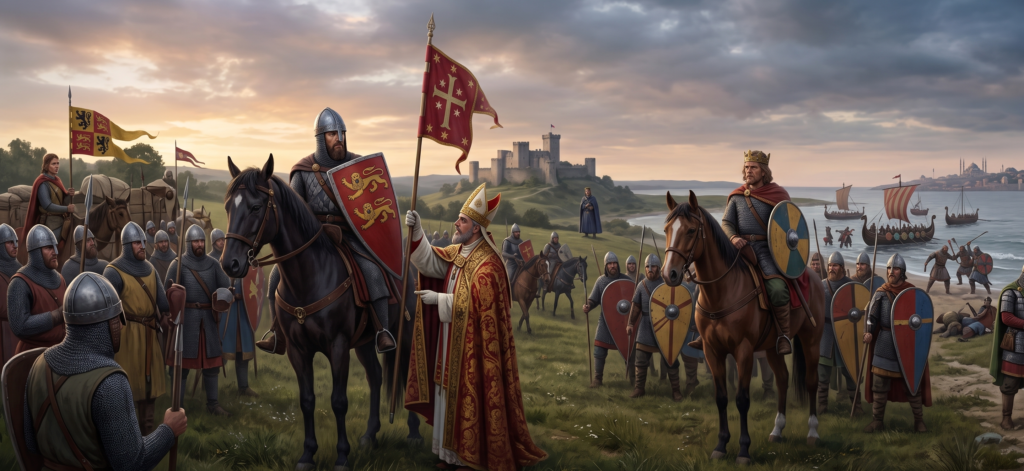
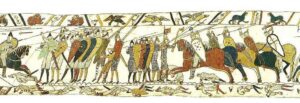
The Battle of Hastings on October 14, 1066, is a moment frozen in historical memory, iconic for its images of shield walls, Norman cavalry, and the falling King Harold. However, we often view this definitive event through a single lens—the immediate struggle for the English throne. To truly appreciate the scale of what William the Conqueror achieved, we must broaden our scope. The Norman invasion of England was not just an English affair; it was a geopolitical tectonic shift that was watched, judged, and influenced by the greatest powers of the medieval world. In this post, we explore: what did the rest of Europe and the distant Byzantine Empire make of this audacious campaign?
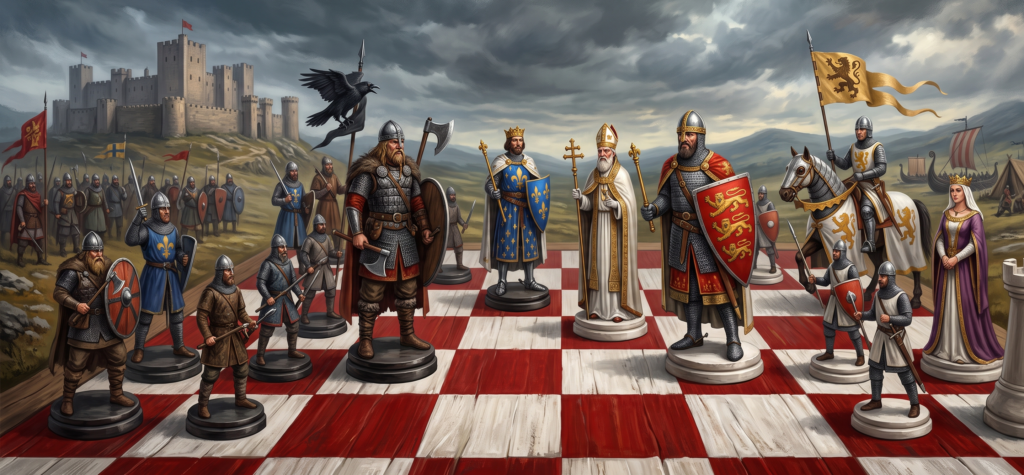
The Geopolitical Chessboard
In 1066, Europe was a complex web of feudal dependencies, fragile balances of power, and deep-seated rivalries. Power was decentralised, and the concept of “nations” as we know them was in its infancy. In this environment, a campaign to conquer a foreign kingdom like England was a dangerous and unprecedented gamble. England, for its part, was an ancient, wealthy, and stable kingdom, prized for its resources and distinct identity. Its vacancy attracted multiple claims, turning 1066 into a year of competing invasions.
William was a masterful political strategist. He spent years cultivating a image of a legitimate heir who had been wronged. His core claim rested on a promise allegedly made by Edward the Confessor and an oath sworn (perhaps under duress) by Harold Godwinson. These claims were not just propaganda; they were the foundation of his international legitimacy.
His Greatest Supporters: Rome and Flanders
William’s invasion would have been impossible without powerful and enthusiastic supporters. His ability to secure this support is a testament to his unmatched political manoeuvring .
The Papacy
William’s most brilliant diplomatic coup was securing the blessing of Pope Alexander II. This was not a minor endorsement; it fundamentally changed the nature of the invasion, transforming it from a simple land grab into a quasi-holy war—a precursor to the Crusades.
The Papacy had its own grievances against the English Church. It was seen as pluralist (Stigand held two bishoprics simultaneously) and resistant to the reform movements championing clerical celibacy and independence from lay control. The Pope also mistrusted the anti-Papal candidate whom Harold had supposedly supported during a Papal schism. By presenting himself as the champion of Papal reform and promising to secure the English Church’s proper structure, William won a powerful weapon: the Papal Banner which flew at Hastings, providing moral and divine legitimacy that inspired his troops and terrified his foes.
Flanders
Diplomatic and military support was also secured through personal ties, most notably with Flanders. Count Baldwin V was William’s father-in-law, a relationship forged through William’s marriage to Matilda of Flanders. This alliance was critical. Flanders provided substantial military resources—knights, soldiers, and logistical support—that bolstered William’s invading force. Baldwin was also an ambitious and powerful figure, and this connection with an established and respected county like Flanders gave William’s claim additional weight in European noble circles.
His Greatest Detractors: Norway, France, and the Byzantine View
But support was far from universal. If William found his champions in Rome and Flanders, his invasion inspired deep dread—and direct action—from other powerful corners.
Norway (The Rivals)
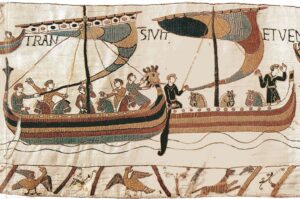
By far the most formidable and direct detractors was Norway. Harald Hardrada, the veteran warrior and King of Norway, held a competing claim to the throne, based on a pact between his predecessor and Harthacnut. For Hardrada, William was an obstacle to his own legitimate right. He launched his own massive invasion in the north, just before William landed, creating a two-front crisis for Harold Godwinson. This Norwegian invasion is crucial for context; it forced King Harold to make a forced march north, battle the Norwegians at Stamford Bridge, and immediately march back south, exhausted, to face the Normans. William’s detractors didn’t just disapprove; they launched a competing military solution. In addition Danish support for the Saxon cause continued long after King William’s coronation in 1066.
France (The Neighbours)
The relationship between the Duchy of Normandy and the Kingdom of France was inherently complex. Normandy was nominally a vassal of the French Crown, yet its counts (and later dukes) often behaved as autonomous princes. This made the King of France, Philip I, a very lukewarm detractor.
A strong, ambitious, and conquering Norman neighbour was a terrifying prospect for the Capetian dynasty. However, Philip I’s realm was itself unstable, and he was preoccupied with internal regional power struggles. His support for William was non-existent, but his opposition was primarily a passive-aggressive deep mistrust. He was undoubtedly relieved to see William occupied elsewhere, but also terrified of what a conqueror-king on his border might eventually do.
Byzantium (The Exile’s Lament)
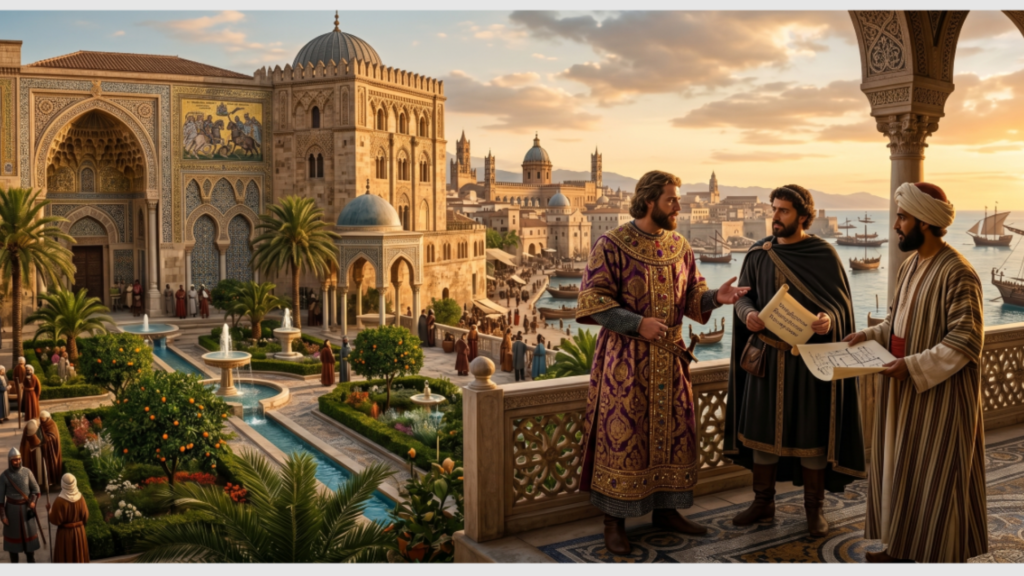
The relationship with Byzantium was perhaps the most fascinating and indirect. While the distant Eastern Roman Empire did not intervene in 1066, the conquest had a profound effect on the Varangian Guard, the Emperor’s elite bodyguard.
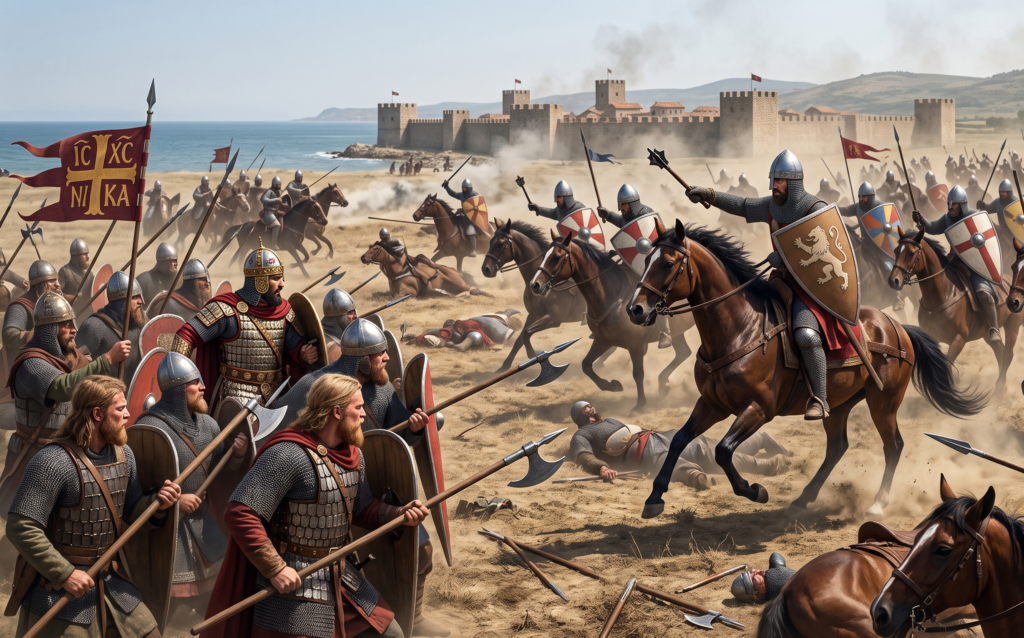
Before 1066, the guard had significant Anglo-Saxon members. In the chaotic aftermath of the Norman victory, many dispossessed Anglo-Saxon nobles, unable to live under Norman rule, fled England and sought refuge in Constantinople, where they were eagerly absorbed into the Varangian Guard. This established a powerful and persistent anti-Norman animus within the heart of Byzantine military service. This came to a head at the Battle of Dyrrhachium in 1081, where the Varangians, fueled by memories of Hastings and their distinct “anti-Norman” identity, fought with unparalleled ferocity against Norman forces from southern Italy.
Hindsight: What William Might Have Done Differently
The 1066 Conquest is one of history’s great hypotheticals. William was a strategic genius, but his rule was often brutal, especially in the early years. In hindsight, how might a master planner like William reflect on his strategy?
His most obvious point of reflection might have been his post-conquest settlement. While he did make early attempts to win over some Saxon magnates, like Earls Edwin and Morcar, this initial “soft integration” was quickly abandoned in favor of ruthless subjugation. A slightly more patient, gradual approach—perhaps rewarding loyal Saxons and maintaining some continuity rather than a total replacement—might have avoided the massive and devastating northern rebellions.
The resulting campaigns, most famously the “Harrying of the North,” were apocalyptic, destroying entire regions and leaving a legacy of profound bitterness. In hindsight, an earlier, slightly lighter touch might have secured long-term peace with less immediate devastation.
Finally, William’s management of his family was his great failure. He never fully resolved the issues with his rebellious eldest son, Robert Curthose. A clearer succession plan or a different distribution of his vast territories could have prevented decades of civil war and instability that followed his death. William was a brilliant conqueror, but his failure to manage his legacy suggests that even tactical geniuses have their limits.
A Continental Triumph
The Norman Conquest was not just an English affair; it was a European-wide event with repercussions felt as far as Constantinople. William secured divine legitimacy from Rome, marital alliances in Flanders, and faced down direct military challenges from Norway and passive dread from France. His tactical execution was brilliant, but it was his ability to navigate this intricate international web that truly defines his legacy as “The Conqueror.” The events of 1066 were a defining moment for England, but also a tectonic shift for the entire continent.