How The Normans Forged The Kingdom in the Sun.
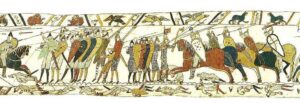
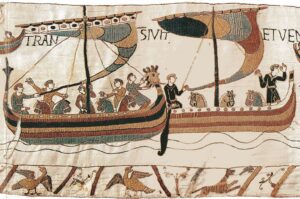
When we think of the Normans, history books invariably direct our gaze to October 1066: Duke William landing at Pevensey, the bloody clash at Hastings, and the transformation of Anglo-Saxon England into a centralised feudal state. Yet, at the exact same moment William was subduing the English countryside, another group of land-hungry Norman adventurers was carrying out a conquest far more improbable, complex, and culturally extraordinary, in the sun-drenched waters of the Mediterranean.
While William the Bastard claimed a single, unified kingdom in a swift military campaign (although followed by years of rebellion), his southern cousins spent decades wrestling control of Southern Italy and Sicily from three powerful regional states simultaneously: the Byzantine Empire, the Lombard duchies, and the Islamic Emirates. The state they forged—centred on Sicily and known to some contemporaries as the “Kingdom in the Sun”—became one of medieval Europe’s wealthiest and most culturally sophisticated states.
Centre Stage: The House of Hauteville
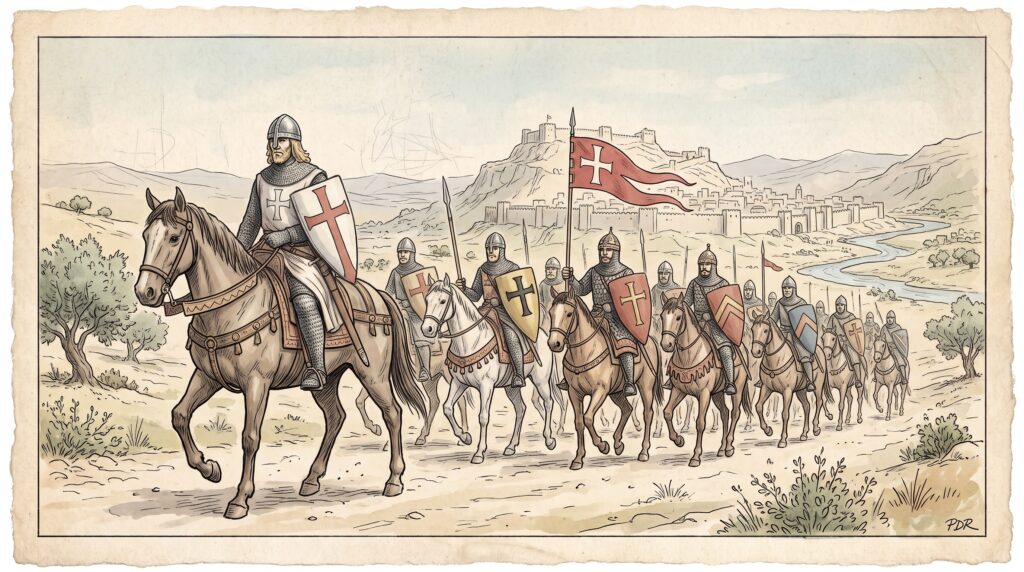
The conquest of Southern Europe was not led by a wealthy duke, but by the younger, impoverished sons of a minor Norman lord named Tancred of Hauteville. Lacking inheritance in Normandy, these brothers rode south as mercenaries, transforming themselves into rulers of the Mediterranean.
- Robert Guiscard (“The Cunning”): The ultimate medieval opportunist. Arriving in Italy with little more than a horse and a handful of followers, Guiscard used banditry, political manoeuvring, and raw military genius to unite the warring factions of Calabria and Apulia. He eventually humbled both the Holy Roman Emperor and the Pope, famously entering and sacking Rome in 1084 and taking the Byzantine stronghold of Bari in 1071.
- Roger I (“The Great Count”): Robert’s younger brother. While Robert focused on the Italian mainland, Roger undertook a gruelling 30-year campaign to conquer Islamic Sicily. Through strategic brilliance and surprisingly generous surrender terms, he secured the island, laying the administrative groundwork for a multi-religious state.
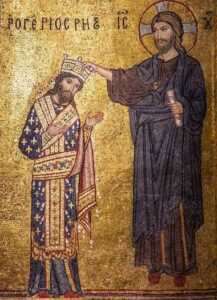
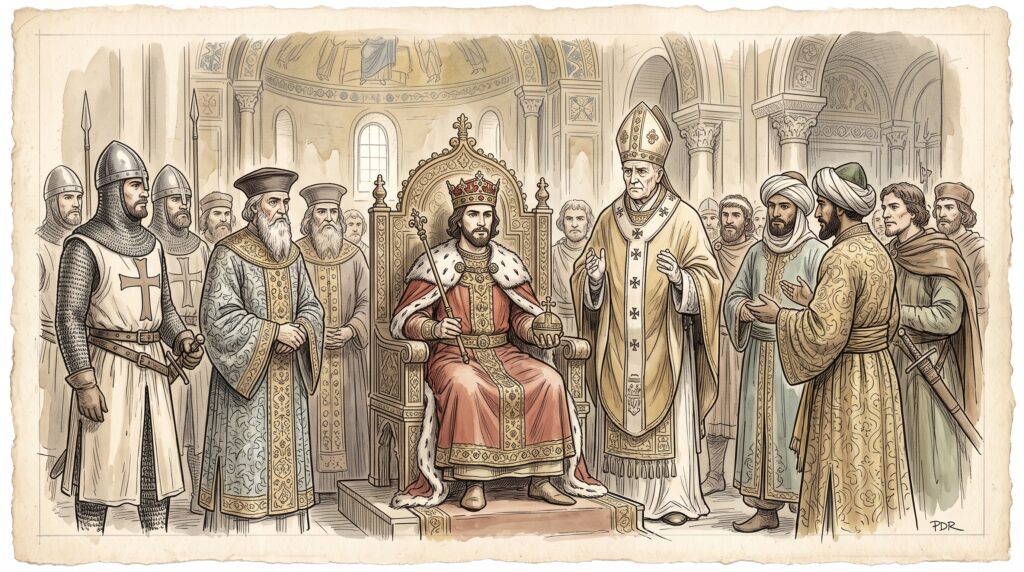
- Roger II: Son of Roger I and the grand architect of the Kingdom of Sicily. Crowned King at Christmas in 1130, he united Southern Italy and Sicily into a dominant maritime empire and presided over one of the most multilingual courts in medieval Europe, turning Palermo into a glittering nexus of science, art, and trade.
- Bohemond of Taranto: Robert Guiscard’s eldest son. Inheriting his father’s gigantic stature and tactical brilliance, Bohemond was cheated out of his Italian inheritance but carved out his own immortal legacy as the primary military leader of the First Crusade, establishing the Principality of Antioch.
Achievements: The Southern Kingdom vs. The Conqueror
Comparing William the Conqueror’s achievements in England to those of the Hautevilles led land-grab in the Mediterranean highlights two vastly different styles of statecraft.
Aspect | William the Conqueror (England) | The Hautevilles (Sicily & Southern Italy) |
Opponents | A single, unified Anglo-Saxon kingdom. | A fragmented mosaic of Byzantines, Lombards, Papal armies, and Muslim Emirates. |
Duration | Decisive victory in weeks; pacification over several years. | Over six decades of continuous, multi-front warfare. |
Governance | Imposed Norman feudalism and replacing local elites (e.g., Domesday Book). | Absorbed local Byzantine and Islamic administrative systems into a hybrid bureaucracy. |
Cultural Impact | Anglo-Norman synthesis that reshaped Northern Europe. | Arabo-Norman-Byzantine golden age of science, architecture, and religious tolerance. |
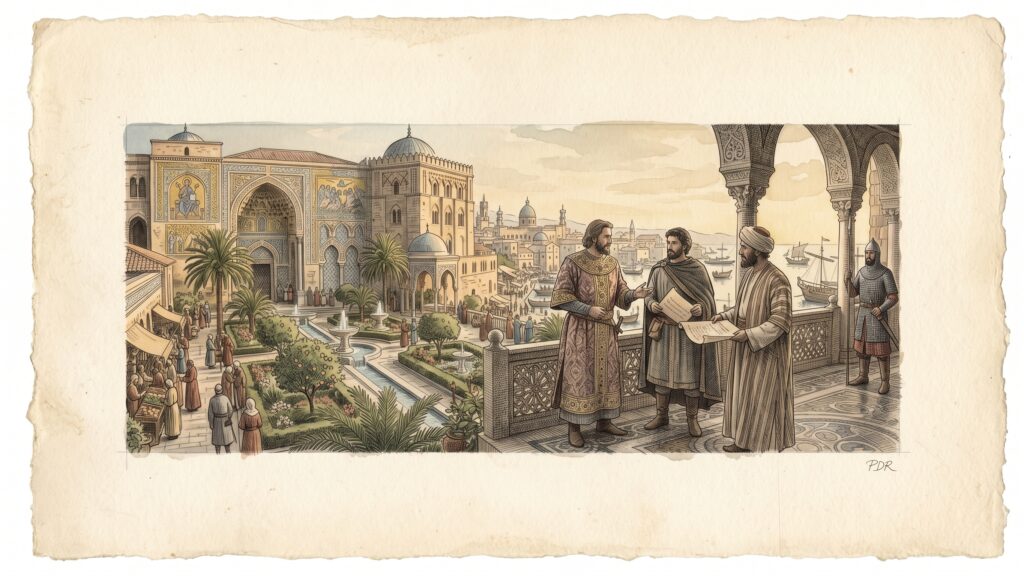
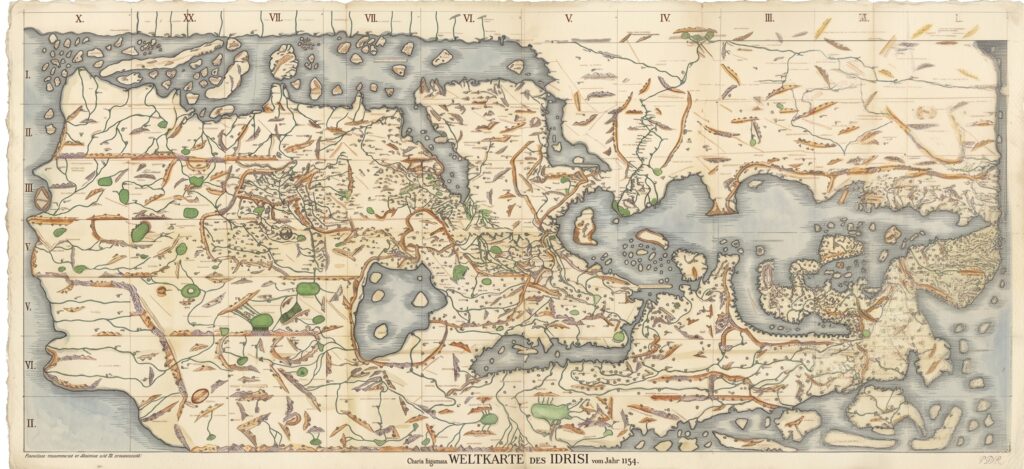
While William ruled through military domination and administrative overhaul, Roger II built a state defined by syncretism (the blending of different factions into a unified whole). In 12th-century Palermo, royal charters were written in four languages: Latin, Greek, Arabic, and Judeo-Arabic. Muslim scholars, Greek administrators, and Latin bishops worked side-by-side in the royal court. Roger II commissioned the Muslim cartographer Muhammad al-Idrisi to produce the Tabula Rogeriana—the most accurate world map of the Middle Ages. Architectural marvels like the Cappella Palatina in Palermo stand today as breathtaking testaments to this fusion, featuring Byzantine mosaics set under Islamic carved-wood muqarnas ceilings.
Milestones: The Rise and Fall of the Southern Normans
1017–1030 (The Arrival): Normans began arriving in southern Italy in the early eleventh century, initially as pilgrims and mercenaries offering their swords to local Lombard rebels fighting the Byzantine Empire in Southern Italy.
1053 (The Battle of Civitate): Pope Leo IX leads an army to expel the unruly Norman warlords. The Normans annihilate the papal forces, capture the Pope, and respectfully convince him to recognise their territorial claims.
- 1071 (Double Triumph): Bari falls to Robert Guiscard, and Palermo falls to Roger after a major siege.
- 1130 (The Kingdom Born): Roger II is crowned King of Sicily, bringing mainland Southern Italy and Sicily under a single crown.
- 1189–1194 (Dynastic Collapse and the Fall): The sudden death of King William II without a direct male heir triggers a succession crisis, opening the door for external conquest.
The Relationship Between North and South
Despite sharing common ancestors and warrior ethos, the Norman barony of Northern Europe and the Kingdom in the Sun operated in largely separate worlds. The Anglo-Normans were locked into the feudal politics of the Atlantic seaboard, perpetually battling the Kings of France over control of Normandy, Anjou, and Britain.
By contrast, the Southern Normans operated in a cosmopolitan Mediterranean sphere. Their primary rivals were the emperors in Constantinople and the caliphates of North Africa. Direct contact between the two branches was rare, occurring chiefly during the First Crusade (1096–1099), when Robert Curthose (Duke of Normandy and son of William the Conqueror) marched south and reunited with his cousin Bohemond of Taranto. While they viewed each other as distant kinsmen bound by shared honour and language, the Southern Normans were widely viewed by Northern barons as exotic, easternised, and potentially un-Christian due to their employment of Muslim bodyguards and Greek administrators.
Why Is the Kingdom in the Sun Comparatively Little Known?
The southern Norman empire often remains a secondary chapter in Western history due to several key factors:
- Anglophone Historiography: English-speaking history naturally prioritises 1066 because it laid the direct foundation for the British Empire and the modern English-speaking world.
- Lack of a Direct Successor State: Unlike England, which maintained continuous statehood after 1066, the Kingdom of Sicily was repeatedly absorbed, partitioned, and ruled by foreign dynasties (Hohenstaufens, Angevins, Aragonese, and Bourbons), obscuring its Norman roots.
- Victorian Historical Bias: 19th-century European historians often struggled to frame a medieval state that openly embraced Islamic culture, Arabic science, and Greek Christianity as part of the Western canon, leading to its neglect in traditional curricula.
How It All Ended
The end of Norman rule came not from a defeat on the battlefield, but through the bedchamber. When Roger II’s grandson, King William II, died childless in 1189, the closest legitimate heir was Roger II’s daughter, Constance.
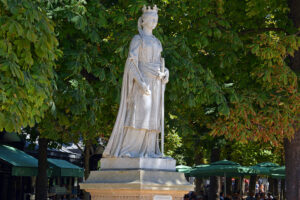
Constance had been married to Henry VI of Germany, the son of Holy Roman Emperor Frederick Barbarossa. In 1194, Henry VI marched into Palermo with an imperial army, claiming the Sicilian crown by right of his wife. Upon his coronation, Henry violently purged the remaining Norman nobility, bringing a tragic, bloody end to the House of Hauteville.
Yet, the Norman spirit flickered one last time in Constance and Henry’s son: Frederick II, Holy Roman Emperor. Raised in Palermo, fluent in six languages, and famously dubbed Stupor Mundi (“The Wonder of the World”), Frederick inherited his Norman ancestors’ intellect, religious pragmatism, and love of learning. Though the Hauteville name was gone, the legacy of the Kingdom in the Sun illuminated Western civilisation on the threshold of the Renaissance.