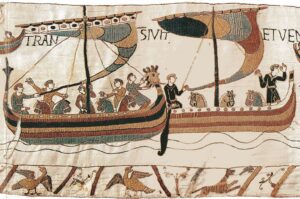
If you stood on the northern coast of Francia in 911 AD, the greatest threat came from the sea. Viking raiders would appear in sleek longships, strike swiftly, and vanish before defenders could react.
Yet by 1066, their descendants, the Normans, fought very differently. No longer seaborne raiders, they had become one of Europe’s most formidable military powers, renowned for their disciplined cavalry, effective leadership, and tactical flexibility.
When the Viking leader Rollo received land from the Frankish king, his followers faced a new challenge: defending territory rather than raiding it.
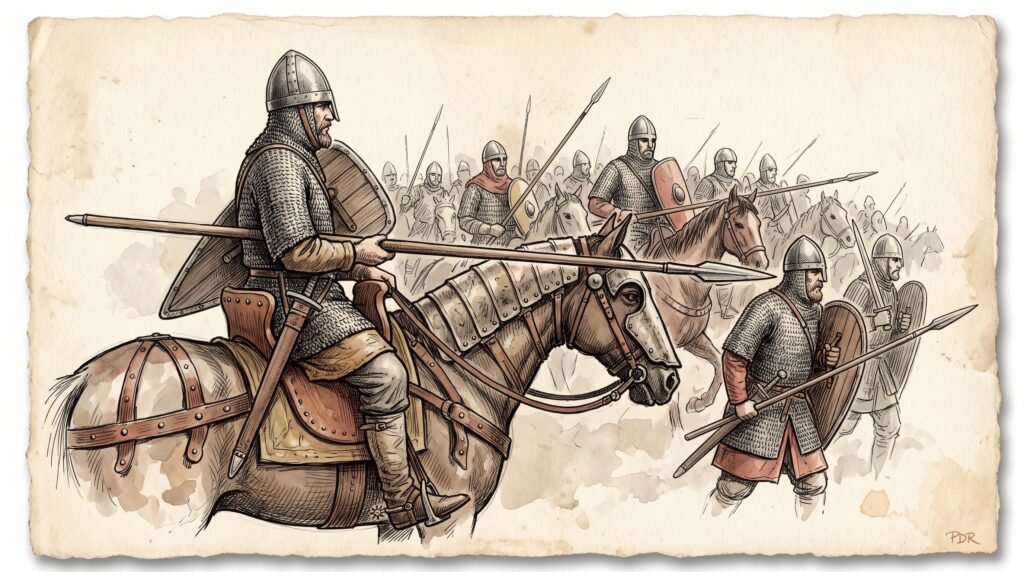
To control and protect their lands, the Normans embraced mounted warfare. Adopting and refining Frankish military traditions, they built their strength around three key developments: the deep saddle, the stirrup and spur, and the lance increasingly used under the arm to transfer more of the horse’s momentum into a charge.
The Power of the Conroi
Norman armies were organised through the feudal system. Dukes, counts, and barons brought knights and retainers into the field, supported by infantry and missile troops.
At the heart of their cavalry was the conroi: a small group of knights who trained, campaigned, and fought together.
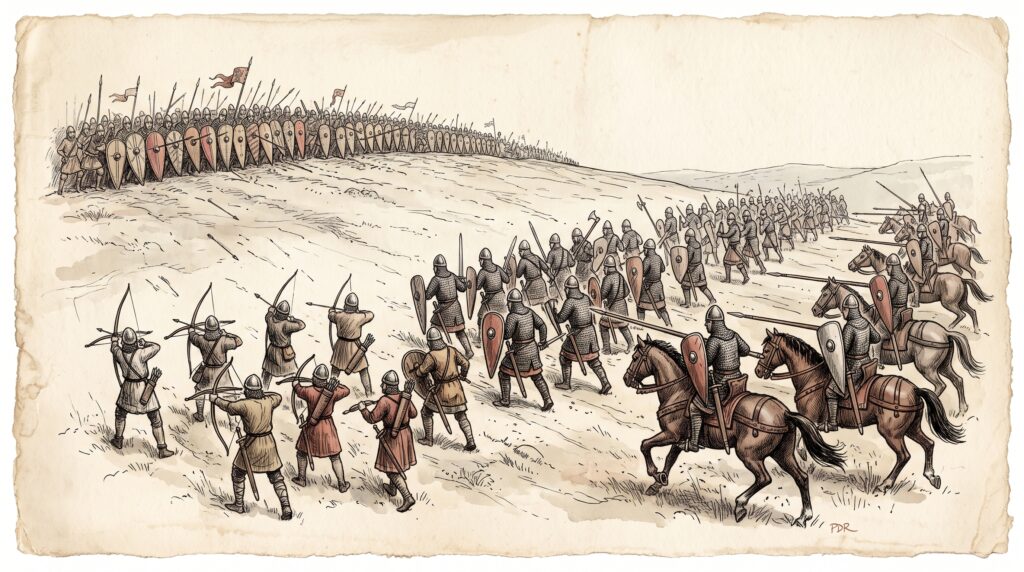
The Normans excelled at what modern soldiers would call combined arms warfare. Their armies typically fought in three stages: archers disrupted enemy formations, infantry engaged and fixed the enemy in place, and cavalry exploited gaps and delivered decisive attacks.
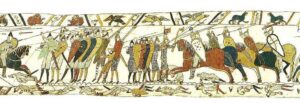
At the Battle of Hastings, William’s army contained substantial numbers of infantry and archers alongside its mounted knights, demonstrating that Norman success depended on combined arms rather than cavalry alone.
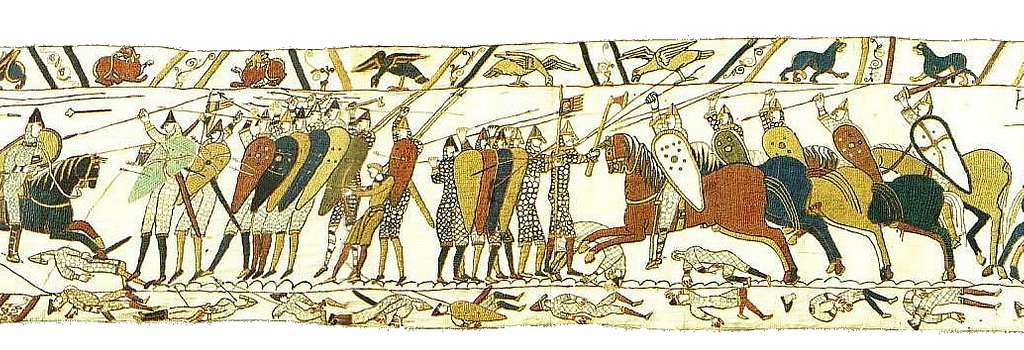
One of the Normans’ most famous battlefield tactics was the feigned retreat. A cavalry unit would withdraw, tempting opponents to break formation in pursuit. Once the enemy became disorganised, the knights could regroup and counterattack.
Norman Supremacy Did Not Just Rely On Horsemanship
A Model Others Followed
Norman success influenced warfare in England, southern Italy, Sicily, and the Crusader States. The Normans did not invent heavy cavalry or feudal warfare, but they refined and spread one of the most effective military systems of the High Middle Ages.
While no direct institutional link exists between Norman armies and today’s British Army, some principles remain familiar: combined arms, shock action, and unit cohesion.
The Normans succeeded because they adapted. Descended from Viking settlers, they embraced new technologies, adopted useful ideas from their neighbours, and built disciplined military institutions capable of operating across Europe and the Mediterranean. Their greatest achievement was not inventing a new way of war. It was perfecting and spreading one of the most effective military systems of the medieval world.
The Norman military story is a reminder that military success belongs not simply to the strongest, but to those who adapt fastest and fight together best.
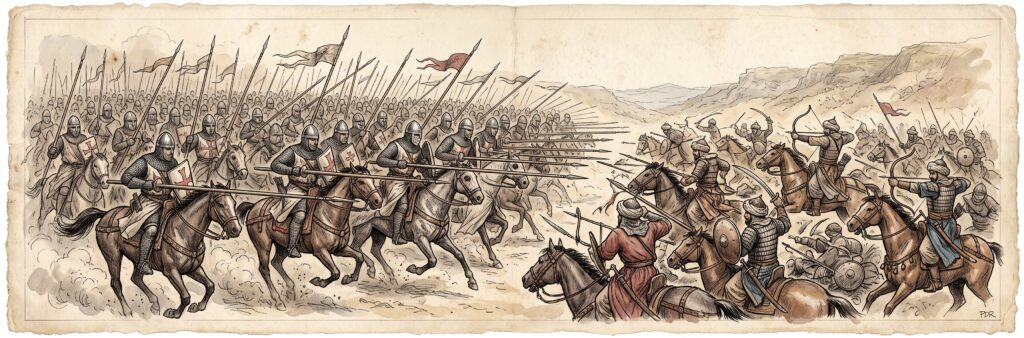
The Norman Charge, Adapted By Many: The Battle of Dorylaeum
Suggested Further Reading
William of Poitiers, Gesta Guillelmi (The Deeds of William): Written by William the Conqueror’s chaplain—a former knight himself. It provides the most detailed contemporary account of Norman equestrian tactics, combined-arms coordination, and the execution of the feigned flight at Hastings.
William of Apulia, Gesta Roberti Wiscardi (The Deeds of Robert Guiscard): A vital epic poem chronicling the Norman conquest of Southern Italy, capturing the raw shock effect of Norman heavy cavalry against Byzantine and Lombard infantry.
Anonymous, Gesta Francorum et aliorum Hierosolimitanorum (The Deeds of the Franks): An eyewitness account by an Anglo-Norman or southern Italian soldier in Bohemond’s army, documenting how Norman shock tactics saved the vanguard at the Battle of Dorylaeum