How Stamford Bridge 1066 Reshaped Viking Norway
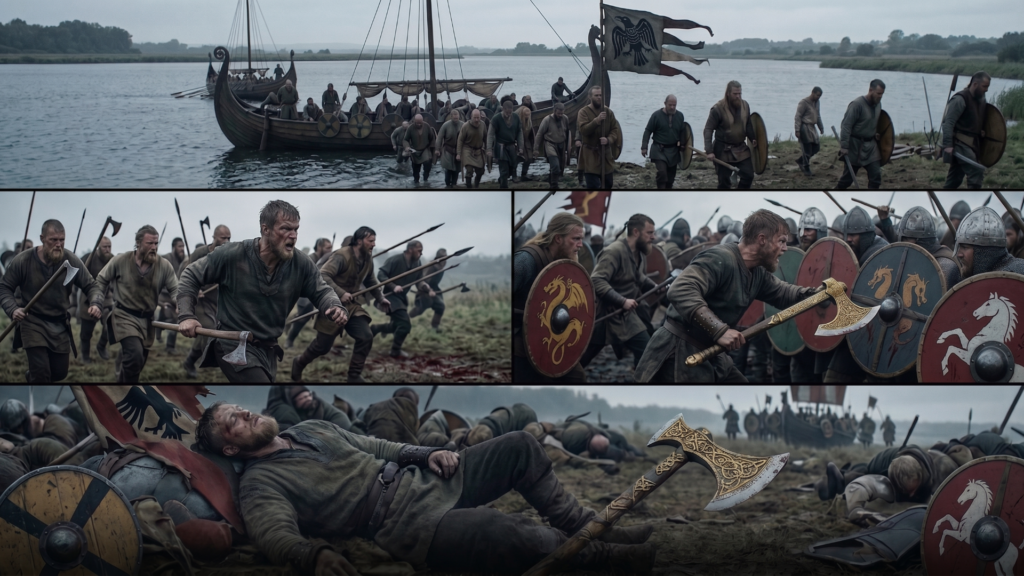
When we think of the year 1066, the mind inevitably wanders to the south of England—to the bloody ridge near Hastings where King Harold Godwinson fell with an arrow in his eye, and William the Conqueror claimed the English crown. Yet, just nineteen days prior, an equally monumental clash took place 185 miles to the north.
On September 25, 1066, the Battle of Stamford Bridge shattered the shield wall of the last great Viking army. While standard histories treat Stamford Bridge as the grand finale of the Viking Age in England, its structural shockwaves completely transformed the political, economic, and cultural landscape of Viking Norway.
Here is a breakdown of the net results, the absolute winners, and the devastating losers of that fateful autumn day.
The Net Results: The Closing of the Viking Age
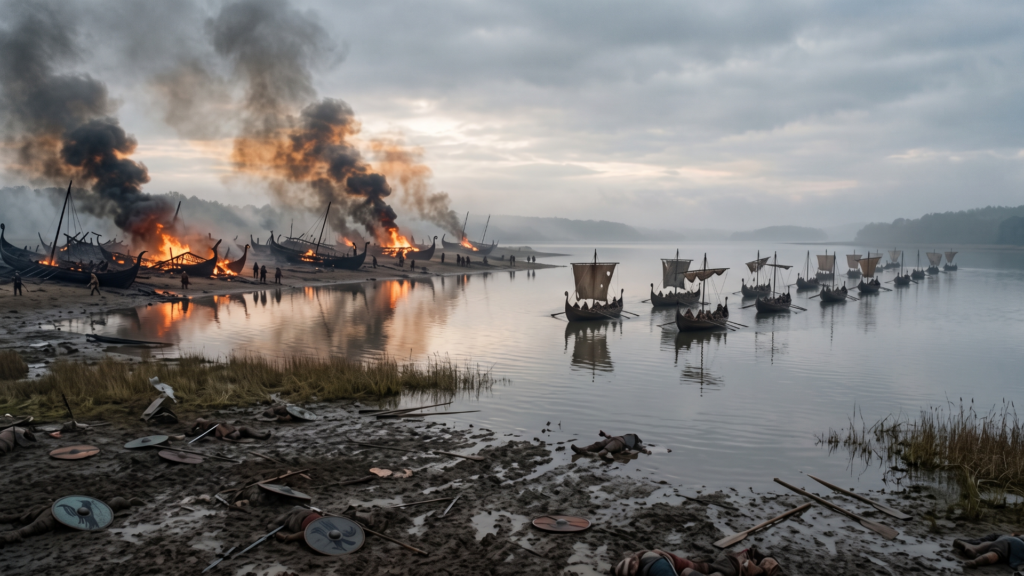
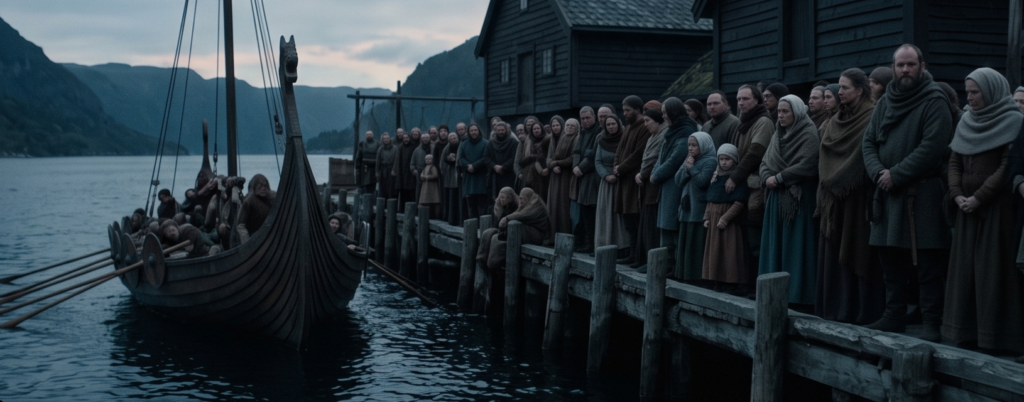
The structural impact of Stamford Bridge on Norway cannot be overstated. Statistically, the data is grim: of the 300 longships that sailed out of Norway filled with the nation’s premier fighting stock, only 24 ships were required to carry the broken survivors back across the North Sea.
The net results fundamentally redirected Norwegian history:
- The Annihilation of Military Capital: Norway lost an entire generation of veteran warriors, chieftains, and naval commanders in a single afternoon. This instantly crippled Norway’s ability to project aggressive military power across Western Europe.
- The Severing of Anglo-Scandinavian Ties: For nearly three centuries, Norway, Denmark, and England existed in a shared cultural and economic orbit. The absolute destruction of the Norwegian army effectively severed England’s connection to the Scandinavian world.
- Accelerated Christianisation: Hardrada was the archetype of the old-school, pagan-aligned, brutal sea-king. His demise cleared the path for a domestic political restructuring in Norway, moving away from aggressive seaborne raiding (strandhogg) toward stabilised, continental European-style feudal monarchy. Christianisation was well on the way to becoming main-stream but the result of this set-back firmly established the ascendency of the ‘White Christ’ in the Norse firmament.
The Winners
- The Co-Regent Brothers (Olaf and Magnus): Hardrada had left his son Magnus behind to govern Norway in his absence. Following the disaster, Hardrada’s surviving son, Olaf—who was granted a merciful truce by the English—returned home. The Norwegian kingdom was cleanly divided between the two brothers. Olaf III went on to rule a peaceful, prosperous Norway for decades, earning the title “Olaf the Peaceful” for completely abandoning his father’s bloody imperial ambitions.
- William the Conqueror (Indirectly): Duke William of Normandy was not present at Stamford Bridge, but he reaped its absolute finest rewards. By force-marching north to crush the Norwegians, Harold Godwinson fatally depleted and exhausted his elite housecarl forces. When William landed his Norman cavalry in the south just days later, he faced a battered, sleep-deprived English defence. Snorri Sturluson’s sagas explicitly attribute the success of the Norman Conquest to the bleeding out of the English army at Stamford Bridge.
The Losers
- The House of Hardrada & Imperial Norway: The dream of a grand North Sea Empire died on the banks of the Derwent. Norway was forced out of the geopolitical arena of Western expansion, permanently shifting from an expansionist superpower to a defensive northern realm.
- King Harold Godwinson & Anglo-Saxon England: Godwinson achieved an astonishing, masterful tactical victory at Stamford Bridge. Yet, it proved to be an absolute tragedy of timing. The casualties he suffered in Yorkshire cost him his crown, his life, and the sovereignty of Anglo-Saxon England at Hastings less than three weeks later.
End-game
Stamford Bridge is frequently overshadowed by Hastings, but for Viking Norway, it was the definitive structural turning point. It was the final time a massive, state-sponsored Viking host would cross the North Sea with the intention of altering European history. The bleached bones that whitened the Yorkshire battlefields for fifty years afterward stood as a stark monument to the day Norway stopped raiding the world, and finally turned inward to join it.-