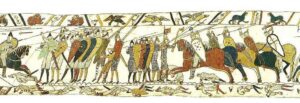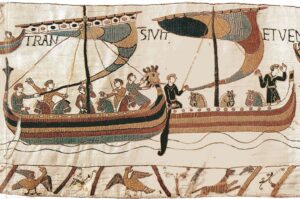

Consult most history books or even, heaven forbid, ask an AI engine if William the Conqueror was successful post-1066 and the answer will be a resounding YES. The Norman victory at the Battle of Hastings established his rule over England which led to many fundamental political, social, and cultural changes. The new ruler centralised power, replacing Anglo-Saxon elites with Normans and brought about the Domesday Book, an expedient that provided a detailed record of all English landholdings and resources. It is often said that William’s success laid the foundation for Norman influence in England for centuries and that his reign significantly shaped English history. But when all is said and done I would argue that if the yardstick was to rule over a contented and supportive people his reign was not a successful one. In the pre-1066 days, he believed that the Saxons would welcome him to the vacated English throne but he was quickly disabused of this notion. The hearts and minds of his new subjects would always be well beyond his reach – wholly down to the tactics he employed to bring them to heel.
The theses on the merits of his reign are numerous and although the general consensus might be that it was beneficial in the long run it was cold comfort to the English people in the short term. All they saw was a cruel, foreign tyrant determined to go to any lengths to suppress his subjects. In the two decades following the Battle of Hastings over two hundred thousand Normans and French people settled in England while at least three hundred thousand English people (1 in 5) died from famine, disease or their wounds. They were starved, killed or simply driven from their ancestral homeland at spearpoint.
As an avid student of 11th-century Normandy, I do not believe that William found any pleasure in victory. I also believe he expected a much easier route to Kingship and that he had originally hoped to rule over a peaceful and willing people. Any goodwill soon evaporated as he began to gift English land to his followers. The English had originally offered him the crown but when they realised what he was going to do with it they revolted in wave after wave of uprisings. It took him five years of ruthless oppression to bring his opponents to heel and even then the conflict seemed to simmer away endlessly. Apart from the treasures he took back to Normandy on his many returns to the Duchy, he had little to show for his rule. He never liked the English people, nor the country and spent as much time as he dared away from his new Kingdom. His expressed desire to learn the Saxon language never amounted to anything and the English people despised and hated him, despite what they said to his face. It was only on his deathbed that he relented and showed any remorse for the cruelties he had inflicted on them.
It seems that it was not just the mortalities William precipitated, which were often seen as acts of God, that angered the Saxons. The injustice of his rule was deeply offensive to the English people if we can believe the sentiments expressed in the Anglo-Saxon Chronicles cataloguing the awful years that followed. The burning resentment of Norman taxation, the removal of religious treasure, the theft of practically all the land in England and the treatment of respected Saxon leaders all stirred the cauldron of hatred. Nobility and clergy were reduced to penury, thrown into prisons and manacled, castrated and blinded. The new King emptied the land of wealth and population, building seemingly impregnable stone castles. They were not to protect himself or his armies but to protect the new landlords as they squeezed the Saxon pips until they squeaked. The oppressive stone keeps became an oppressive symbol of bondage.
The lands which King William gave to his followers became poverty-stricken and barren and their taxable value fell accordingly, perhaps by as much as half. Much of the arable land went out of cultivation and, never more than enough to support the locals, even under the old regime, caused widespread starvation. The ability to collect taxes from the villages fell which even twenty years later had not recovered to anything like their previous levels. By giving away the land to his supporters King William forced his victory into the lowest of dwellings where even the children were constantly reminded that they were born to a beaten race. Unsurprisingly, these brutality subjugated people never became Norman. They steadfastly absorbed the hated invaders ultimately creating a new form of Englishness from the mixture, finally lifting them to new heights in subsequent generations.
On balance, I give the success of William the Conqueror’s reign a cautious thumbs down.