
The jury has been out on William the Conqueror for over a thousand years but from a Saxon point of he was definitely a ‘bad ‘un’. However, history is written by the winners so we will need to consider the Norman PR machine. Was he good King William I of England or did he live up to his moniker of ‘the Bastard’ which in many eyes he was? But whatever you think of him he was certainly a complex figure, and whether he was a “good” king depends on the criteria you’re using to judge him.
Pros:
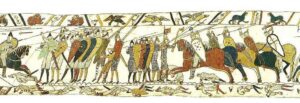
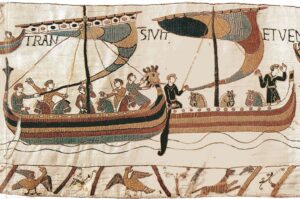
As Conqueror of England, William is best known for his successful invasion of England in 1066, which established Norman rule and overthrew the ruling Saxons. His victory at the Battle of Hastings was a turning point in English history. Although a close-run thing, the conquest led to profound cultural and political changes, helping to shape the future of England and Northern Europe.
William was a great manager of resources. After taking the throne, he implemented a more centralised and efficient system of government compared to what had existed before. The Domesday Book, a comprehensive survey of land ownership and resources in England, allowed for more effective taxation and governance.
His new and arguably better distribution of wealth came in the form of the feudal by which he granted land to his Norman followers ensuring loyalty and control over the newly conquered territories. This system remained a key part of English society for many centuries.
William was a highly effective general and the Norman war machine was a thing of awesome beauty. His army was one of the most effective on the European continent and the Norman cavalry was feared and revered. His marshalling of his forces was key to winning England.
Cons:
William’s harsh rule of England was marked by significant violence and repression, especially in the early years after the conquest. He was a very ruthless monarch. The Harrying of the North exemplified his methodology and he brutally suppressed uprisings in northern England to the point of genocide. This campaign led to widespread famine and devastation, killing many people.
Although William had strong support from his Norman followers whom he rewarded generously, the Anglo-Saxon view was less favourable. It is not surprising when considering that over 90% of the landed native nobility was dispossessed of land and wealth. They wholeheartedly resented the Norman takeover and the heavy-handed way he ruled. His imposition of foreign rule on the English people created long-lasting tensions but more so on the Saxon nobles than the commoners.
William had lots of offspring but they were constantly at odds with each other and their father. His later years were marked by concerns about the succession. His son, William II, became king after his death, but there were constant tensions and struggles over the throne. William’s choice of heirs and his control over his territories in France and England were questionable and possibly overcomplicated.
William’s legacy was not particularly that of a ‘good King’ but we have to judge him by the standards of the day, not our potentially even-handed 21st century ones. He was cruel and harsh and ruled by fear, much as he had done when he was merely the Duke of Normandy. However, his effect on England and the English church, military system and the political system were far-reaching and long-lasting. His success in consolidating power and creating a unified, feudal state suggests that he was a highly effective ruler, even if some of his methods were controversial. He was a pious man, a faithful husband and a good father but it is doubtful that his reign was ever looked upon as good except for his loyal companions who grew fat on the bounty of England. A powerful ruler rather than a good one and he was certainly remembered.