
The Forgotten Anglo-Saxon Colony of Nova Anglia
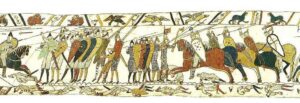
When we think of the Battle of Hastings in 1066, we usually picture the final, tragic scene: King Harold fallen beneath a rain of Norman arrows, the English shield wall shattering, and William the Conqueror securing his blood-soaked grip on the throne. History textbooks often treat this moment as the end of the Anglo-Saxon story.
In reality, it was merely the beginning of an extraordinary, far-flung saga.
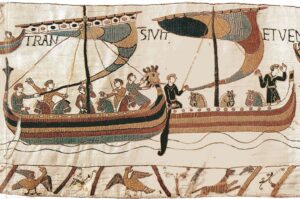
In the years following the conquest, as Norman stone castles sprang up across the English landscape, thousands of dispossessed Anglo-Saxon warriors made a desperate choice. Rather than bow to foreign lords, they boarded longships and set sail into the unknown. Their journey would carry them across the Mediterranean to the court of the Byzantine Empire—and ultimately to the creation of a medieval “New England” on the shores of the Black Sea.
Flight Across the Wine-Dark Sea
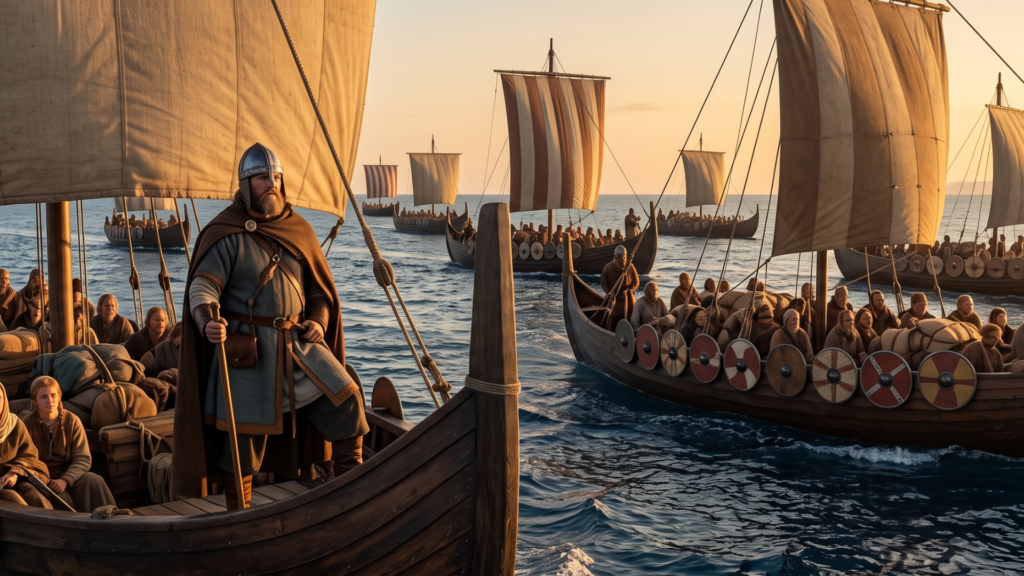
Following the crushed rebellions of 1069 and the brutal Harrying of the North, life for the native English aristocracy became untenable. Stripped of their lands, an alliance of disinherited housecarls, noblemen, and their families gathered a great fleet.
According to medieval chronicles—notably the Icelandic Saga of Edward the Confessor and the Chronicon Laudunense—a fleet of over 300 ships commanded by Siward, Earl of Gloucester, set sail from England. Navigating through Atlantic gales, they raided down the coasts of France and Spain, passed through the Straits of Gibraltar, and pushed deep into the Mediterranean.
Their destination was Constantinople: the “City of the World’s Desire,” ruled by the Byzantine Emperor.

The English Varangian Guard: A Match at Dyrrhachium
Upon arriving in the East in the late 1070s, the battle-hardened English exiles offered their swords to Emperor Alexios Comnenus. Impressed by their martial prowess and fierce loyalty, Alexios inducted them directly into his elite personal bodyguard: the legendary Varangian Guard.
Before 1066, the Varangian Guard had been dominated by Scandinavian and Rus warriors. Within a decade of Hastings, it had transformed into a predominantly Anglo-Saxon force. The Byzantine court referred to them simply as the Inglinoi.
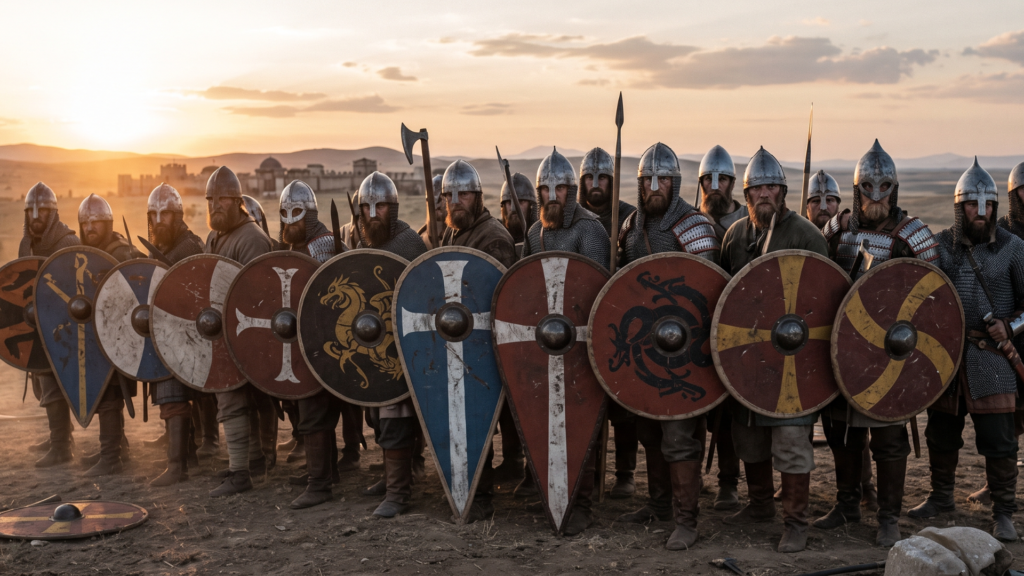
In a dramatic twist of history, these exiles faced their bitter rivals once again. At the Battle of Dyrrhachium in 1081, the English Varangians lined up opposite a invading Norman army led by Robert Guiscard—the ruthless Duke of Apulia and close ally of William the Conqueror. Charging into battle with two-handed battleaxes, the English sought vengeance for Hastings. Though the battle ultimately ended in a tactical defeat due to Norman cavalry, the English warriors earned an enduring reputation for unbreakable ferocity.
Nova Anglia: A Saxon Realm on the Black Sea
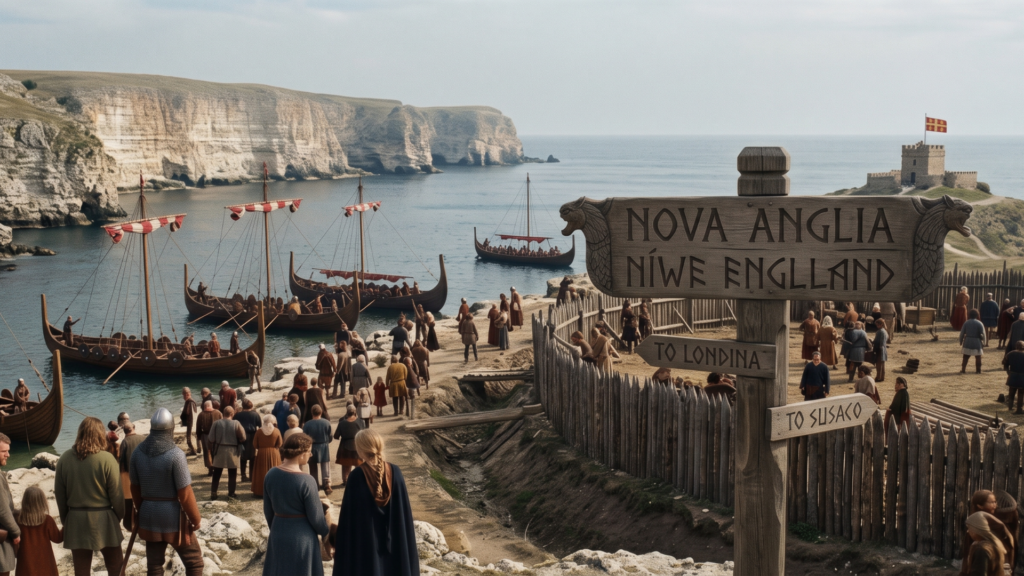
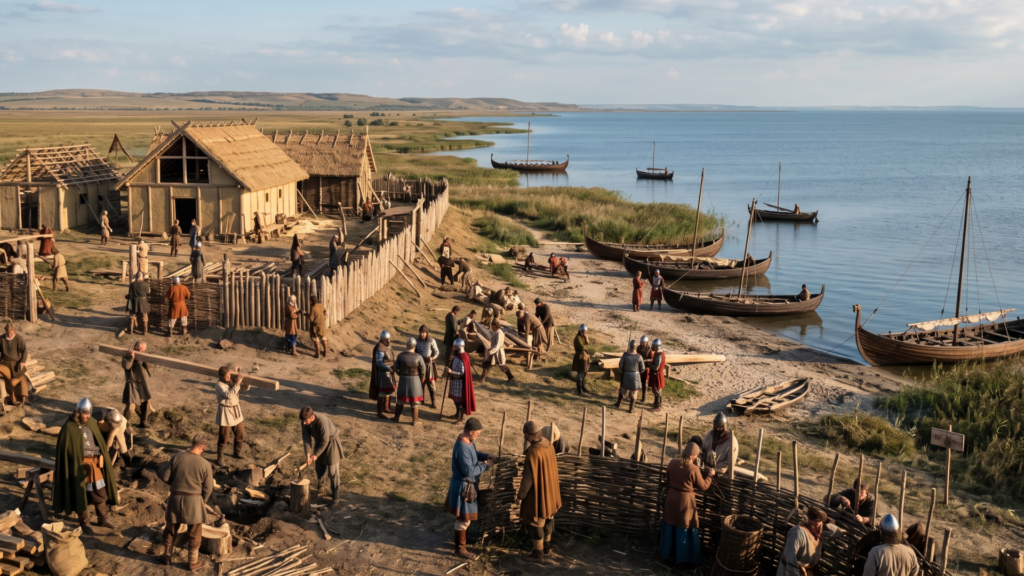
Recognising that the English warriors needed permanent homes for their families, Emperor Alexios offered them land northeast of Constantinople. Medieval sources record that the Emperor granted them territory along the coast of the Black Sea and the Sea of Azov—a region previously held by pagan nomads.
The exiles drove out the invaders and established a sovereign territory they named Nova Anglia (New England).
Determined to preserve their heritage thousands of miles from home, they built towns and fortresses, naming them after the places they had lost:
- Londres (New London)
- Eorwic (New York)
- Sussex and Lincoln
For generations, these settlements maintained Old English language, customs, and religious traditions. Byzantine records indicate that as late as the 13th century, imperial guards were still recruited from the “English of the Black Sea,” who greeted the Emperor in their ancestral tongue.
Fading into Legend: The Enduring Echoes of Nova Anglia
The ultimate fate of Nova Anglia was not sealed in a single, catastrophic battle, but swallowed slowly by the tides of time and geography. For generations, the English settlements along the Black Sea flourished, preserving their ancestral tongue, customs, and religious faith thousands of miles from their lost homeland. They sent their sons to Constantinople to serve in the Varangian Guard, where the distinctive clash of two-handed battleaxes and the sound of Old English remained familiar fixtures of the Byzantine court well into the 13th century.
Eventually, the pressure of nomadic incursions—first from the Cumans and later from the Mongol invasions—along with the gradual decline of the Byzantine Empire itself, eroded the isolation of the colony. The towns of Londres and Eorwic were slowly absorbed into the shifting cultural landscape of the Crimean coastline, their English bloodlines blending with local populations.
Yet, Nova Anglia remains one of the most remarkable chapters of medieval history. It proves that while the Battle of Hastings shattered an Anglo-Saxon kingdom, it could not crush the resilience of its people. Driven into exile, these warriors did not merely survive in foreign lands—they reshaped empires, established new realms, and ensured that the story of 1066 echoed far beyond the borders of England.
The story of Nova Anglia is a powerful reminder that history rarely fits neatly into textbook chapters. When conquered at home, the Anglo-Saxons did not simply fade away—they adapted, fought, and carved out a legacy that stretched from the English Channel to the Crimea.
This spirit of resilience, migration, and fierce loyalty underpins everything I explore in creating historical fiction. The men and women who took to the seas after 1066 carried the iron will of their ancestors—a thread of ambition and survival that shaped the medieval world.



This Post Has 2 Comments
Hi Peter, I remember doing my thesis on Anglo-Saxon revolts to Norman rule many years ago when very little research had been done is this area. It is good to see someone is finally researching what happened to the Anglo-Saxons at Nova Anglia.
The post-1066 revolts are a fascinating period. I always wondered what might have been had Harold Godwinson not been quite so impulsive.