The Leopards of Normandie Series: Interpreting the Tapesty's Tale
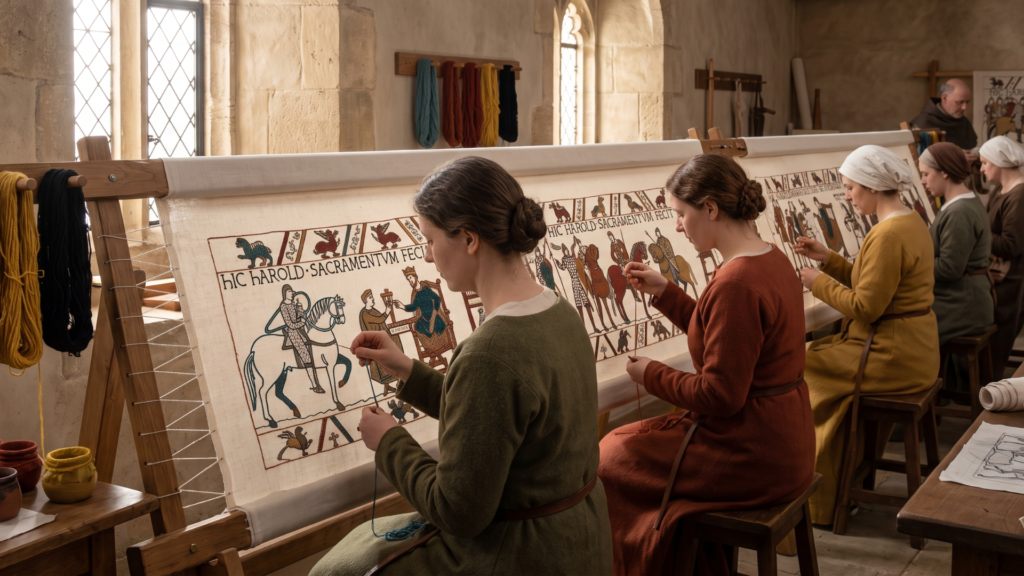
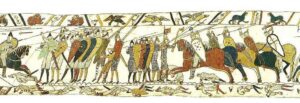
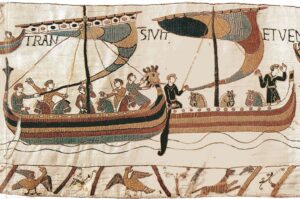
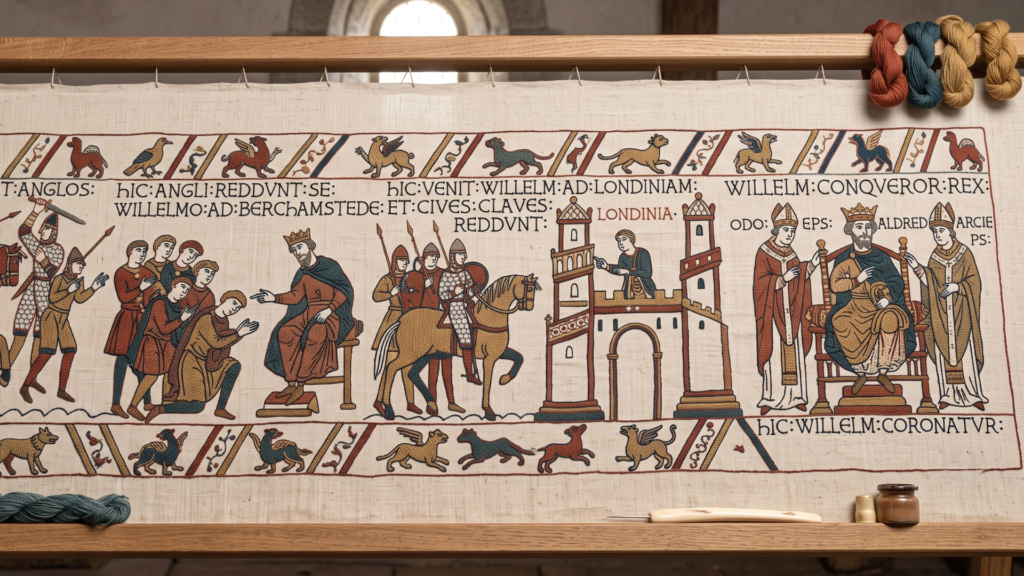
Few artefacts from the medieval world capture the imagination quite like the Bayeux Tapestry. It is, effectively, the world’s oldest surviving comic strip—seventy metres of embroidered linen detailing the earth-shattering events leading up to the Battle of Hastings in 1066. But for all its fame, the Tapestry remains an enigma. It is a work of Norman propaganda, ordered by the victors, stitched by the vanquished, and silent on the deepest motivations of the men and women it depicts.
For a historical novelist, the Tapestry is both a treasure trove and a minefield. How does one breathe life into these iconic, two-dimensional figures without violating the established historical record?
In my series Leopards of Normandie saga, I set out to accomplish something quite ambitious: not just to write a story based on the Conquest, but to create a narrative that seamlessly segues and articulates with the story of the Tapestry itself. My goal was to construct a literary bridge between the static, embroidered images and the living, breathing reality of the eleventh century. By inhabiting the “white space” between the panels, the series doesn’t just retell the story; it attempts to decode the Tapestry, making sense of its enigmatic transitions and unlocking some of its most enduring mysteries.
The Art of the Seamless Segue
Creating fiction with a primary source as rigid as the Bayeux Tapestry requires a delicate touch. You cannot merely use it as a backdrop; you must treat it as a script. In writing The Leopards of Normandie, I adopted a methodology of working “from the artifact outward.”
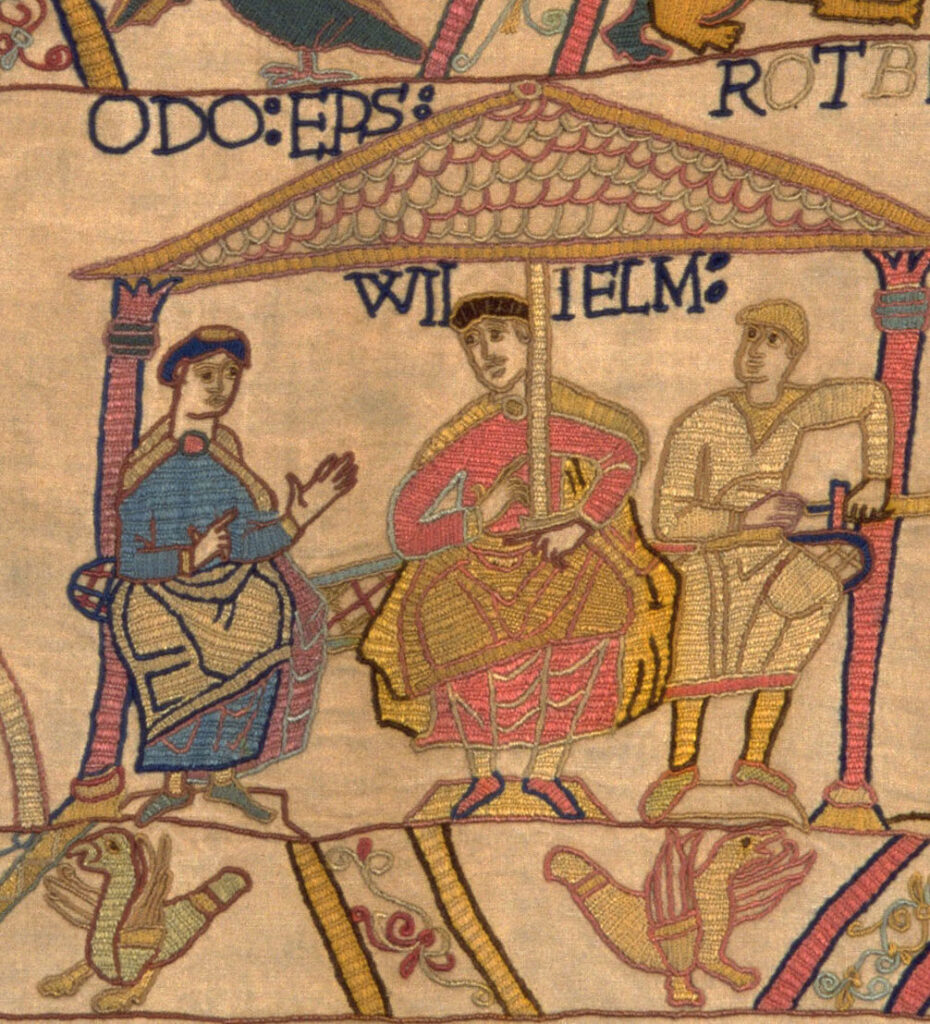
If a scene appears on the linen, it must appear in the novel, but viewed through the emotional lens of the characters. When the narrative moves between the depicted events, the transition must be logical and human. For example, the Tapestry shows Harold Godwinson being taken to Duke William’s palace at Rouen, and in the very next frame, they are on campaign against the Bretons.
Historically, this is an abrupt leap. In the novel, I used this space to explore the building psychological tension between the two ambitious leaders. How did Harold feel, effectively a guest-prisoner of his rival? How did William use the Breton campaign to assert his superiority? By focusing on the human elements—the political manoeuvring, the language barriers, and the simmering rivalry—I tried to segue between these static scenes, giving the sequence a narrative fluidness that the embroidery alone lacks. The fiction fills the gaps in the linen with pulse and sinew.
Breathing Life into the Stitches
The visual style of the Tapestry is distinct, but it offers little in the way of characterisation. With a meticulous commitment to eleventh-century realism, The Leopards of Normandie translates these stylised figures into multi-dimensional human beings.
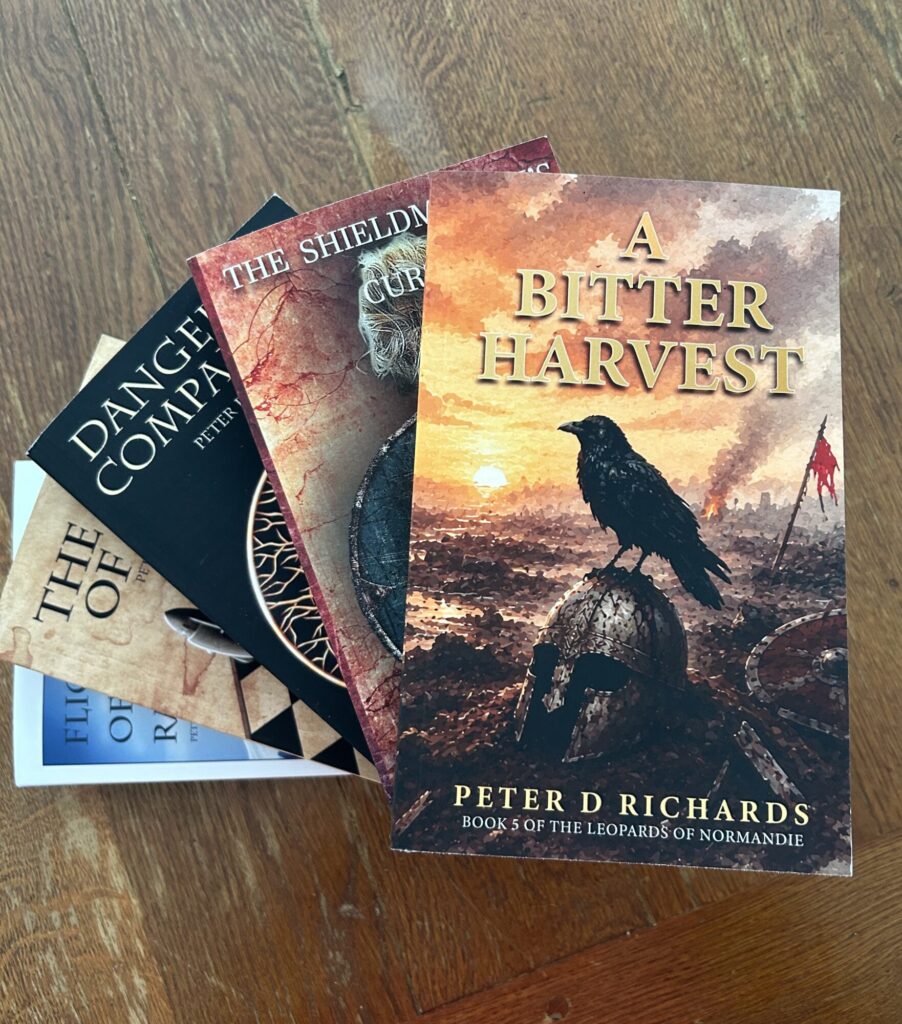
When we see William the Conqueror on the Tapestry, he is often a looming, commanding figure on horseback. In the books, we understand why. Through deep immersion in Norman history, I tried to show William not as a caricature of ambition, but as a man haunted by the insecurity of his illegitimate birth, driving himself and his duchy with a ruthless efficiency that the Tapestry merely hints at.
Similarly, Harold Godwinson is transformed from the tragic, oath-breaking figure of Norman propaganda into a complex statesman torn between personal honour and national necessity. By inhabiting their minds, the series moves beyond the Tapestry’s bias. When Harold swears his infamous oath to William over holy relics, the linen shows a static act. The saga shows the inner turmoil, the duress, and the political trap William set, making the scene resonate with dramatic irony.
Cracking the Linen Code: Explaining the Mysteries
Perhaps the most gratifying part of weaving this saga was using fictional narrative to propose logical solutions to the Tapestry’s most enduring riddles.
Consider the puzzling panel early in the narrative, depicting a lone woman with the inscription, “Where a certain clerk and Aelfgyva…“ followed by an image of a cleric striking her. History has no definitive answer as to who this woman was or what she did. It is a fascinating mystery.
In The Leopards of Normandie, I integrated this specific “unexplained” moment directly into the broader political intrigue. By giving Aelfgyva a concrete role within the complex mesh of Anglo-Norman relations, I provided a solution that is both dramatically satisfying and historically plausible. I treat the panel as a clue, using the surrounding narrative to construct a “why” that fits perfectly with the known aftermath, turning a historical footnote into a driving force of the plot.
Furthermore, there is the great controversy of Harold’s death. The Tapestry includes the iconic phrase “Harold Rex Interfectus Est” (King Harold is slain) over a chaotic scene. Traditionally, viewers identify the figure with an arrow in his eye as the King. But right next to him is a warrior being hacked down by a Norman rider, also under the text. Historians have argued for centuries: Was it the arrow, perhaps a sword or even as this author posits, an axe