How the Vikings of Nuestria Became the Successful Normans
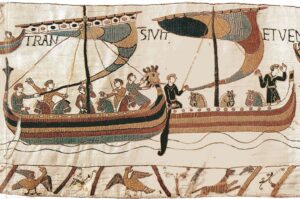
In the grand tapestry of medieval history, there is no transformation quite as spectacular—or as swift—as the evolution of the Norse raider into the Norman knight. In 911 AD, a fleet of weathered Viking longships sailed up the Seine, carrying a fierce, pagan host intent on plunder. Less than two centuries later, the descendants of those very same raiders rode across Europe as armoured, French-speaking Christian warlords, reshaping the destinies of England, Sicily, and Antioch.
How did a band of Scandinavian pirates successfully transform themselves into the most sophisticated ruling elite of the Middle Ages? The answer lies not in what they discarded, but in how they adapted their core Norse DNA to conquer the feudal world.
The Great Metamorphosis: How Raiders Became Rulers
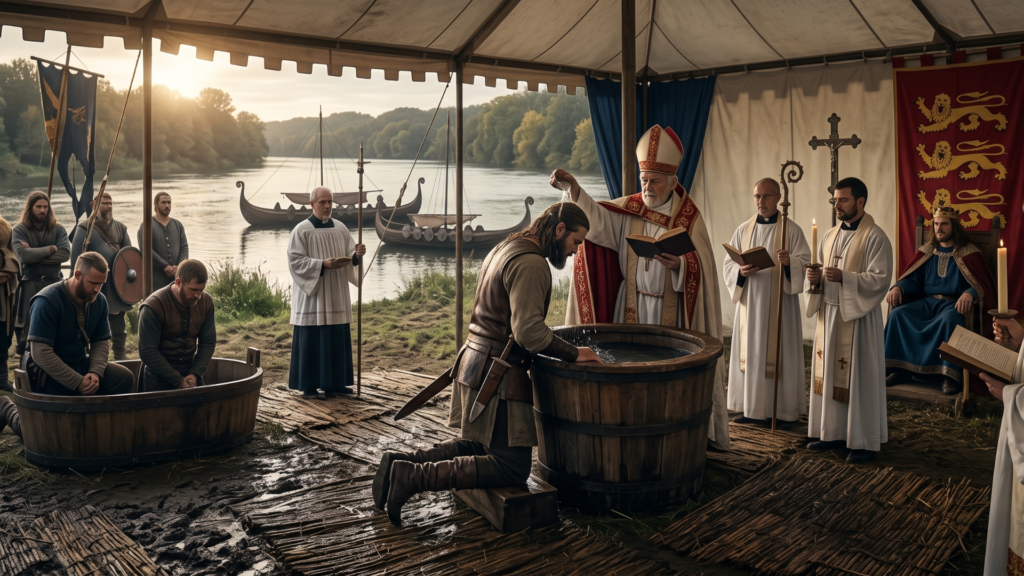
The Norman miracle began with a pragmatic bargain. Exhausted by decades of siege and slaughter, the West Frankish King Charles the Simple made a desperate political move: he granted the Viking chieftain Rollo the lands surrounding Rouen via the Treaty of Saint-Clair-sur-Epte. In exchange, Rollo agreed to defend the mouth of the Seine against other Vikings, convert to Christianity, and swear fealty to the French crown.
Where other conquerors might have forced their own culture onto the conquered population, Rollo and his men did something far more radical: they absorbed the local culture like a sponge.
To achieve this meteoric rise to legitimacy, the early Normans executed three strategic pivots:
Linguistic Assimilation: Within two generations, the Norse tongue was largely abandoned in the court of Rouen in favour of Old Norman French.
Feudal Structuring: The Vikings rapidly adopted the Carolingian model of governance. They traded the loose, clan-based chieftains’ councils for a highly centralised, strictly organised feudal duchy, transforming raw martial power into institutional law.
Religious Realpolitik: By embracing Latin Christianity, the Normans unlocked a powerful geopolitical tool. They gained access to the administrative literacy of the Church, secured the blessing of the Pope, and instantly stripped away the “pagan barbarian” label that had previously united Europe against them.
The Unbroken Thread: The Viking Traits That Built the Norman Empire
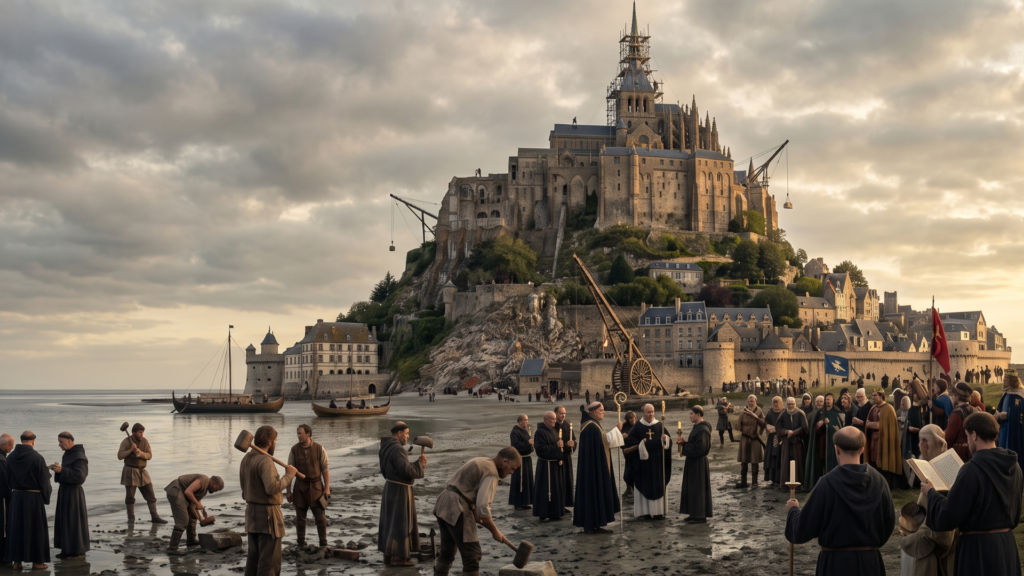
Though they wore French silk and spoke the language of the court, the Normans never truly stopped being Vikings. Beneath the polished veneer of chivalry beat a restless, predatory Norse heart. Several constant Viking traits remained entirely unchanged as the Normans rose to global prominence.
1. Radical Adaptability (The Chameleon Trait)
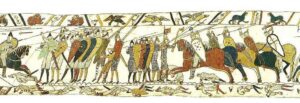
The defining characteristic of the Viking age was the ability to thrive in any environment, from the frozen fjords of Norway to the bustling markets of Constantinople. The Normans inherited this chameleon-like quality in its purest form. When they realised that the flat, open plains of northern France favoured the warhorse over the longship, they didn’t fight the terrain—they mastered it. They discarded the traditional infantry shield wall and engineered the most devastating shock-cavalry tactic Europe had ever seen.
2. Insatiable Expansionist Restlessness
The old Norse hunger for land, wealth, and renown (orðstírr) did not vanish once they acquired the borders of Normandy. The Duchy quickly became too small for the younger sons of Norman nobility. This hereditary restlessness drove men like William the Conqueror to cross the English Channel, and the iron-willed sons of Tancred of Hauteville to carve out kingdoms in southern Italy and Sicily. The Norman expansion was simply the Viking diaspora continuing under a new flag.
3. Cold, Ruthless Pragmatism
Vikings were fundamentally merchant-adventurers who understood the mathematics of power; they fought for profit, not just ideology. The Normans retained this calculating mindset. They were master consolidators of power. When they conquered a territory, they routinely kept the best existing administrative systems intact—utilizing Anglo-Saxon tax registers in England and Greek-Arabic bureaucracies in Sicily—while mercilessly crushing any native rebellion with terrifying, systematic efficiency.
4. Masterful Logistical and Combined Arms Vision
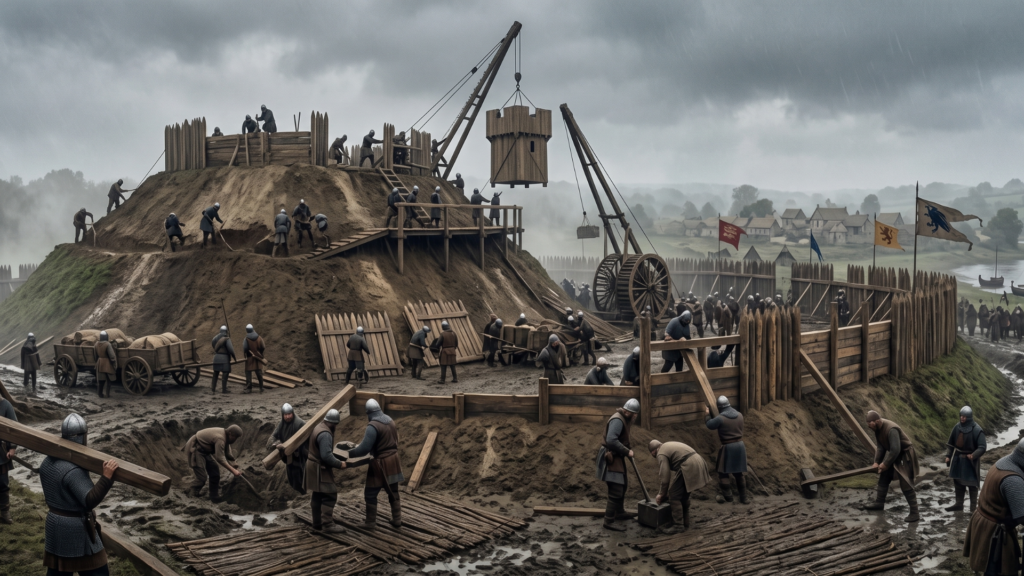
The Vikings’ supreme mastery of naval logistics allowed them to strike anywhere with total surprise. The Normans translated this logistical genius to land warfare. Their rapid construction of prefabricated wooden motte-and-bailey castles to lock down conquered English territories was a direct evolution of the temporary fortified camps (longphorts) their Viking ancestors used to hold the riverbanks of Ireland and France.
The Ultimate Shape-Shifters
The Vikings of Normandie did not become successful Normans by forgetting who they were; they became successful because they were the ultimate shape-shifters of the medieval world. They understood that an empire cannot be sustained by the axe alone. By marrying the fierce, opportunistic, and adaptable spirit of the Norse warrior with the sophisticated military and legal architecture of Western Europe, they created an unstoppable hybrid culture.
The story of the Normans is the ultimate testament to the enduring legacy of the Viking Age—a lineage of apex predators who climbed off the dragon ships, mounted the warhorse, and rode straight into the pages of immortal history.