How the Norman Conquest Transformed the English Diet
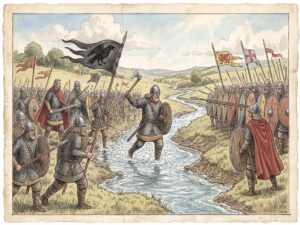
When William the Conqueror marched his army to the foot of Senlac Hill in 1066, he brought more than heavy cavalry, stone castles, and feudal governance. He unwittingly initiated a fundamental transformation of the English kitchen. The Norman Conquest did not merely rewrite England’s political landscape; it permanently altered what sat on the dining table, how food was prepared, and even the language used to describe it.
Crucially, this was not just a Gallic influence. Through their concurrent conquests in Southern Italy and Sicily—the vibrant “Kingdom in the Sun”—the Normans acted as a culinary conduit, filtering Arab, Byzantine, and Mediterranean flavours directly into the great halls of Northern Europe.
The Anglo-Saxon Table: Rustic, Fibre-Rich, and Seasonal
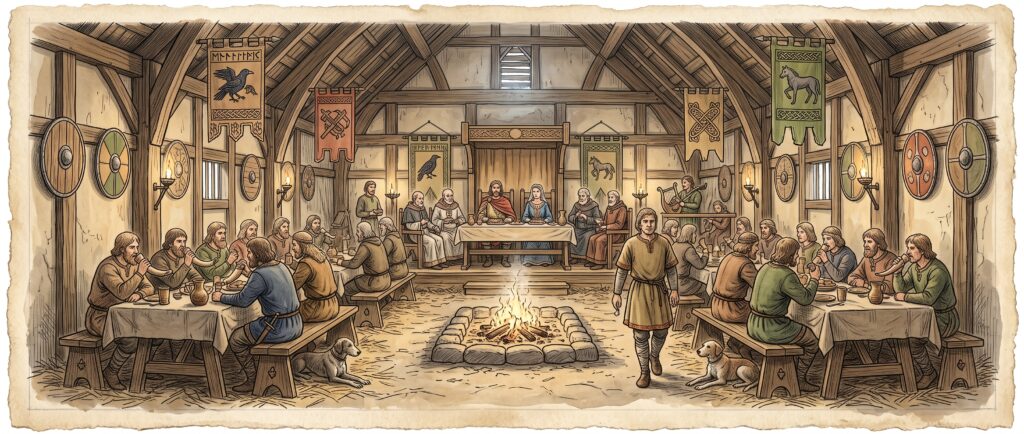
Before 1066, Anglo-Saxon culinary life revolved around local subsistence, seasonal harvests, and agricultural self-reliance. For the vast majority of the population, the daily diet was almost entirely plant-based, dense in dietary fibre, and centred around a dish known as pottage.
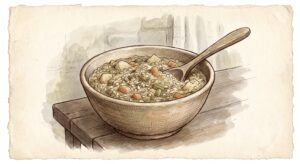
Pottage was a thick, slow-cooked stew composed of oats, barley, rye, field peas, and broad beans, combined with whatever root vegetables or gathered wild greens were available (leeks, onions, cabbage, garlic, and nettles).
Meat was a luxury, eaten primarily on high feast days or enjoyed by the landowning Anglo-Saxon nobility (ealdormen, thegns). When meat was consumed, it usually meant salted pork, poultry, mutton, or freshwater fish like eel and trout. Bread was dark and dense, baked from coarse grains like barley or rye, while the universal daily beverages were ale, mead, and cider.
The Norman Impact: Status, Language, and Restrictive Forest Laws
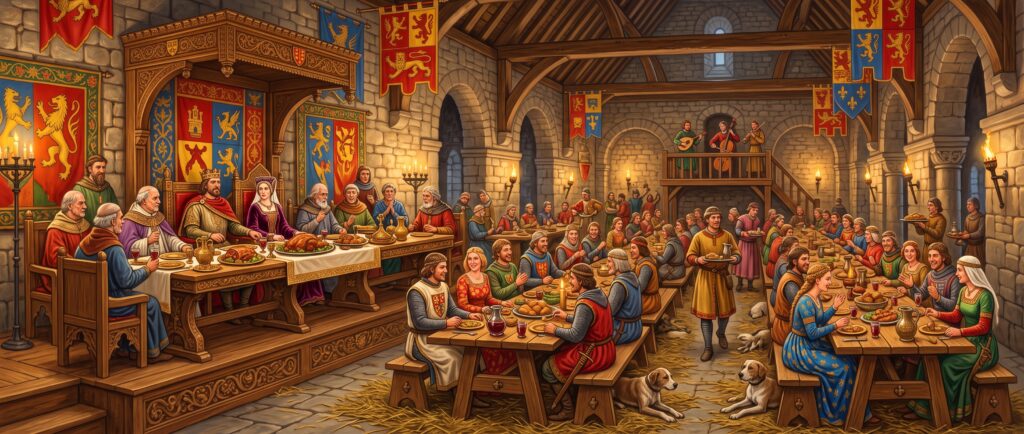
The Norman occupation reshaped English gastronomy by establishing sharp social divisions through food preparation, ingredient access and language.
1. The Language of the Table
The linguistic legacy of 1066 remains embedded in the English language today. Anglo-Saxon peasants raised live animals in the fields, retaining old Germanic terms: ox, cow, calf, swine, pig, and sheep. The Anglo-Norman ruling class consumed the cooked dishes served by servants, using Norman-French terms: beef (bœuf), veal (veau), pork (porc), and mutton (mouton). Food became an explicit marker of conqueror versus conquered.
2. Restricted Game and New Livestock
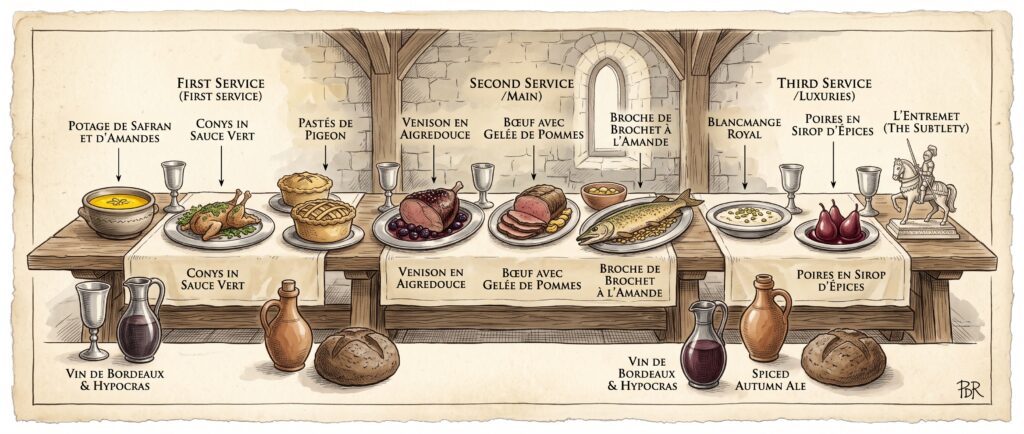
The Normans introduced controlled rabbit warrens (rabbits were then called conies) to England as a source of tender meat and fur, along with stone pigeon cotes (dovecotes) to secure fresh poultry throughout the winter. William I instituted strict Forest Laws, declaring vast tracts of woodland (such as the New Forest) as exclusive royal hunting grounds. Poaching wild deer or boar became a severe crime punishable by blinding or execution. This stripped ordinary Anglo-Saxons of traditional access to wild game, forcing them to rely almost exclusively on farmed crops and domestic livestock.
3. The Sicilian Connection: The ‘Kingdom in the Sun’
While Norman barons built castles in England, their Hauteville kinsmen conquered Southern Italy and Sicily. In Palermo, Norman rulers inherited a sophisticated Arab-Byzantine court culture enriched by centuries of Mediterranean agricultural innovation. The cultural changes invariably filtered back into society in Northern Europe by returning Norman soldiers and traders. Through royal marriages (such as Princess Joan of England marrying King William II of Sicily in 1177), monastic networks, and diplomatic trade, these Mediterranean luxuries migrated rapidly to Anglo-Norman courts in Rouen and London:
- Almond Milk as a Fast-Day Staple: Almond trees thrived in Sicilian groves. Once imported north, almond milk became the cornerstone of high-status medieval cooking. It provided a rich, creamy base for soups and sauces during Lent and fast days when animal milk and butter were strictly forbidden by the Church.
- The Agrodolce (Sweet-and-Sour) Profile: Arab-Sicilian cooks favoured contrasting sweet and sour flavours. Anglo-Norman court cooks adopted this style, pairing roasted meats with sauces made from wine vinegar or verjuice mixed with cane sugar, honey, raisins, and dried figs.
- Cane Sugar and Exotic Spices: Sugar imported from Mediterranean plantations was treated as an elite spice. It was used to glaze meats, sweeten spiced wines (hypocras), and build elaborate edible sugar sculptures (subtleties) for royal feasts.
- Saffron and Visual Aesthetics: Saffron was used both as a spice and a brilliant yellow dye. Food aesthetics became a flex of immense wealth: cooks gilded roasts with saffron washes or dyed almond-milk soups bright gold.
- Rice and Pasta: Imported Mediterranean rice was ground into flour to thicken almond-milk puddings (blancmange), while early forms of dried pasta (itrija) began appearing in elite Anglo-Norman recipe manuscripts.
Anglo-Saxon Peasant Diet vs Rich Norman Fayre
Culinary Feature | Anglo-Saxon Peasant Diet | Anglo-Norman Elite Court Diet |
Primary Grain Staple | Coarse barley, oats, dark rye bread | Refined wheat bread (manchet), pastry crusts, rice |
Main Protein Sources | Legumes (peas, beans), salted pork, river fish | Spit-roasted beef/mutton, rabbit, pigeon, marine fish |
Flavouring & Seasoning | Garden herbs (parsley, sage, garlic, mustard) | Imported spices (pepper, saffron, ginger), almond milk |
Flavour Profile | Savory, earthy, basic salted | Agrodolce (sweet-and-sour: fruit, vinegar, sugar) |
Primary Beverages | Ale, mead, apple cider | Imported wine, spiced wine (hypocras), fine ale |
Nutritional Assessment: Which Diet Was Healthier?
From a modern nutritional perspective, the Anglo-Saxon peasant diet was structurally healthier than the opulent diet of the Anglo-Norman nobility.
The Anglo-Saxon diet was exceptionally rich in soluble fibre, complex carbohydrates, and micronutrients derived from whole grains, legumes, and field greens. This promoted gut health and provided sustained energy with zero refined sugar or processed fats. Its main flaw was seasonal vulnerability: late winter often brought vitamin deficiencies if the previous autumn harvest was poor.
In comparison, Anglo-Norman court food was heavily weighted toward animal proteins, saturated fats, refined wheat, and high salt concentrations. The elite’s disdain for “common” ground vegetables, combined with high alcohol and sugar consumption, led to chronic health issues among the nobility, including gout, kidney stones, scurvy, and cardiovascular disease.
Even William the Conqueror, as he aged and reduced his active soldiering, fell prey to the rich Norman diet. He grew very heavy and rotund, to the point where King Philip I of France mockingly compared him to a woman lying-in (pregnant). William became so heavy that he even struggled to ride a horse. To combat this, he undertook an extreme liquid diet consisting almost entirely of alcohol.
The Lasting Culinary Legacy
The Norman Conquest transformed English food from local subsistence into an international culinary art. By merging Anglo-Saxon agricultural resilience with French technique and Mediterranean trade networks, the Conquest expanded the English palate and established the foundational food culture of the high Middle Ages. But was this a good thing for the defeated Anglo-Saxons? If you were able to ask them today, they might just have prefeered a bowl of pottage.