Crowns Won By Steel, Dynasties By Blood
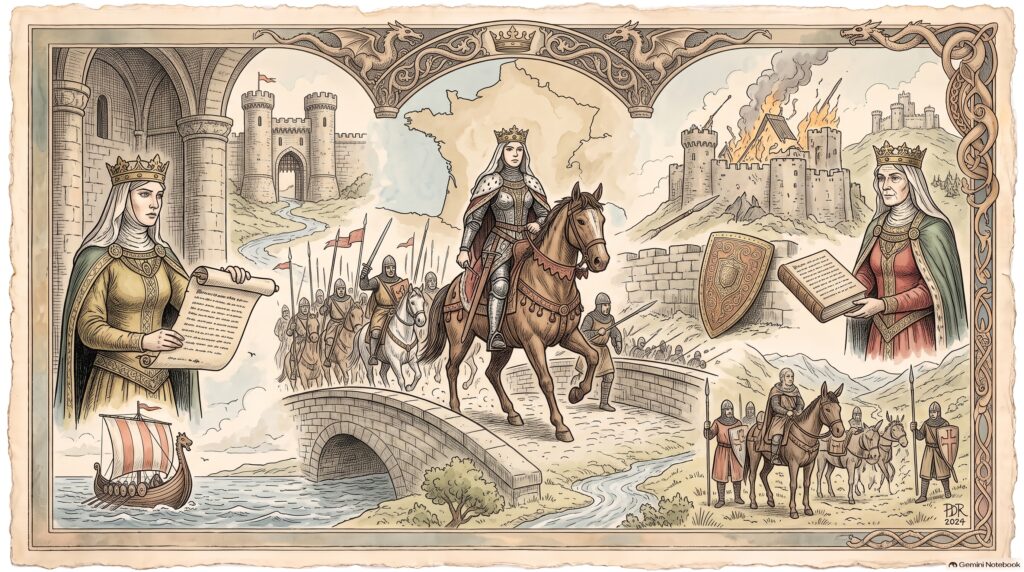
In the history of England there have been many outstanding Queens from Boudicca to Elizabeth II. But when we visualise English medieval history, the images that usually spring to mind are of kings in armour, swords clashing at Hastings, or barons signing the Magna Carta. For centuries, traditional narratives marginalised the roles of women, relegating them to the background as passive pawns in dynastic marriages.
However, the reality of the medieval period was far more complex. While the patriarchal structure was rigid, extraordinary women frequently rose to meet—and manipulate—the challenges of their time. These were not merely “wives of kings”; they were regents, power brokers, war-leaders, and dynastic architects. To understand the trajectory of medieval England, we must understand the women who held the reins of power. But, to decide who was the most influential woman is an even harder task.
Among the titans of this era, three stand tallest: Matilda of Flanders, Empress Matilda, and Eleanor of Aquitaine. Their lives represent the absolute highs of female power in the Middle Ages, as well as the crushing lows of the period’s patriarchal limitations.
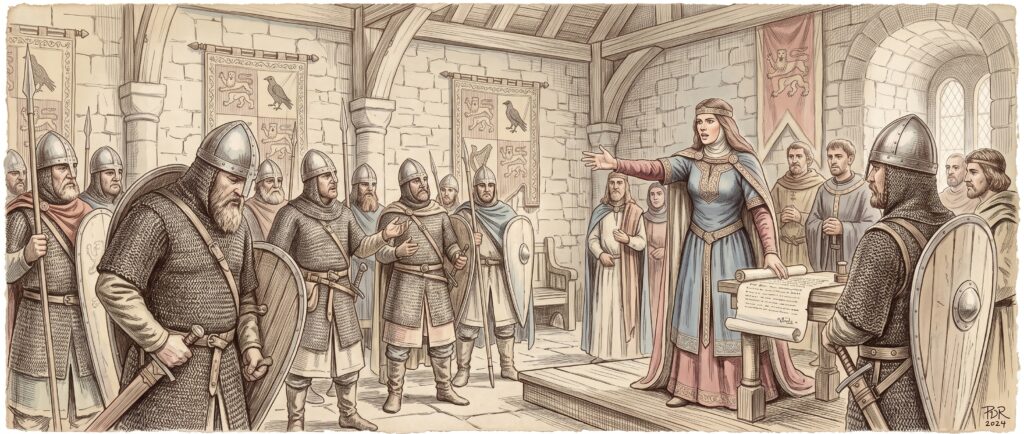
Matilda of Flanders (c. 1031–1083): The Iron Regent
Matilda of Flanders authorised power through her partnership; she was William the Conqueror’s essential political peer. Her lineage provided critical dynastic legitimacy, and her unique position meant she managed the core of the state while her husband conquered another.
The Highs: Trust and Coronation
Matilda’s greatest “high” was the unprecedented level of trust William placed in her. When he sailed for England in 1066 to seize the throne, he did not leave a council of barons to govern Normandy; he left Matilda. As regent, she managed the Duchy flawlessly, financing the invasion and ensuring William had a secure home base to return to. Her political acumen was so respected that upon William’s victory, he insisted she be crowned Queen of England. She was a crowned and anointed ruler, representing her active role in the dual governance of the Anglo-Norman realm.
The Lows: Familial Fracture
The lows of Matilda’s life were deeply personal and tied to the very power she helped build. Her greatest sorrow arose from the conflict between her husband and their eldest son, Robert Curthose. Matilda loved Robert and, despite William’s fury, secretly sent vast sums of money to support her son during his rebellions against his father. When William discovered this, it caused the only known serious rift in their remarkably strong marriage. The political giant was reduced to a mother caught between a husband she respected and a son she loved, dying in 1083 while the family was still fractured.
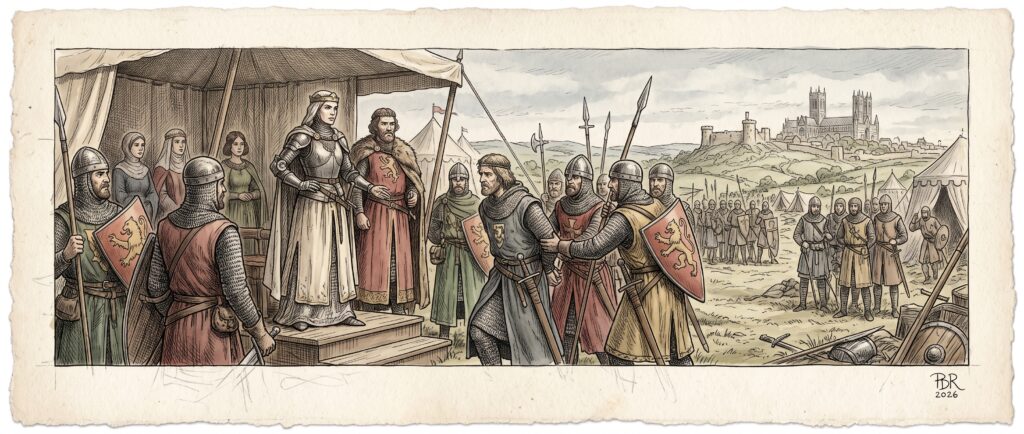
Empress Matilda (c. 1102–1167): The Uncrowned Queen
Matilda of Flanders authorised power through partnership, but her granddaughter, Empress Matilda, was the first woman to claim the right to rule England in her own right. She defied the ceiling, showing that a woman with a strong claim could command armies and challenge the very core of the feudal system.
The Highs: Inheritance and Defiance
Empress Matilda’s high point was the unprecedented political endorsement she received. Her father, Henry I, lacking a legitimate male heir, made his barons swear oaths recognising her as his successor. She was highly educated, politically experienced, and a natural war-leader. When her cousin Stephen seized the throne upon her father’s death, she did not retreat. In 1139, she invaded England, sparking the brutal civil war known as “The Anarchy,” proving her tactical capability by capturing Stephen himself at the Battle of Lincoln.
The Lows: The Stolen Crown and “The Anarchy”
Her low was the absolute ceiling she hit. Just as she was poised for coronation in London, she was rejected. While traditional history blamed her “arrogance,” the modern consensus points to the existential crisis her gender posed: the barons simply could not accept a woman as their feudal lord. They rebelled, forcing her to flee London. Despite her military successes, she was never crowned, and her cause foundered. Though she secured the throne for her son (the future Henry II), she lived her later years in Normandy, a constant, bitter reminder of the “High” she almost grasped.
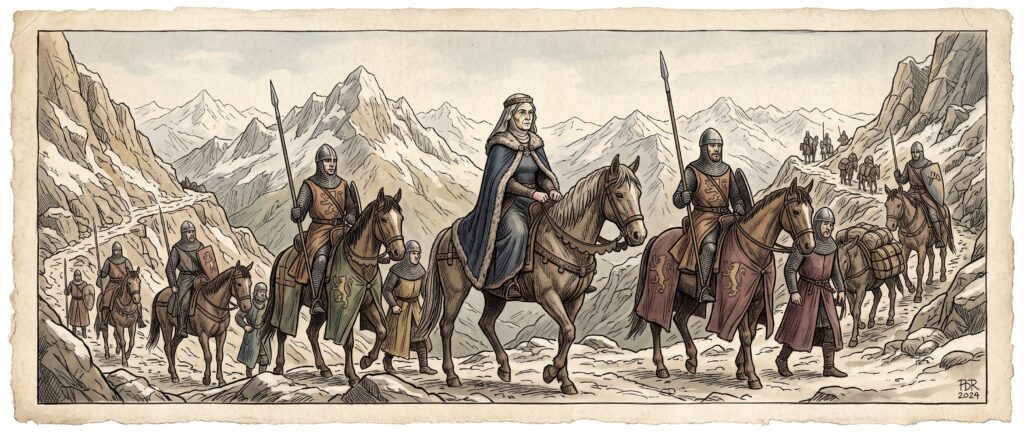
Eleanor of Aquitaine (c. 1122–1204): The Queen of Kings
If the Matildas were exercises in statecraft and dynastic struggle, Eleanor of Aquitaine was a force of nature. Wealthier and more politically significant in her own right than most kings, Eleanor inherited the vast Duchy of Aquitaine, making her the most desirable bride in Europe. Her life is unparalleled in medieval history: she was Queen of France and later Queen of England, and the mother to two iconic English kings, Richard the Lionheart and John Lackland.
The Highs: The Power Broker
Eleanor’s highs are spectacular and define a dynamic peer-to-peer power. Even after her turbulent divorce from the French King, she immediately married Henry II, creating the vast Angevin Empire. She was highly intelligent, a generous patron of the arts (fostering the culture of courtly love), and served as the effective ruler of England while her beloved son Richard was away on the Third Crusade. In her 70s, she crossed the Pyrenees to select a bride for the French Dauphin, securing alliances until her final years.
The Lows: Betrayal and Imprisonment
Her lows were equally spectacular. Her marriage to Henry II, initially a powerhouse union, devolved into a bitter feud. When Henry sidelined her politically and flaunted his mistresses, Eleanor incited their own sons to rebel against him in 1173. The rebellion failed, and Henry—incapable of executing his formidable wife—put her in prison. Eleanor spent nearly sixteen years under house arrest, moved from castle to castle, stripped of her freedom and Aquitaine until Henry’s death in 1189.
A Decisive Conclusion: Eleanor Stands Unrivalled
While all three women were formidable forces who shaped English history, analysing their high and low points to decide who was the most influential leads to a decisive conclusion.
We must look at who was able to best execute and authorise with autonomous and dynamic power.
Matilda of Flanders was a partner; her influence, while profound, was dependent on William’s trust and his gift of delegated authority. She managed the established state. Empress Matilda challenged the ceiling and was a war leader, yet her quest ultimately failed, though her son succeeded. Her power was a claim she had to defend, not an inheritance she could use dynamically as a peer.
Eleanor of Aquitaine is the definitive answer.
Eleanor possessed vast autonomous power as the independent Duchess of Aquitaine. She did not authorised influence through a partner; she operated as a peer-to-peer political broker across international borders. She defined the entire culture of an era (courtly love and patronage), managing complex diplomacy and direct warfare across two kingdoms, even crossing rugged mountains at age 70. Her influence was dynamic and lasting, shaping the vast Angevin state and creating a blueprint for autonomous female power that subsequent queens across Europe referenced. Her “lows”—imprisonment for inciting rebellion against her peer—originated from challenging the limits of that power, not from dependency. In a world structured to limit female agency, Eleanor of Aquitaine created her own peer-driven realm, and, I believe, remains unrivalled.