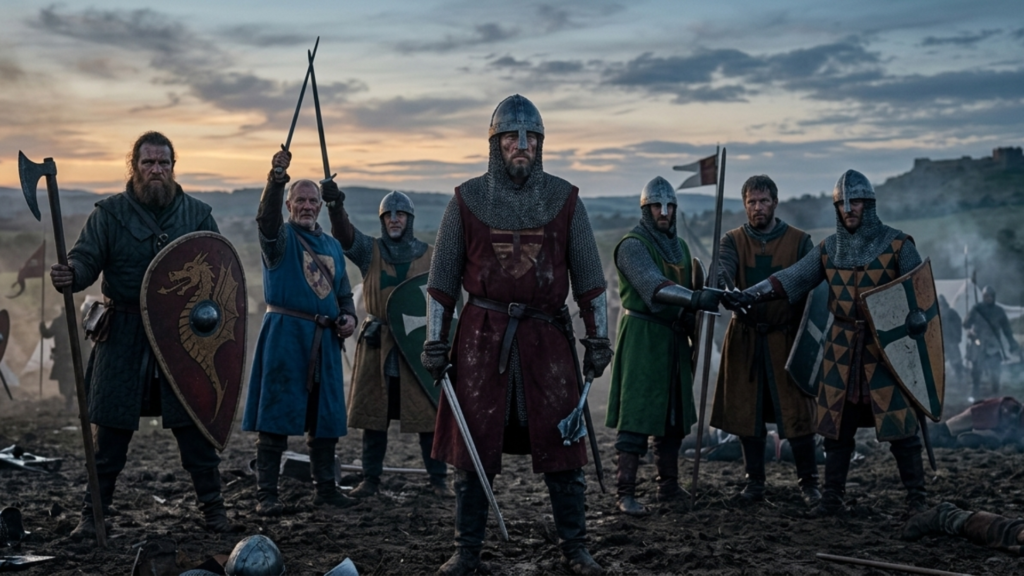
History books often paint the Norman Conquest of 1066 as a singular achievement—the masterstroke of one brilliant, ruthless Duke who dragged England into a new era by force of will. But look past the Hollywood polish and dig into the 11th-century dirt, and you find a different reality. William the Bastard did not cross the Narrow Sea alone. He was backed by a core syndicate of fiercely competent, ruthlessly loyal men.
These were his inner circle, his childhood friends, and his blood relatives. They were the men who looked at the terrifying prospect of invading a unified Anglo-Saxon kingdom and said, “Build the ships.” To understand the true “grit and steel” of The Leopards of Normandie era, we must meet the iron brotherhood who stood shoulder-to-shoulder with the Conqueror, fought and defeated the Saxon shield wall at Hastings, and reaped the spoils of a conquered nation.
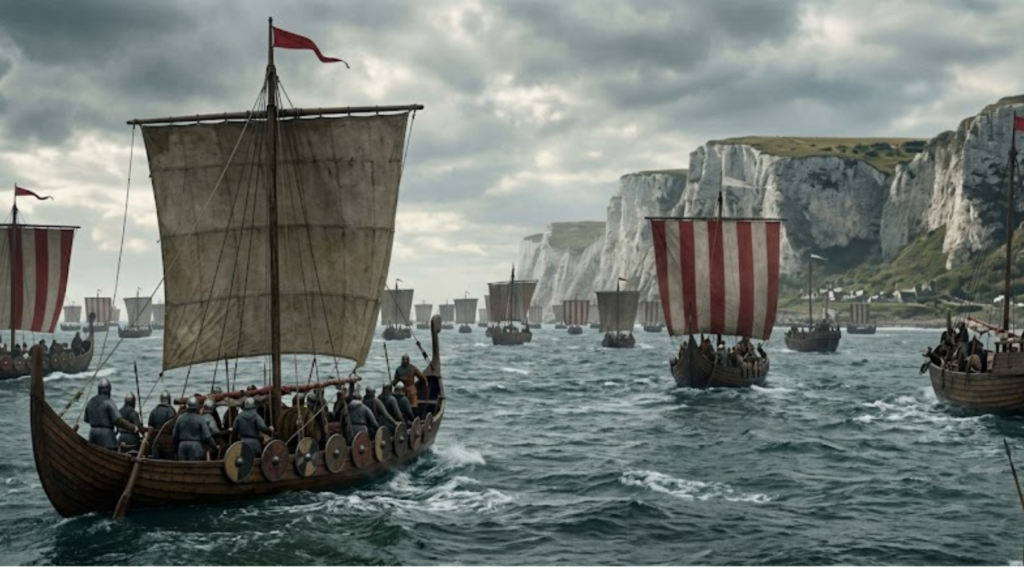
1. William FitzOsbern: The Right Hand
If William had a true brother-in-arms, it was William FitzOsbern. The son of Duke William’s early guardian, FitzOsbern was the Duke’s closest childhood friend.
- Major Contributions: When the Norman barons balked at the sheer madness of invading England, it was FitzOsbern who shamed, cajoled, and convinced them to back their Duke. He personally contributed a massive fleet of 60 ships to the invasion force. At the Battle of Hastings, he fought alongside the Duke as one of the primary battlefield commanders, steadying the line when rumors of William’s death threatened to rout the army.
- The Reward: William rewarded his lifelong friend with unprecedented power. FitzOsbern was made Earl of Hereford and given vast estates along the Welsh Marches. More importantly, when William returned to Normandy in 1067 to secure his ducal lands, he left FitzOsbern as co-Regent of England, tasked with building the first wave of brutal motte-and-bailey castles to suppress the English population.
- His Fate: FitzOsbern’s iron life met a violent end. In 1071, he traveled to Flanders to assist Richilde, Countess of Hainaut, in a civil war. He was killed at the Battle of Cassel, leaving his vast English lands to be split among his sons—one of whom would later rebel against the Crown.
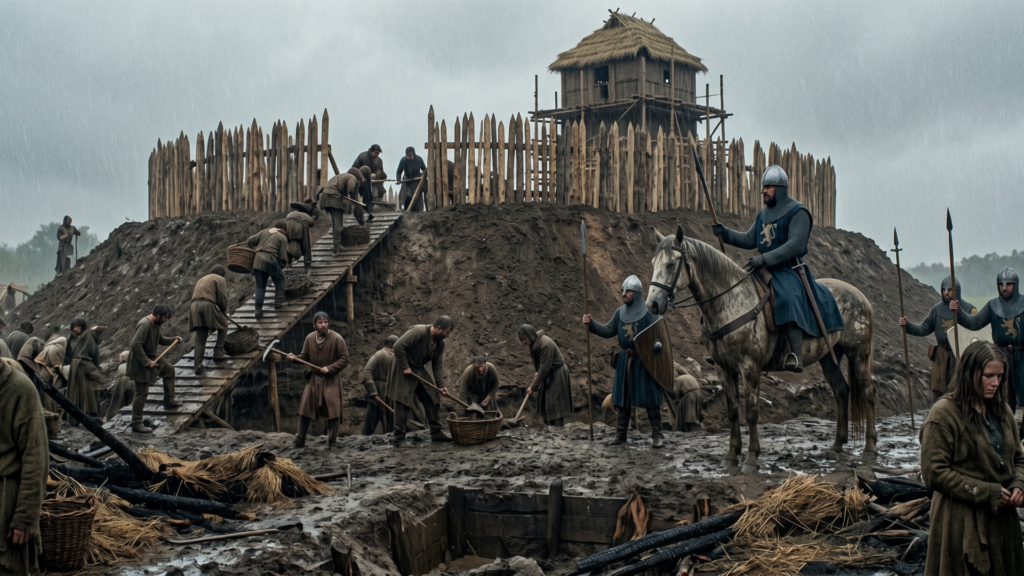
2. Odo of Bayeux: The Warrior Bishop
Odo was William’s half-brother, sharing the same mother, Herleva. Appointed Bishop of Bayeux at a ridiculously young age, Odo was a man of the church in name, but a warlord in spirit.
- Major Contributions: Odo was a massive financial and military engine for the 1066 invasion, bankrolling and providing 100 ships for the fleet. Because Christian canon law forbade priests from shedding blood with a sword, Odo famously wielded a heavy wooden mace at Hastings. The Bayeux Tapestry (which Odo himself likely commissioned) depicts him turning the tide of the battle, rallying panicked young Norman knights back into the fray.
- The Reward: Odo became the second richest man in England, eclipsed only by the King. He was created Earl of Kent and seized vast swaths of land across multiple counties. Like FitzOsbern, he served as Regent of England during William’s absences, ruling with a terrifying lack of mercy.
- His Fate: Odo’s unchecked ambition eventually became his undoing. In 1082, he was abruptly arrested and imprisoned by William, allegedly for trying to fund a military expedition to Rome to secure the Papacy for himself. He remained imprisoned until William’s deathbed pardon in 1087. Odo later joined the First Crusade and died in Palermo, Sicily, in 1097.
3. Robert, Count of Mortain: The Quiet Power
While Odo was loud and ambitious, his full brother (and William’s other half-brother), Robert of Mortain, was the quiet anchor of the family enterprise.
- Major Contributions: Robert was arguably the largest single contributor to the invasion fleet, delivering a staggering 120 ships. He was a steadfast commander at Hastings, quietly securing the flanks while his brother and the Duke commanded the center.
- The Reward: Robert’s loyalty was rewarded with the total domination of the southwest. He was made Earl of Cornwall and granted virtually the entire county, alongside hundreds of manors across England. He became the largest landholder in the Domesday Book, creating a virtually impenetrable feudal fiefdom.
- His Fate: Unlike many of his contemporaries, Robert survived the turbulent early years of the conquest, outliving Duke William. He died peacefully in 1090, passing his colossal wealth to his son, William.
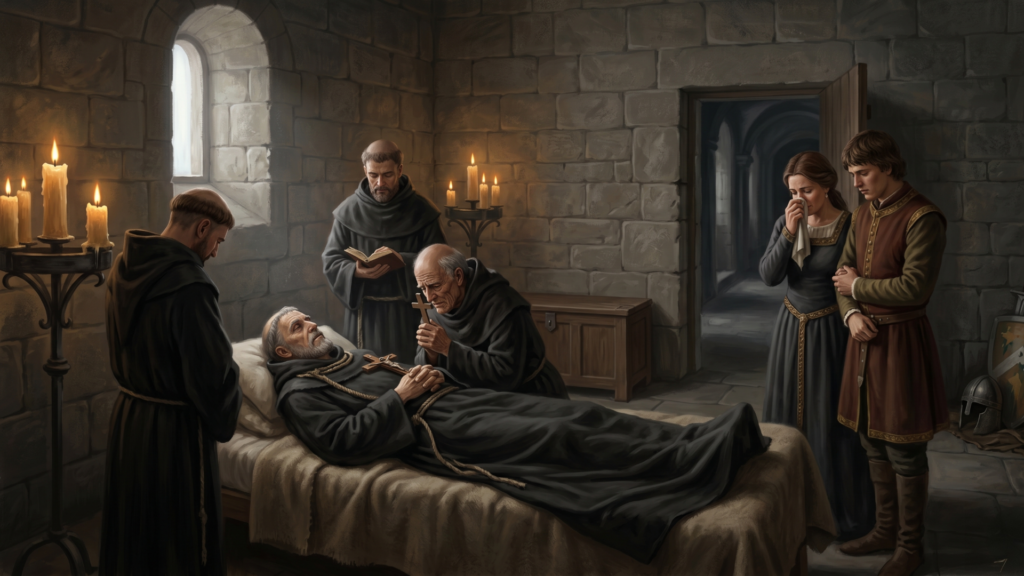
4. Roger de Montgomery: The Vanguard of Shrewsbury
A powerful Norman lord related to the ducal family, Roger de Montgomery was a trusted advisor whom William counted on for both military might and administrative stability.
- Major Contributions: Roger did not actually fight at Hastings; William trusted him so highly that he left him behind in Normandy to co-govern the Duchy alongside Duchess Matilda while the army was away. However, Roger funded 60 ships for the invasion and crossed the Channel in 1067 to help subdue the fierce rebellions of the wild Welsh borders.
- The Reward: Roger was made Earl of Shrewsbury and given massive territories along the Shropshire border. He was tasked with securing the realm against Welsh incursions, which he did by constructing an aggressive network of fortifications.
- His Fate: Roger lived a long, highly successful life as one of the premier “Marcher Lords.” On his deathbed in 1094, following a long-standing Norman custom, he entered monastic orders at Shrewsbury Abbey—which he had founded—and died days later as a monk.
Conclusion: The Legacy of the Syndicate
The fates of these men show the raw reality of the Norman Conquest. William’s companions were not mere subordinates; they were stakeholders in a dangerous, high-risk venture. The earldoms they were granted along the frontiers—Hereford, Shrewsbury, and Cornwall—were designed to act as a defensive shield wall for the new English kingdom.
Through blood, iron, and a calculated distribution of the “Great Land Grab,” William and his companions successfully turned a desperate cross-Channel raid into a permanent administrative dynasty that would echo down the centuries.