Re-evaluating 1066
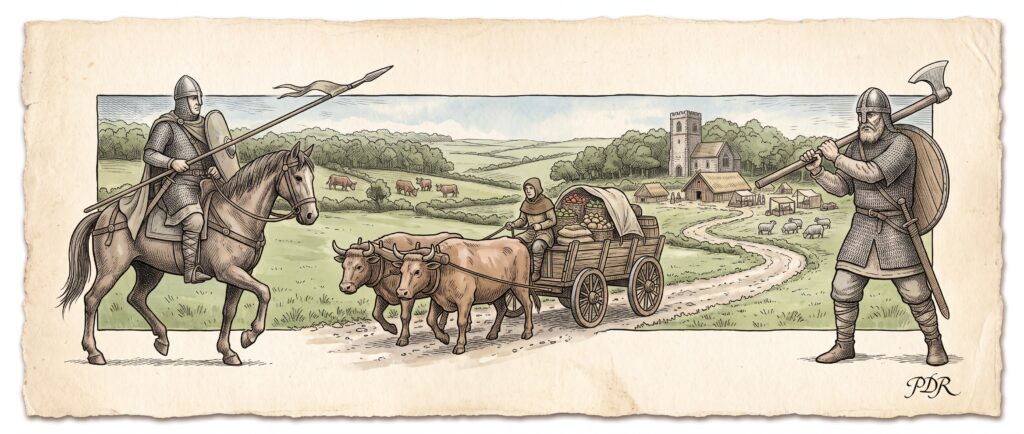
For centuries, historians have argued over the smoking ruins of Senlac Hill (the Battle of Hastings). On one side stands the romantic myth of the “Norman Yoke”—the idea that a golden age of Anglo-Saxon liberty, ruled by the pragmatic Godwinson dynasty, was brutally crushed by foreign thugs. On the other stands the narrative of Norman modernisation—that William the Bastard brought order, continental sophistication, and bureaucratic genius to an insular realm on the brink of chaotic disintegration.
Were the Anglo-Saxons of 1066 tragic victims of brutal conquest, or were they lucky to be dragged into the high medieval world? The answer depends entirely on whether you were wearing a crown or pushing a plow.
The Case for the Norman Yoke: Brutality, Subjugation, and Lost Liberty
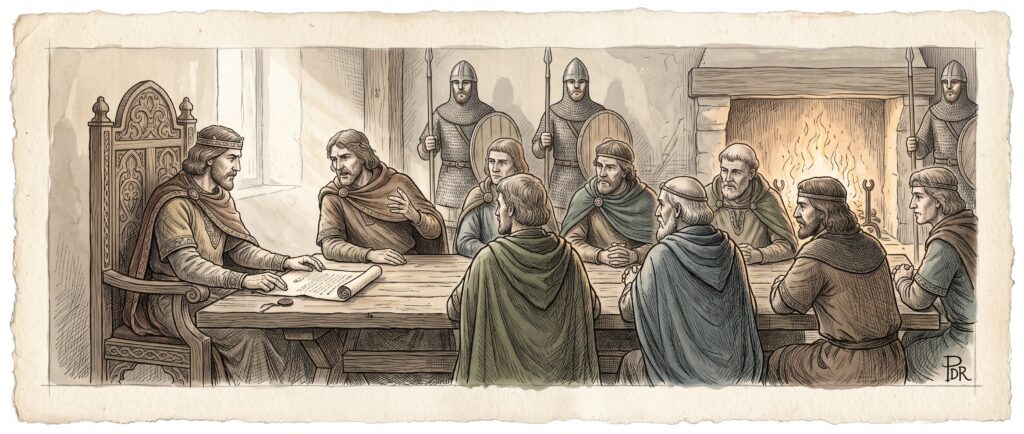
To call the events of 1066 a catastrophe for the native population is no overstatement. The Anglo-Saxon state under King Harold Godwinson was not a primitive wilderness; it possessed a sophisticated local court system (shires and hundreds), an effective silver coinage system, and a tradition of governance represented by the Witenagemot (the Witan)—the council of wise men who held the power to elect and advise kings.
The Conquest smashed this political ecosystem to pieces:
The Demise of the Native Elite: By 1086, less than 8% of English land remained in Anglo-Saxon hands. An entire native aristocracy was executed, exiled, or reduced to landless obscurity, replaced by roughly 8,000 Franco-Norman adventurers.
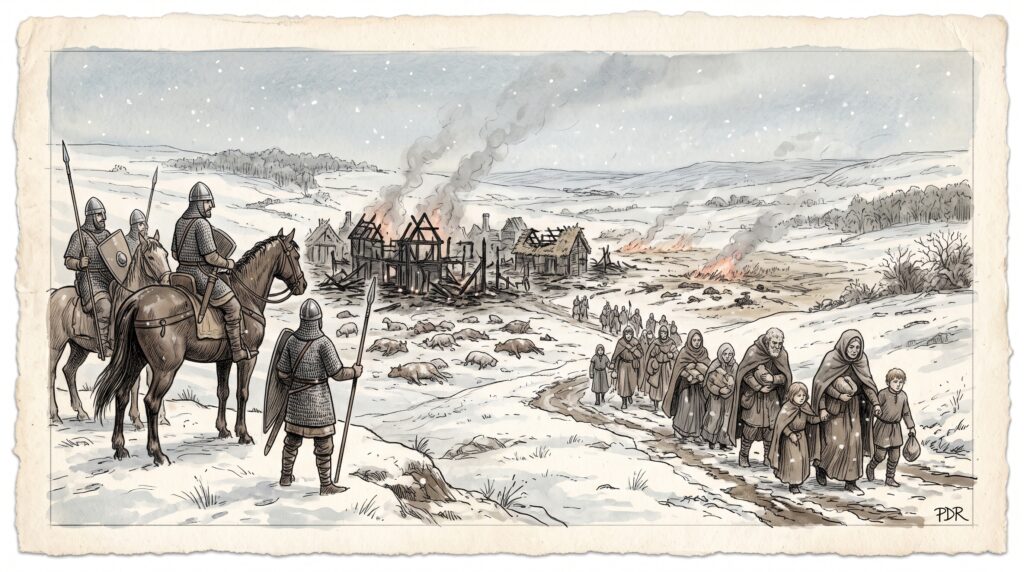
The Harrying of the North (1069–1070): To crush resistance in Northumbria, William deployed scorched-earth tactics. Crops were burned, livestock slaughtered, and fields salted. Contemporary chroniclers estimated over 100,000 people died of famine—a devastating campaign that left vast swathes of northern England desolate for generations.
The Depression of the Peasantry:
Before 1066, the Anglo-Saxon ceorl (free peasant) enjoyed a degree of landowning freedom and legal standing. Under the rigid feudal pyramid introduced by the Normans, free peasants were systematically depressed into serfdom and villeinage, bound directly to the soil of their new foreign lords.
The Case for a New Order: Administrative Genius and Continental Integration
Yet, to paint pre-Conquest England as a pristine utopia of freedom is to ignore the structural flaws of the late Anglo-Saxon state. The realm was perpetually unstable, wracked by factional rivalries between the great Earldoms of Wessex, Mercia, and Northumbria. The Godwinson family ruled through raw force, land accumulation, and tenuous compromises.
William brought a razor-sharp efficiency to statecraft:
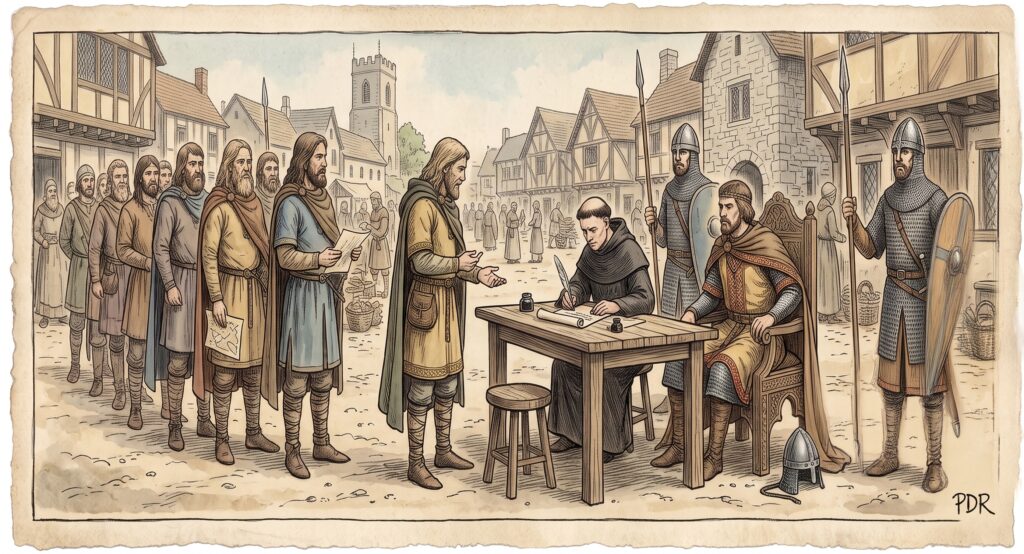
The Domesday Book (1086): An administrative marvel unmatched in Europe for centuries. William ordered a comprehensive survey of every hide of land, head of cattle, and penny of tax obligation across England. It was not merely an instrument of extraction; it was an unprecedented triumph of centralised governance.
Ecclesiastical Reform & Papal Alignment:
Riding into battle under the Papal Banner blessed by Pope Alexander II, William positioned the conquest as a moral reform. Under Lanfranc of Pavin, Archbishop of Canterbury, the Norman Church reorganised corrupt monasteries, established canon law courts, and aligned England with the intellectual mainstream of Western Europe.
Defensive Transformation:
The Normans replaced wooden halls with formidable stone keep castles and soaring Romanesque cathedrals (such as Durham and Ely), securing the realm against Scandinavian invasion and establishing a permanent military deterrent.
Anglo-Saxon vs. Norman Rule
Pre- & Post- | Anglo-Saxon England (Godwinson Era) | Norman England (William I) |
Governance | Decentralised; powerful regional Earls; Witenagemot advice. | Highly centralised feudal hierarchy; direct oaths to the Crown. |
Peasant Rights | Mixed; free ceorls held land rights alongside chattel slaves. | Widespread serfdom/villeinage; formal decline of chattel slavery. |
Administration | Advanced writ system; local shire-reeves (sheriffs). | Weaponised Saxon administrative tools into the Domesday Book. |
Church & Culture | Insular, Scandinavian-leaning, monastic traditionalism. | Continental Latin alignment, Papal reform, stone cathedrals. |
Military Structure | Select fyrd levies and elite housecarl infantry. | Heavy knightly cavalry, castle networks, disciplined feudal service. |
The Historical Verdict: Ruthless Efficiency Built on Saxon Bones
The narrative of 1066 is neither a pure tragedy nor a triumphant liberation; it is a story of ruthless synthesis. William did not destroy the Anglo-Saxon administrative apparatus—he seized it, refined it, and used it to enforce his will. The very shires, sheriffs, and tax-collecting mechanisms that made the Domesday Book possible were Saxon inventions.
What the Normans added was raw organisational discipline and a continental perspective. They eliminated the centuries-old threat of Viking conquest, bound England to the political fate of Europe, and built a centralised monarchy capable of projecting power across the Channel.
Was an age of liberty crushed? Yes, for the Anglo-Saxon landholders and ceorls who saw their rights eroded and their land seized. But out of that brutal military occupation emerged an Anglo-Norman state whose administrative efficiency, legal reforms, and central authority laid the very groundwork for modern Britain.