
The Fate of the Anglo-Saxon Diaspora After 1066
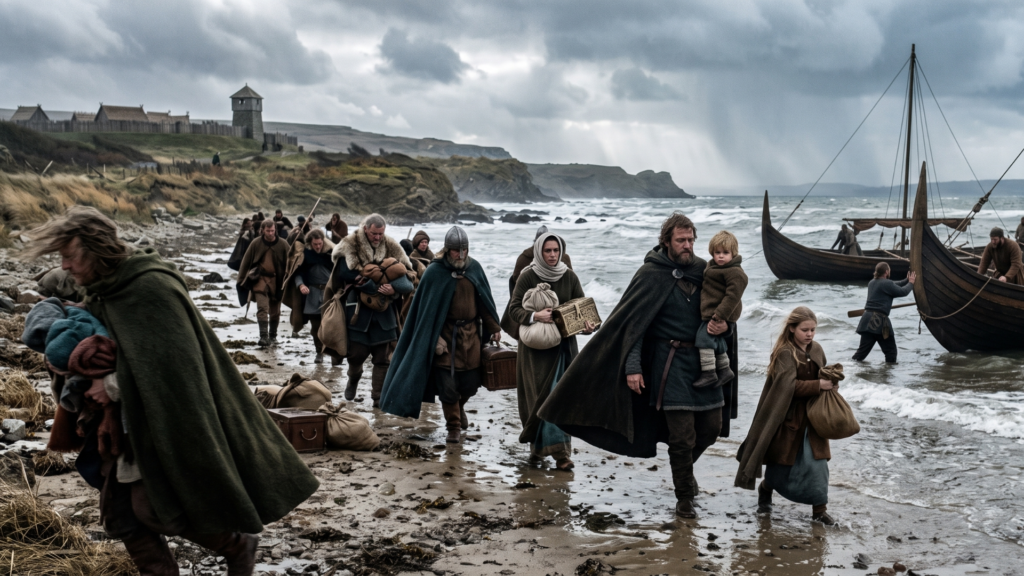
The year 1066 is often remembered for a single, pivotal day on a Sussex hillside—the clash of shield walls at Hastings, the fall of King Harold Godwinson, and the triumph of William the Conqueror. Yet, the Battle of Hastings was merely the prologue to a far broader socio-political cataclysm. In the decades that followed, native Anglo-Saxon society was systematically dismantled.
While stone Norman castles rose like iron beacons across the landscape, the people who had called England home for six centuries faced two distinct, painful fates: exile across the known world for the elite, or subjugation on the lands their ancestors had plowed for the masses left behind.
The Exiled Nobility: Flight, Mercenaries, and “New England”
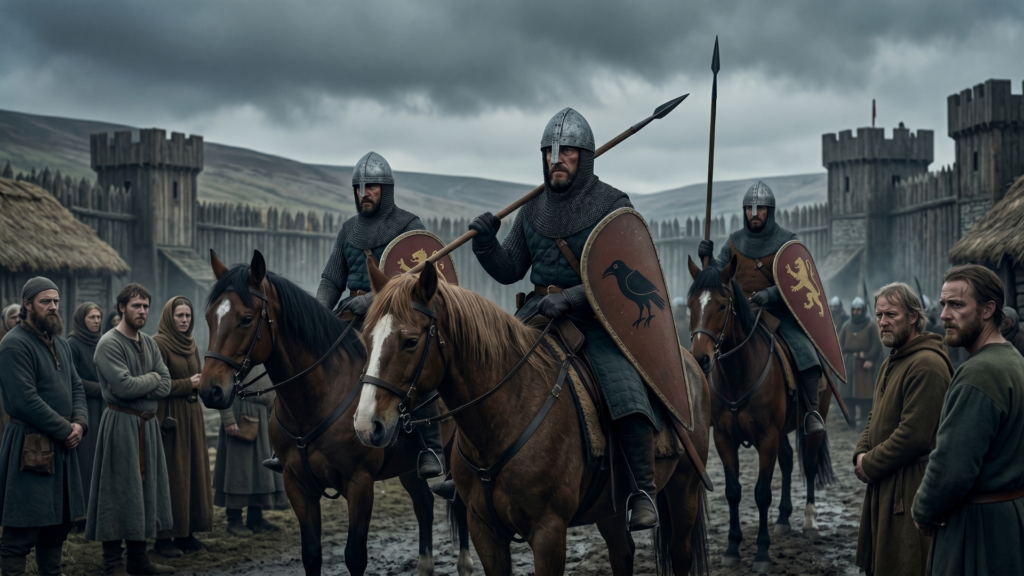
For the surviving Anglo-Saxon aristocracy, life under Norman rule quickly proved untenable. Following a series of crushed rebellions across the Midlands, the North, and the Fens, the native elite recognised that submission meant disinheritance, imprisonment, or death. Thousands chose flight over servitude.
This sparked one of the most remarkable, yet underreported, diasporas of the Middle Ages:
The Celtic & Scandinavian Fringes: Many nobles sought immediate refuge in Scotland and Ireland. Margaret, sister of the un-crowned Anglo-Saxon claimant Edgar Ætheling, married King Malcolm III of Scotland, weaving English royal lineage directly into the Scottish monarchy. Others fled to Denmark and Norway, appealing to Scandinavian kin for military aid.
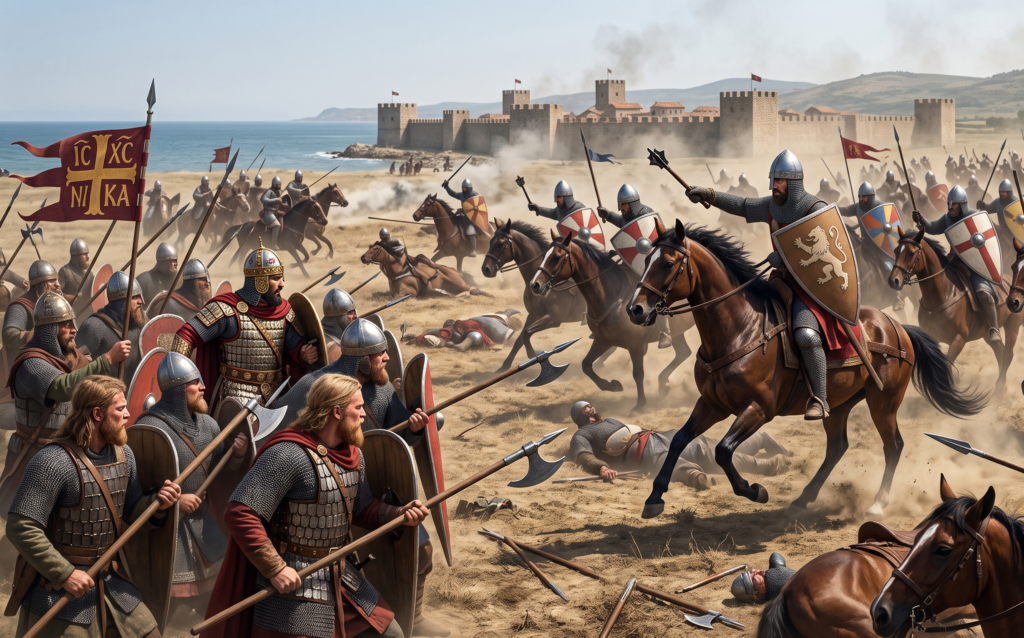
The Exodus to Byzantium: The most extraordinary chapter of the diaspora unfolded far to the east. By the late 1070s, a massive fleet of dispossessed Anglo-Saxon warriors and their families sailed into the Mediterranean, bound for Constantinople.
The Varangian Guard: The Byzantine Emperor, Alexios I Comnenus, eagerly inducted these seasoned housecarls into his elite Varangian Guard. The English became the primary core of the Emperor’s personal bodyguard. In a dramatic twist of history, these exiles faced their Norman foes once more at the Battle of Dyrrhachium in 1081.
Some medieval chroniclers even record that Alexios granted the English land along the shores of the Black Sea, where they established a settlement named Nova Anglia (New England), complete with towns named after London and York.
The Peasantry Left Behind: Conquest, Bondage, and the Harrying
While the martial elite possessed the mobility and resources to flee, the vast majority of the population—the English peasantry—had no such escape. For the ceorls (free farmers), the Norman Conquest was a slow-motion disaster that stripped away centuries of customary rights.
Before 1066, Anglo-Saxon society maintained a relatively fluid social hierarchy. While slavery existed, a significant portion of the peasantry enjoyed land ownership, local legal standing, and personal freedom. Under the rigid Norman feudal system, this vanished.
The Domesday Book of 1086 reveals a stark reality: within twenty years of Hastings, virtually all land in England had been redistributed to roughly 180 Norman barons and churchmen. Less than 5% of English land remained in native hands.
For the ordinary peasant, this meant:
Reduction to Serfdom: Free ceorls were reclassified as villeins or serfs, legally bound to the land and subject to the authority of a foreign, French-speaking lord.
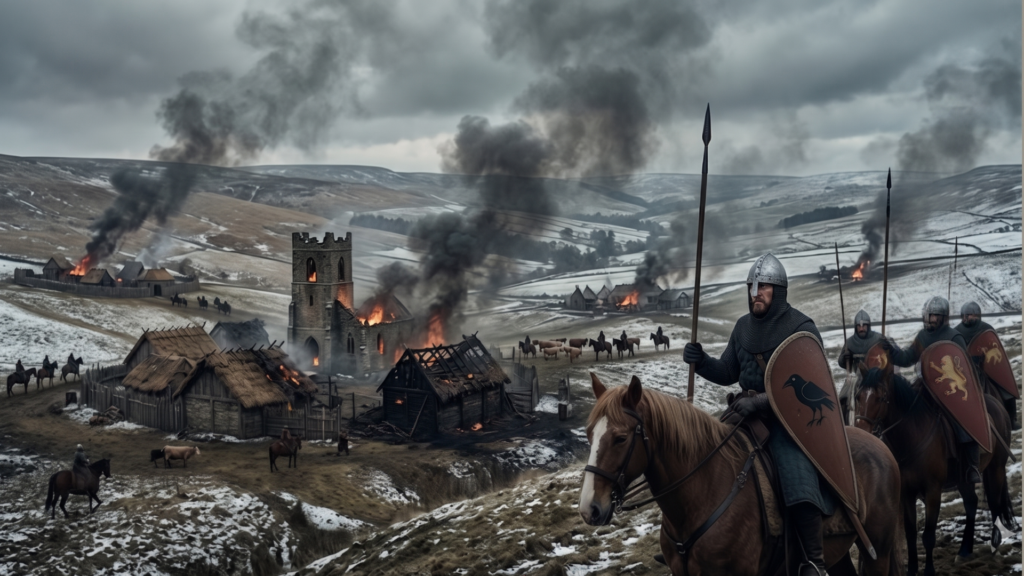
Devastation and Famine: The brutal scorched-earth tactics deployed by William—most notoriously the Harrying of the North in the winter of 1069–1070—destroyed entire regions. Fields were salted, livestock slaughtered, and tens of thousands starved to death, permanently altering the demographic landscape of northern England.
The Few Lucky Anglo-Saxons Who Made It
While the Domesday Book paints a grim picture of systematic disinheritance, a tiny, fascinating minority of native English managed to survive—and even thrive—under Norman rule. These survivors were the rare exceptions that proved the rule. To keep their status, land, or lives, they relied on extreme wealth, spiritual authority, or rapid assimilation.
Bishop Wulfstan of Worcester: The most prominent survivor in the Church was Wulfstan, the Bishop of Worcester. While William methodically purged native English clergy and replaced them with continental prelates, Wulfstan kept his see. Renowned for his genuine piety, administrative competence, and willingness to cooperate with the new regime, Wulfstan proved indispensable. He was the only native Anglo-Saxon bishop left in office by the time of his death in 1095.
Thurkill of Warwick: One of the very few English magnates who retained vast estates recorded in the Domesday Book. Thurkill survived by refusing to fight alongside King Harold at Hastings, swearing early fealty to William, and providing military service to the new king. His family assimilated so thoroughly that his descendants adopted the Norman-style surname “Arden”—creating a lineage that endured for centuries (eventually counting Mary Arden, William Shakespeare’s mother, among its descendants).
Colswein of Lincoln: An enigmatic success story, Colswein was a native Englishman who actually expanded his land holdings after 1066. Operating in Lincolnshire, he built castles, redeveloped urban property, and leased land to incoming Normans. He proved that an Englishman with business acumen and an early willingness to collaborate could navigate the new capitalist feudalism.
Royal and Noble Women: Some high-status Anglo-Saxon women retained wealth or power through strategic marriages or royal protection. Edith of Wessex, widow of Edward the Confessor and sister of Harold Godwinson, was allowed to keep her extensive dower lands and lived in wealth until her death in 1075. Other noblewomen were married off to Norman barons, creating a bridge between the old elite and the new conquerors.
For these few “lucky” Anglo-Saxons, survival meant shedding their old political loyalties instantly. They adapted to French customs, spoke Anglo-Norman in public, and ensured their children integrated fully into the new ruling class.
The Balance Sheet: Winners and Losers
The aftermath of 1066 created clear, undeniable divides across the medieval world:
The Winners
The Norman Elite: A relatively small ducal aristocracy transformed into a trans-channel empire, acquiring vast wealth, land, and institutional control.
The Byzantine Empire: Acquired thousands of fiercely loyal, battle-hardened Anglo-Saxon elite troops who defended the imperial throne for generations.
The Continental Church: The Papacy successfully brought the English Church under tighter Roman and continental authority, replacing native bishops with Anglo-Norman reformers.
The Losers
The Anglo-Saxon Aristocracy: Completely erased from power within a single generation through death, exile, or extreme impoverishment.
The English Peasantry: Suffered a catastrophic reduction in personal liberty, forced into centuries of manorial bondage and heavy taxation.
Old English Language & Culture: Old English was stripped of its status as the language of law, governance, and high literature, forced underground until it eventually re-emerged centuries later, transformed into Middle English.
A Legacy of Resilience
The aftermath of 1066 was not a simple change of rulers; it was the structural dismantling of a civilisation. Yet, despite the flight of its leaders and the bondage of its workforce, Anglo-Saxon identity was never truly erased. The resilience of those who stayed, combined with the martial legacy of those who fought across distant seas, ensured that the bedrock of pre-Conquest England endured to shape the story of Britain for centuries to come.


This Post Has One Comment
Another Anglo-Saxon landowner that maintained his position and possibly enhanced it was Edward of Salisbury. His descendants who became the Earls of Salisbury claimed Norman ancestry which confused the issue but he is recorded as serving under Edward the Confessor.
Harold de Sudeley the son Ralph of Hereford the nephew of Edward the Confessor is another though he had some French ancestry.