When we think of the year 1066, history books tend to focus entirely on one man: William the Conqueror, the brutal Norman duke who smashed the Anglo-Saxons at Hastings and seized the English crown. But behind every legendary conquest is a mastermind holding the homeland together. Enter the diminutive Mathilda of Flanders—Duchess of Normandy, the first formally crowned Queen Consort of England, and a medieval political powerhouse who proved that real power didn’t always require a sword. She wasn’t a passive bystander to history; she was William’s trusted ruling partner, a brilliant diplomat, and a fierce maternal protector whose choices eventually tore her family apart. Here is the true story of her remarkable life, her triumphs, and her tragic end.
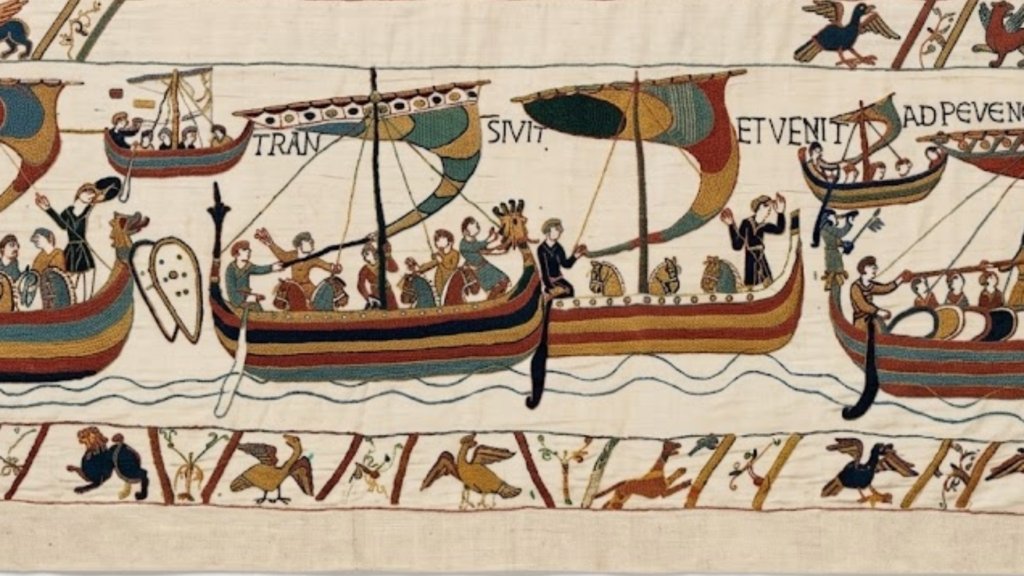
The Mora: Building the First Ship of the Invasion Fleet
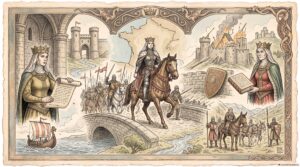
Key Milestones: From Royal Flanders to the English Throne
Born around 1031, Mathilda belonged to the prestigious House of Flanders. She possessed impeccable royal lineage, tracing her ancestry back to the Kings of France and the Charlemagne dynasty. Because William was illegitimate (the son of a tanner’s daughter), Mathilda actually held a far grander social standing than her future husband.
The “Rough Wooing” (c. 1051): Legend says that when William first proposed, Mathilda refused to marry a “bastard.” Infuriated, William allegedly rode to Bruges, dragged her by her hair, and beat her in the street. Rather than calling for his execution, Mathilda was apparently so impressed by his raw determination that she agreed to the match. While likely exaggerated by later chroniclers, it set the tone for an intensely fierce partnership.
Funding the Invasion (1066): When William prepared to cross the Channel, Mathilda personally funded and gifted him his magnificent flagship, the Mora. On its prow, she installed a golden statue of a child pointing toward England—a grand psychological omen for the conquest.
A Historic Coronation (1068): After the dust settled at Hastings, Mathilda crossed to her new realm. On May 11, 1068, she was crowned at Westminster Abbey. Crucially, she was the first consort in English history to have a separate, formal coronation where the liturgy specifically stated she shared in God-given royal authority.
The Abbey of Caen
Her Greatest Achievements: Ruling an Empire
Mathilda’s legacy is defined by her incredible aptitude for statecraft. In an era when women were rarely granted political autonomy, she commanded absolute respect.
The Flawless Regent
While William was away brutally subduing English rebellions, Mathilda served as Regent of Normandy six separate times. She managed the economy, handled the barons, levied taxes, and sat in judgment in the courts. Under her watch, the duchy remained secure, stable, and completely free of rebellion.
The Ultimate Royal Brood
Mathilda gave birth to at least nine or ten children. Unlike many medieval monarchs, she took a direct, personal interest in their education, ensuring her daughters were taught Latin alongside her sons. Her genetic legacy was absolute: she mothered two future Kings of England (William Rufus and Henry I) and the mother of a third (King Stephen).
Cultural Patronage
Alongside William, she fundamentally reshaped the architecture of Normandy, founding grand hospitals and commissioning the magnificent Abbaye-aux-Dames (Holy Trinity Abbey) in Caen, a masterpiece of Romanesque architecture.
Iron fist in a velvet glove
Her Failures: A Bitter Mother-Son Rift
No medieval ruler is a saint, and Mathilda’s record contains severe political and personal blind spots.
The Treasonous Blind Spot
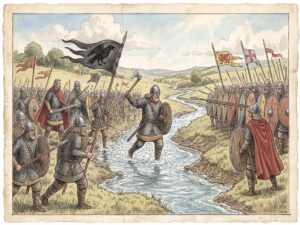
Mathilda’s greatest failure was her inability to balance her loyalty to her husband with her love for her spendthrift eldest son, Robert Curthose. When Robert rebelled against his father’s overbearing rule, Mathilda secretly funneled vast fortunes of royal gold and silver to fund her son’s military exile. When William discovered this betrayal, it permanently fractured the trust between the royal couple, and William stripped her of her independent regency powers.
Petty Political Vengeance
Rumors long persisted that in her youth, Mathilda had been rejected by a wealthy Anglo-Saxon thegn named Brihtric. Years later, as Queen of England, she allegedly used her absolute authority to confiscate all of Brihtric’s ancestral lands, throwing him into a dungeon where he died under mysterious circumstances.
Her Final Fate: The Grief of a Tyrant
By the early 1080s, the ongoing emotional warfare between her husband and her rebellious son broke Mathilda’s health. She withdrew from the political stage, deeply stressed and gravely ill.
On November 2, 1083, Mathilda died at approximately 52 years of age, surrounded by her grieving daughters and a devastated William. She was buried in her beloved Abbaye-aux-Dames in Caen under a grand slab of black marble. (Modern 20th-century exhumations dispelled the popular historical myth that she was a dwarf; she stood at a perfectly average 5 feet tall).
Her death sealed the fate of the realm. William had been completely faithful to Mathilda—an extreme rarity for a medieval king—and her calm, stabilising intellect had always curbed his worst impulses. Without her, William spiraled into absolute tyranny, spending his final four years burning villages and growing increasingly ruthless. Mathilda was the glue holding the Anglo-Norman empire together; when she passed, the golden age of the Conqueror died with her.