The Highs, Lows, and Haunted Death of William the Conqueror
He was born a bastard and died a king. Few figures in human history have cast a longer shadow over England than William the Conqueror. By the time his heart stopped beating in 1087, he had shattered the Anglo-Saxon world, bound England to continental Europe, and redrawn the maps of power forever.
Yet behind the stone castles and the iron crown lies a deeply complicated human story. Was the man who conquered England truly successful by his own metrics? And did the master of the Norman world die with peace in his heart?
To understand the verdict, we have to look at the staggering highs and brutal lows of an extraordinary, blood-soaked life.
The Iron Rise: The Highs of the Conqueror
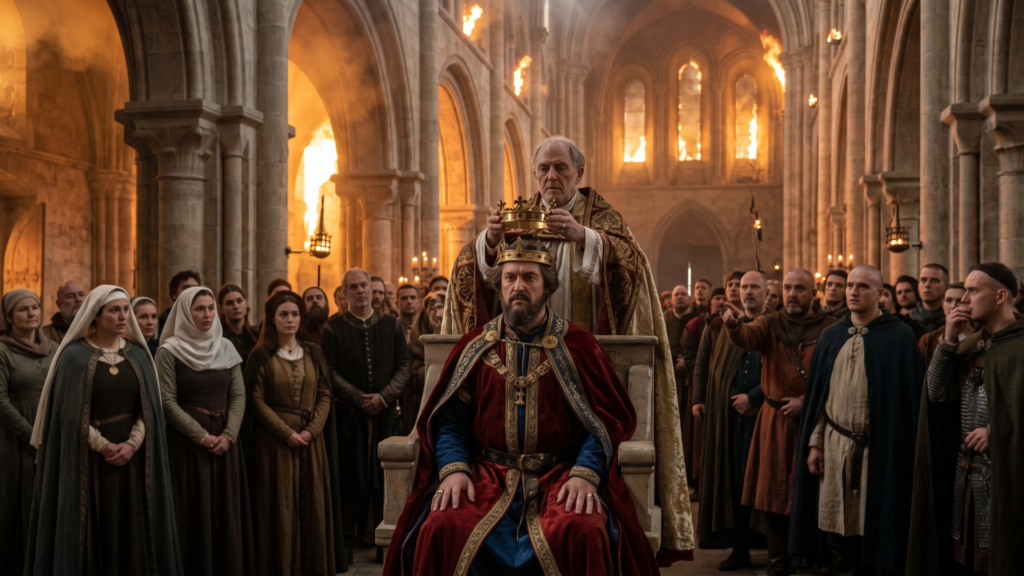
William’s life was defined by an relentless drive to overcome the odds. His early life was a nightmare of survival; as the illegitimate son of Duke Robert of Normandy, he inherited the duchy at just seven years old. Assassins murdered his guardians in his very bedchamber, yet William survived, grew, and forged himself into a ruthless military commander.
By the time he turned his gaze toward England in 1066, he was already one of the most feared warlords in Christendom. His crowning achievements came in rapid, devastating succession:
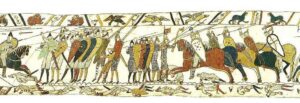
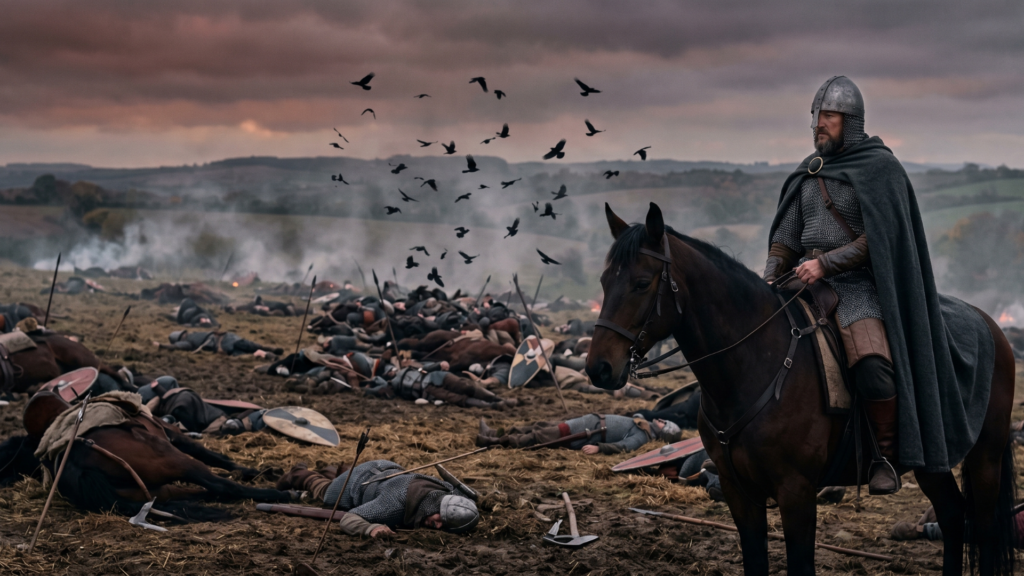
- The Battle of Hastings: Defeating King Harold Godwinson against incredible odds on a bloody ridge in Sussex.
- The Master of Stone: Subjugating a hostile English population by planting hundreds of motte-and-bailey castles and massive stone keeps, like the White Tower of London, across the landscape.
- The Domesday Book: Commissioning the most comprehensive, terrifyingly efficient economic survey of the medieval world, ensuring every ox, acre, and hide of land paid tax directly to his treasury.
Physically and territorially, William achieved what many thought impossible. He transformed Normandy from a fractured duchy into the anchor of a transnational empire.
The Heavy Crown: The Lows of the Empire
However, the crown of England was forged in fire, and it brought William endless misery. The highs of conquest were instantly matched by the crushing lows of ruling a rebellious, bitter population.
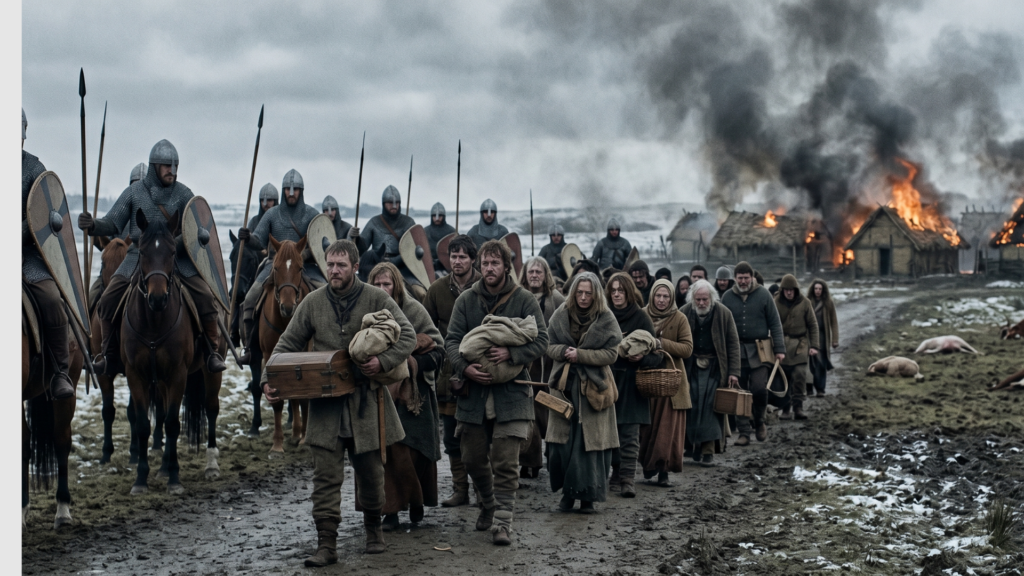
William’s most profound moral and military low point came during the winter of 1069–1070. Faced with relentless rebellions in York and Northumbria, William unleashed the Harrying of the North. His armies engaged in a scorched-earth campaign, salted fields, slaughtered livestock, and burned villages. Over 100,000 people died of systematic starvation. It was a brutal act of domestic terrorism that stained his legacy forever and left him ruling over a graveyard.
Yet, William’s greatest heartbreaks did not come from his enemies, but from his own blood.
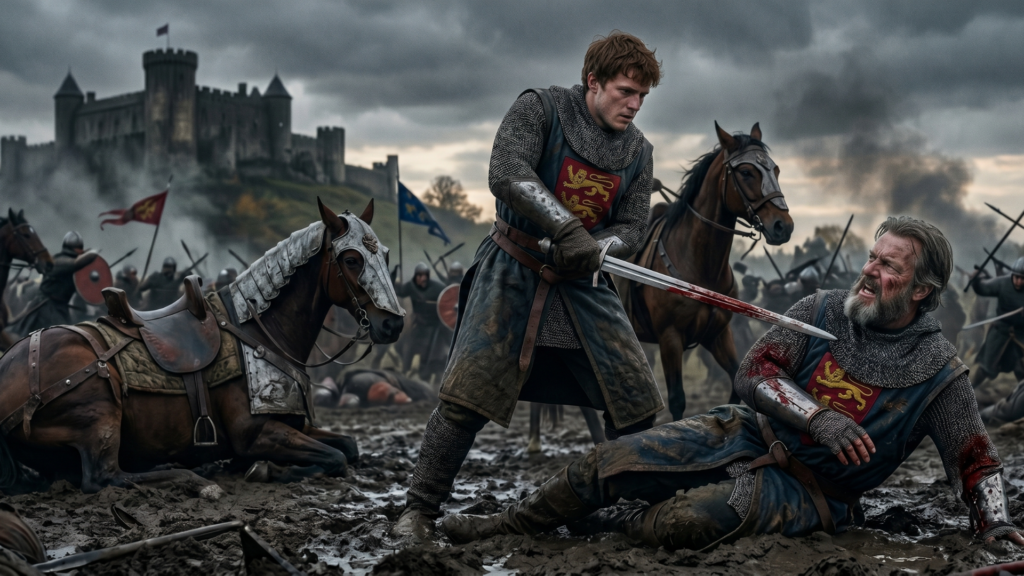
His later years were consumed by a vicious, ongoing civil war against his eldest son, Robert Curthose. Robert felt slighted by his father’s refusal to grant him real power, leading to open rebellion. In 1079, during a skirmish at Gerberoi, father and son met in hand-to-hand combat. Robert unhorsed William and wounded him in the arm before recognizing his father’s voice and stopping the blade. For a medieval warlord who valued absolute authority, being humiliated on the battlefield by his own son was a devastating psychological blow.
The Verdict: Did He Achieve All He Wanted?
If William’s goal was purely geopolitical dominance and the security of his dynasty, yes, he achieved it. He successfully replaced the entire Anglo-Saxon aristocracy with his own loyal Norman barons, reshaping the language, law, and culture of England for the next millennium.
But if he wanted a unified, peaceful empire to pass down to a loyal family, he failed completely. William knew his sons would tear his realms apart if left to their own devices. On his deathbed, he was forced to split his empire—leaving his beloved Normandy to the rebellious Robert, and the crown of England to his second son, William Rufus. He did not build a monument of lasting family peace; he built a powder keg.
Did He Die a Happy Man?
The short answer is absolutely not. William’s death is one of the most grim and tragic sequences in royal history.
In the summer of 1087, while besieging the French town of Mantes, William’s horse stepped on burning embers. The beast reared violently, throwing the heavily overweight, aging king forward against the iron pommel of his saddle. The impact ruptured his internal organs.
William spent six agonising weeks dying at the Priory of St. Gervase in Rouen. According to the chronicler Orderic Vitalis, the dying king was haunted by the ghosts of his past. On his deathbed, William allegedly wept for his sins, confessing:
“I fell on the English like a raging lion… I brutally harassed the native inhabitants. I caused the untold misery of thousands, both young and old.”
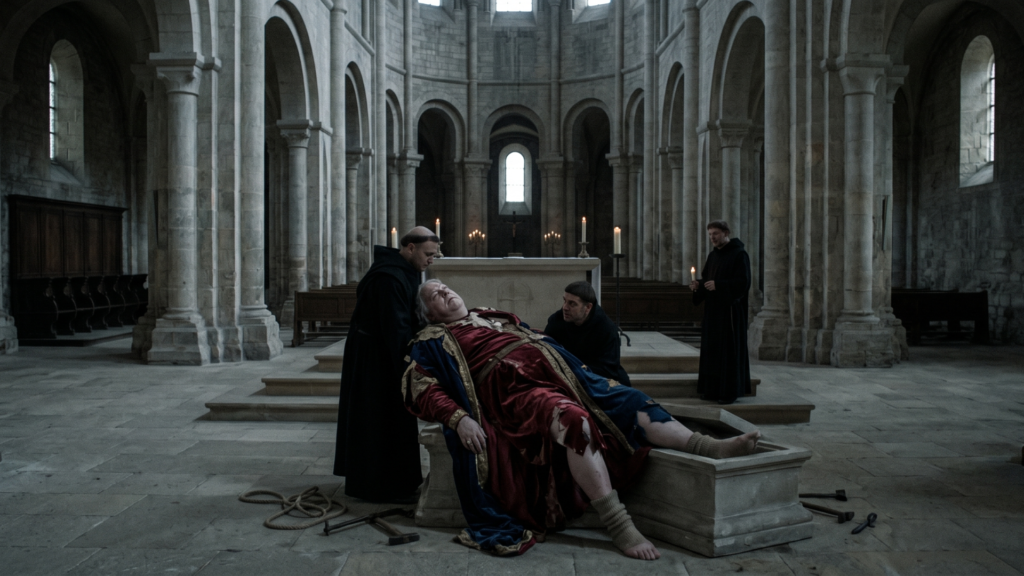
When his breath finally failed him on September 9, 1087, the tragedy turned to farce. His nobles immediately abandoned his corpse to secure their own lands. Servants stripped the palace clean, leaving the Conqueror’s body half-naked on the floor.
At his funeral in Caen, the attendants tried to force his bloated body into a stone sarcophagus that was built too small. When they pressed down, his abdomen burst open, filling the church with such a horrific stench of decay that the mourners fled into the streets.
William the Conqueror won England, accumulated unimaginable wealth, and built a dynasty of iron. But he died in agony, ridden with guilt, abandoned by his family, and terrified of the divine judgment awaiting his soul. He achieved everything he reached for, but he paid for it with his happiness.