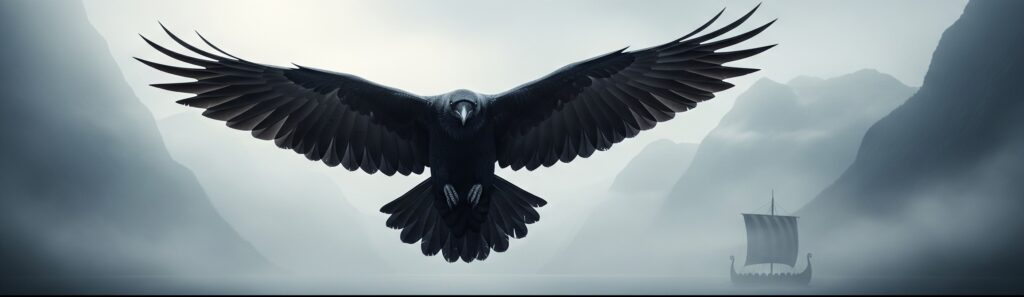
In the mist-choked fjords of the tenth century, the sight of a raven was rarely viewed as a mere coincidence. For Scandinavian pagans the raven was not just a scavenger of the battlefield; it was a cosmic messenger, a symbol of divine surveillance, and the ultimate herald of Odin, the All-Father. To understand the world of Flight of the Ravens, one must understand why this obsidian bird held such a terrifying and revered place in the Norse soul.
Huginn and Muninn: Thought and Memory
At the heart of the raven’s importance are Huginn (Thought) and Muninn (Memory). According to the Prose Edda, these two ravens fly across the entirety of Midgard every day, returning at dinner to sit upon Odin’s shoulders and whisper the secrets of the world into his ears.
This myth reveals a sophisticated understanding of the bird’s actual nature. Ravens are among the most intelligent creatures on earth, capable of problem-solving and social communication. To the Vikings, this intelligence was supernatural. Odin did not just see the world; he processed it through Thought and Memory. The fear expressed in the Grímnismál—that Muninn might one day fail to return—underscores the Norse dread of losing one’s history and identity. Without Memory, even a god is diminished.
The Chooser of the Slain
Beyond the halls of Asgard, the raven was the “corpse-bird.” Norse poetry, or skaldic verse, frequently used the “kennings” (metaphorical descriptions) involving ravens to describe battle. To fight was to “feed the raven” or “gladden the swan of blood.”
This association wasn’t merely macabre; it was spiritual. Because ravens were the first to arrive at a battlefield, they were seen as intermediaries between the worlds of the living and the dead. A raven circling a warband was often taken as a sign that Odin was present, choosing who would fall and earn a place in Valhalla. In the Leopards of Normandie saga, the raven represents this thin veil between earthly ambition and eternal destiny.
The Raven Banner: A Totem of Terror
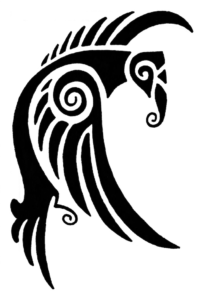
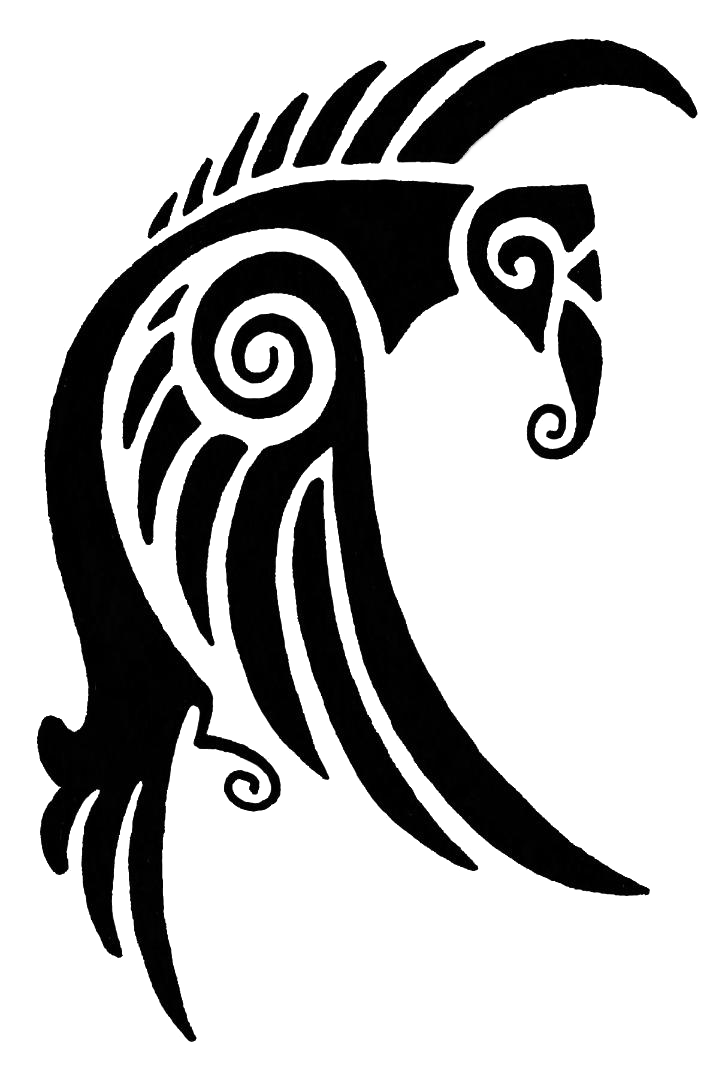
The mythic power of the raven translated directly into medieval warfare through the Hrafnsmerki—the Raven Banner. Carried by legendary figures like Ragnar Lodbrok’s sons and Harald Hardrada, these banners were said to possess a life of their own. Legend claimed that if the raven on the silk fluttered its wings, victory was certain; if it hung limp, defeat was imminent.
The banner was a psychological weapon, signaling to enemies that they weren’t just fighting men, but the will of the All-Father himself. It turned a military engagement into a ritual sacrifice.
Legacy in the Fitzroy Saga
In Flight of the Ravens, the bird serves as a bridge. As Bjorn Halfdanson and Torstein Rolloson sail awayfrom the North to the shores of England, he carries these old shadows with him. The raven is the thread that connects the Viking exile to the Norman conqueror. It is a reminder that while empires fall and languages change, the fundamental forces of Thought, Memory, and Fate remain as constant as the beating of black wings against a grey sky.
When you look at the raven crest of the Fitzroys, remember: it is not just a bird. It is a thousand years of secrets, whispered into the ear of a god.