1066 was a busy year in England. Three decisive battles brought some unexpected outcomes, good for some and bad for others, but suffice to say things were never the same afterwards – none more so than in the land of the Norsemen.
After a great start to his campaign at Fulford Gate, Harald Hardrada, the Norwegian King fell on the field of battle changing the political and military face of Scandinavia forever. It also marked the end of an era sounding the death knell for the four-hundred-year-old ‘Age of the Vikings’ and Norway took several generations to recover. From a fleet of fourteen hundred ships of the King’s invasion fleet, there were only enough men to crew twenty-five of them on the homeward voyage. They left behind them the cream of their elite warriors – dead at the Battle of Stamford Bridge. Harald Hardrada’s defeat and death marked the last significant Viking invasion of England and with it the end of the golden Viking Age. While Vikings had been raiding and settling in parts of Europe for centuries, Hardrada’s failure meant that the Viking threat to England and other parts of Europe diminished. Subsequent events, including the Norman Conquest, ensured that the Viking influence in the British Isles came to an abrupt halt. After 1066, the large-scale raids that had terrorised the English countryside stopped abruptly and Viking dominance in Europe was over.
With conservative estimates of between 10-12 thousand Norwegians and their allies slain in Northumbria, the pendulum of power in Scandinavia swung toward Denmark. Hardrada’s death and the loss of his army had severe consequences for Norway. He had been an ambitious king who sought to reclaim England and expand his influence but defeat left his country in a weakened position. His son, Olaf Kyrre, succeeded him, but the kingdom lacked strong leadership and Norway’s influence in Europe diminished after this defeat. Denmark assumed the position of prominence in Scandinavia but, less belligerent than their Norwegian rivals, Europe became a safer place.
The defeat had long-term effects on Scandinavian Society and there was a consolidation of power in Denmark and Sweden: Following Hardrada’s death and the collapse of his ambitions, Denmark and Sweden began to focus on consolidating their own territories. Both countries would eventually experience their own periods of growth and territorial expansion, but the Vikings’ era of raiding and conquest was at an end. There was also a shift in Norse identity: The failure in England led to a shift in Norse identity, moving away from raiding and pillaging to more settled, agricultural, and political lives. Over the next few centuries, Norse societies gradually transitioned from warrior cultures to more democratised, Christianised nations.
The legacy of the great sea kings was also dramatically impacted. Hardrada had been one of the last great Viking monarchs, and his defeat at Stamford Bridge shattered the vision of a Viking resurgence. While Hardrada remains an important figure in Norse history, his defeat represents the symbolic end of paganism versus Christianity in Europe. Following his demise, no more Viking kings were looking to conquer or establish dominion over England or other parts of Western Europe. An age of sea-borne violence transitioned into a more peaceful era for Scandinavia. However, the memory of the Viking raids and expansion would continue to influence European culture for some time.
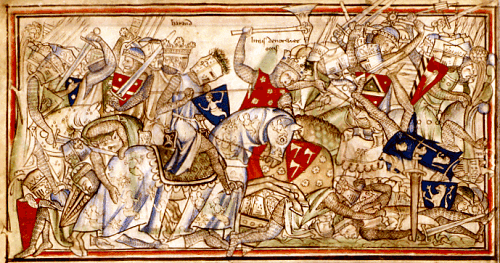
While Hardrada’s passing had some advantages for Scandinavian society, particularly if you were Danish and Christian – for Saxon England there were none. After defeating the Norwegians and their allies, King Harold Godwinson had to march his tired army south to join battle against the Normans. The rapid march over several days with a depleted and exhausted army weakened Harold’s position before the Battle of Hastings (October 14, 1066), where he was defeated and killed. The Duke of Normandie became King William the First of England and he set about destroying the great Saxon Earldoms and redistributed their land and wealth to his followers. He established a brutal Norman dynasty in England leading to profound changes in English society, governance, and feudalism and the introduction of Norman culture. The victory at Stamford Bridge left England vulnerable, and just days later, William the Conqueror invaded. His victory at Hastings and grinding conquest of England shifted the balance of power in Europe. The Normans, fifth-generation Vikings, would go on to create one of the most powerful kingdoms in Europe, expanding their influence throughout the British Isles and beyond. With the arrival of Norman rule in England, all Viking influence was effectively eradicated. England underwent significant cultural and linguistic changes. Norman French became the language of the ruling class and the court. Old English persisted among the common people but over time, this led to the development of Middle English, which was influenced heavily by Norman French. Castles, cathedrals, and fortifications sprung up and the structure of the Anglo-Saxon world changed forever.
Harald Hardrada’s defeat at Stamford Bridge had lasting consequences, from the end of Viking influence in England and Europe to the consolidation of power by the Normans in England, the weakening of Norway, and a shift in Scandinavian society toward the consolidation of state power and Christianisation. This event was a key milestone in Saxon, Norman, Viking and European history.