
Introduction
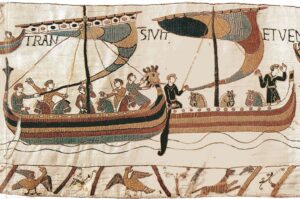
In the annals of history, the name Normandy conjures up images of William the Conqueror and the Battle of Hastings in 1066 that had such a cataclysmic effect on Saxon England. However, a lesser-known aspect of this period is the remarkable feat of Norman shipbuilding which played a crucial role in shaping the course of events. How did the Normans remember how to build ships again in 1066, and what led to this sudden resurgence in naval power? Let us delve into the mysteries of Norman shipbuilding during this pivotal moment in history.
The Strategic Necessity of a Fleet in 1066
In 1066, the ambition of William the Conqueror to claim the English crown necessitated a formidable challenge: the transportation of a vast army across the treacherous English Channel. The geography of this venture underscored the critical need for a sizeable fleet, positioning naval strength as a cornerstone of military strategy. This requirement was not just about movement; control of the seas signified a tactical advantage that could predetermine the outcome of the impending conflict. It would allow the Normans to project power, secure supply lines, and potentially outmanoeuvre their adversaries on the Saxons’ home turf. The English Channel, thus, transformed from a mere body of water into a strategic battlefield, where supremacy at sea was essential for the success of the Norman conquest. This pivotal moment highlighted the intricate relationship between naval capability and the ambitions of conquest, spotlighting the strategic necessity for a fleet that could ensure the safe and efficient passage of William’s forces, heralding a new era in medieval warfare and statecraft.
The Dearth of Norman Naval Power
Faced with the monumental task of mounting an invasion across the English Channel, the Normans encountered a significant impediment: a scarcity of ships. This shortfall was not merely a logistical hiccup but a critical strategic bottleneck. Historically, Norman naval capabilities had not been developed to the same extent as those of their maritime predecessors or neighbours. Unlike the Vikings, with their renowned seafaring prowess, or the Saxons, who had established their own maritime traditions, the Normans found themselves at a juncture where their naval resources were insufficient for the task at hand. This deficiency threatened to undermine the entire invasion plan, spotlighting the urgent need for a rapid expansion of their fleet. The pressure to construct a navy capable of ferrying William the Conqueror’s forces to English shores highlighted a crucial moment of vulnerability and adaptation in Norman military strategy. It was a scenario that necessitated not only a revival of shipbuilding knowledge but also a remarkable mobilisation of resources and manpower to bridge the naval gap that stood between the Normans and their ambitions of conquest.
Rediscovering Ancient Shipbuilding Techniques
Confronted with the pressing need to amass a fleet capable of crossing the English Channel, the Normans turned to their historical roots for guidance. The legacy of their Viking ancestors, renowned for their maritime prowess, served as a crucial touchstone in this period of urgent innovation. By delving into the design principles of both Viking longships and the maritime crafts of their Saxon counterparts, the Normans undertook a comprehensive study of ancient shipbuilding techniques. This process of rediscovery was not merely academic but a practical reawakening of a dormant skill set within the Norman cultural memory. Craftsmen and shipwrights, drawing upon a collective heritage steeped in the lore of seafaring, began to piece together the forgotten knowledge of hull design, sail configuration, and oar placement that had once made their forebears masters of the seas. This revival of ancient craftsmanship was instrumental in the Normans’ ability to rapidly construct a fleet that was not only seaworthy but capable of sustaining the logistical demands of William the Conqueror’s ambitious military expedition. Through this blend of historical insight and innovative adaptation, the Normans set the stage for what would become a pivotal moment in maritime and military history.
The Rebirth of Norman Shipbuilding in 1066
Faced with the monumental challenge of assembling a fleet sufficient to launch William the Conqueror’s invasion, the Normans demonstrated extraordinary dedication and craftsmanship. Through a concerted effort, drawing on a richlegacy of maritime expertise inherited from Viking ancestors and adapting techniques observed from their Saxon and other contemporaries, a significant fleet was swiftly constructed. In the workshops and along the banks of Normandy, shipwrights and craftsmen laboured with a sense of urgency and precision. Utilising timber from the dense forests of Normandy, thesevessels were meticulously crafted to meet the demands of the perilous journey across the English Channel. The construction of these ships marked not only a remarkable achievement in terms of scale and speed but also signified a pivotal resurgence in Norman maritime capability. This era witnessed the transformation of Norman shipbuilding from a dormant skill to a formidable instrument of conquest, enabling a new chapter in the history of medieval seafaring to be written.
The Legacy of Norman Shipbuilding Prowess
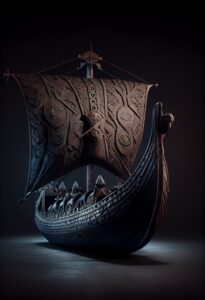 The profound influence of Norman shipbuilding achievements in 1066 resonates through the annals of history, underpinning the pivotal Battle of Hastings and the subsequent Norman dominion over England. This remarkable feat not only facilitated William the Conqueror’s ascendancy to the English throne but also heralded a new epoch in naval architecture and maritime strategy. The fleet’s construction showcased an extraordinary synthesis of innovation, drawing upon ancient techniques and adapting them with remarkable speed and efficiency. This legacy of shipbuilding excellence established the Normans as formidable maritime powers, extending their influence beyond the shores of Normandy and setting a precedent in naval warfare and construction that would echo through the Middle Ages. The resilience, ingenuity, and adaptability demonstrated by the Normans in overcoming their initial naval deficiencies underscored their strategic acumen and left an indelible mark on medieval seafaring, influencing future generations and altering the course of European history.