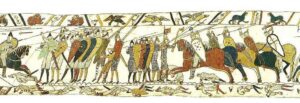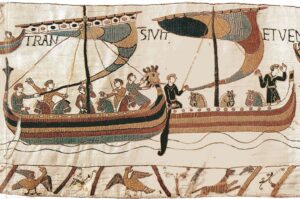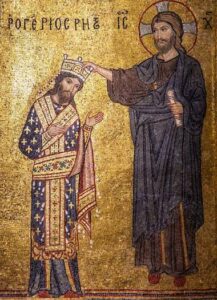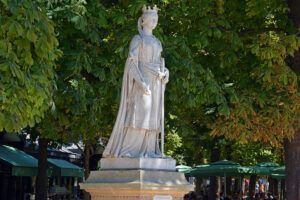
Like many medieval monarchs, William ‘the Bastard’, Duke of Normandy and King of England, fulfilled his destiny by creating a dynasty that, although it did not last long, was full of potential heirs. In a formidable partnership with the diminutive Mathilda of Flanders, it is believed they had at least ten children. Unlike other medieval kings and queens, their fruitful union was underpinned by a relationship of mutual love and respect. Of all the princes and princesses of Normandy, there is a fair amount known of at least nine, and I have ranked them all in terms of importance and impact. These are just my thoughts; see what you think.
9. Adeliza (Adelaide)
A daughter about whom little is known, Adeliza may have died young or retired into religious life. The lack of documentation suggests she played no major political role. Some chroniclers believe she died before reaching adulthood. Very little is known about her although she may have become a nun and probably died young. Achievement rating 2/10
8. Agatha
Sadly, Agatha died young, probably in her mid-teens. During a shortish life, she fulfilled her duty and was betrothed several times for diplomatic advantage. Her suitors included Alfonso VI of León and Castile, but an early death ended potential political importance, beyond which, she left little historical record beyond her role in attempted marriage alliances. Achievement rating 3/10
7. Richard of Normandy
Could have been a contender for the next King of England, but Richard, one of William’s eldest sons, died young in a hunting accident in the New Forest. The incident was an eerie foreshadowing of the later death of his brother William II in the same forest. There is plenty of conjecture about this dual tragedy, and medieval rivals were not known for the inventive nature of assassinations. His early death removed him from succession and changed the future of Norman rule, making him a “what‑might‑have‑been” figure in Anglo‑Norman history. Achievement rating 3/10
6. Cecilia of Normandy
Cecilia found God at an early age when she was placed into the Church—common for noble daughters—and became Abbess of the Holy Trinity convent in Caen, one of her mother’s pet projects in currying favour with the Pope of Rome. As abbess, she administered lands, oversaw the nuns, and played a respected role in Norman ecclesiastical circles. Her life represents the quiet but important influence of aristocratic women in the Church, and followed her mother’s quiet and dignified example. Not a bad effort when opportunities for high-ranking noblewomen were sparse. Achievement rating 4/10
5. Constance, Duchess of Brittany
Constance married ducal neighbour, Alan IV, Duke of Brittany, strengthening Norman–Breton relations. She reportedly held significant influence over her husband and the Breton court. Alas, Constance died childless, and some later historians suggest she may have clashed with her mother‑in‑law, leading to unverified rumours of poisoning. Her political impact was moderate but notable. Good effort, but swimming against the tide as a ‘barren’ wife with a non-supportive mother- in-law. Achievement rating 5/10.
6. Adela of Normandy
Adela was, probably, one of the most politically capable of William’s children. She married Stephen of Blois and acted as Regent while he was away on crusade, effectively governing the county. Adela was a patron of the Church and a great supporter of crusades, as she corresponded widely with religious leaders. Her biggest role was the mother of King Stephen of England, which extended her political legacy into the next generation. Adela was a skilful manager and a wily diplomat, as well as producing an heir to the throne. A fine effort over the full game. Achievement rating 6/10
7. Robert Curthose, Duke of Normandy
“Shorty-pants” (sic) was William’s eldest surviving son, and he inherited Normandy. Apparently brave and charismatic, he was on the First Crusade (the successful one) and was praised for his leadership and courage. However, he proved less capable as a leader and was financially inept with an inability to control his rebellious noblemen. Falling out with his brothers, he eventually lost the Duchy to his brother, Henry I and spent the last 26 years of his life as a prisoner. A heroic but ultimately tragic figure whose weak long‑term political control cost him everything. Good on the field of battle, but a poor all-round game. Achievement rating 6/10.
8.William Rufus
His father’s namesake succeeded William I as King of England. A forceful, aggressive, and determined monarch kept the powerful baronnie in check. William II expanded the royal authority and strengthened the treasury, although he did not always get along with the Church. He died in 1100 in another hunting accident—possibly assassinated, possibly misfortune, but the New Forest claimed another heir to the throne. His reign is remembered as strong but controversial. Very strong man management and will be remembered for good fiscal control. Achievement rating 8/10
9. Henry I “Beauclerc,” King of England
Probably the pick of the bunch, Henry I is widely considered the most capable of the grand old Duke’s progeny. Quick‑thinking and intelligent, he seized the English throne after William II’s demise. In an impressive second half performance, he defeated his brother Robert to win Normandy as well, reuniting their father’s dominions. Henry reformed the government, strengthened the legal system, established the Exchequer, and laid the foundations for English royal bureaucracy. A long reign (1100–1135) brought relative stability. to both realms. A man-of-the-match performance and one that his tyrannical father would have approved of.