William the Conqueror's Changing Attitudes To His Anglo-Saxon Subjects
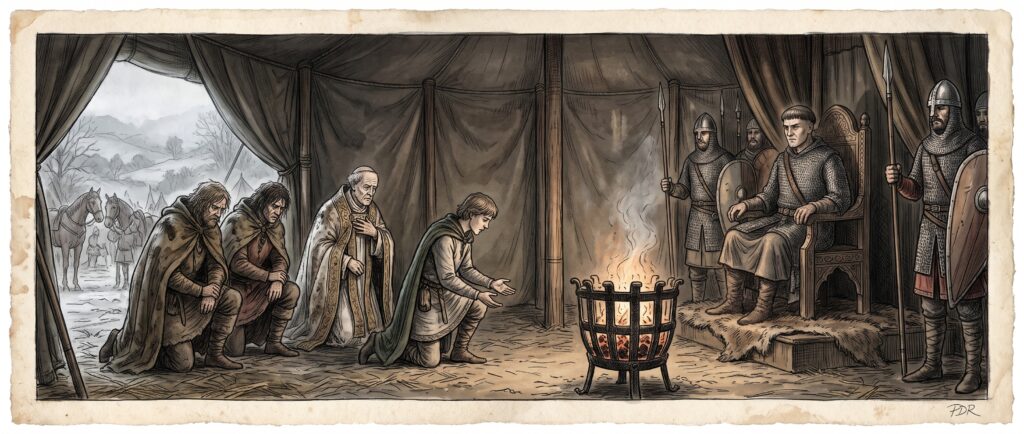
When Duke William of Normandy knelt at the high altar of Westminster Abbey on Christmas Day 1066, he did not intend to rule as an alien tyrant. His ambition was more calculating: he sought to be recognised as the rightful, legitimate successor to his kinsman, King Edward the Confessor. Yet within five short years, that veneer of legal continuity shattered. What began as a tentative policy of political conciliation degenerated into one of the most ruthless occupations in European history.
William’s evolving posture toward the English—and the bitter resistance that sparked it—forged the brutal architecture of medieval Norman rule.
The Conciliatory Illusion (1066–1067)
Immediately after Hastings, William made a deliberate effort to govern with the native aristocracy. He confirmed the ancient privileges of the City of London, promised to uphold the customary laws of Edward the Confessor, and took homage from leading Saxon nobles rather than executing them. Earls Edwin of Mercia and Morcar of Northumbria were permitted to keep their lands. Waltheof, the towering Earl of Northampton, retained his vast estates. Orderic Vitalis even records that William attempted to learn the English language so he could hear his subjects’ pleas without an interpreter—an endeavour the middle-aged Duke soon abandoned in frustration.
To the Anglo-Saxons, however, this royal clemency was a hollow masquerade. William’s army was an occupying force that demanded staggering taxes to pay continental mercenaries. Worse still, when William returned in triumph to Normandy in the spring of 1067, he left England under the joint regency of his half-brother, Bishop Odo of Bayeux, and his fierce lieutenant, William FitzOsbern. The regents ruled with predatory arrogance, allowing Norman garrisons to seize Saxon lands, harass women, and throw up oppressive timber mottes without restraint.
The conquered English did not weep in submission; they organised.
First Fires: Dover and the Welsh Marches
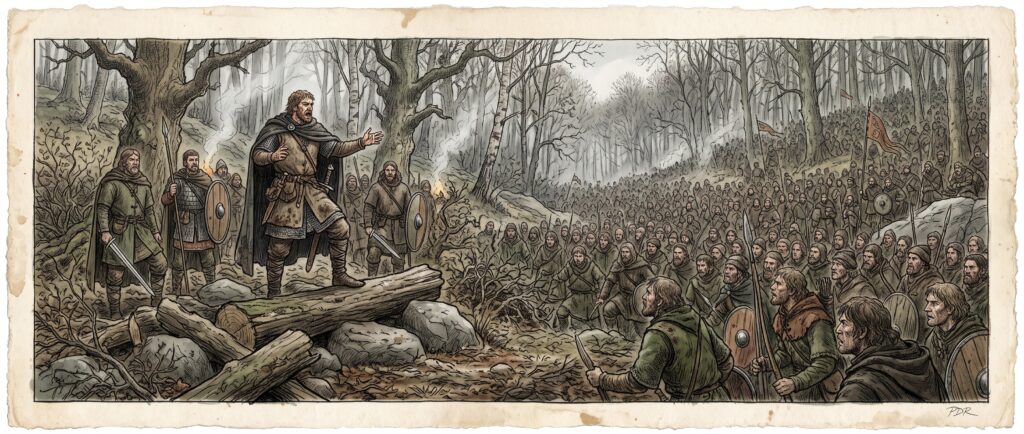
The backlash began while William was still in Normandy. Sensing vulnerability, native rebellions erupted across the geographic fringes of the kingdom.
In Kent, the English population despised the garrison of the newly built castle at Dover. In the autumn of 1067, they forged an unlikely alliance with Count Eustace of Boulogne—a former ally of William who had fallen out with the King. Landing under cover of darkness, Eustace and his Saxon allies launched the Siege of Dover, storming the formidable ditch and ramparts of the fortress. Though the Norman garrison ultimately repelled the assault and forced Eustace to flee back across the Channel, the message was unmistakable: even the south-eastern heartlands would rise against the new order given the slimmest opportunity.
Simultaneously, the western frontier caught fire. Along the Welsh Marches, an unyielding thegn named Eadric the Wild (Eadric Silvaticus) refused to submit. Eadric forged an alliance with the Welsh kings of Gwynedd and Powys, Bleddyn and Rhiwallon ap Cynfyn. Operating out of the untamed borderlands, Eadric waged a brutal guerrilla campaign against Norman outposts, laying siege to the castle at Hereford and ambushing FitzOsbern’s border patrols. The Welsh Marches became a bleeding wound that Norman knights could neither predict nor cauterise.
The Defiance of the West: The Siege of Exeter (1068)
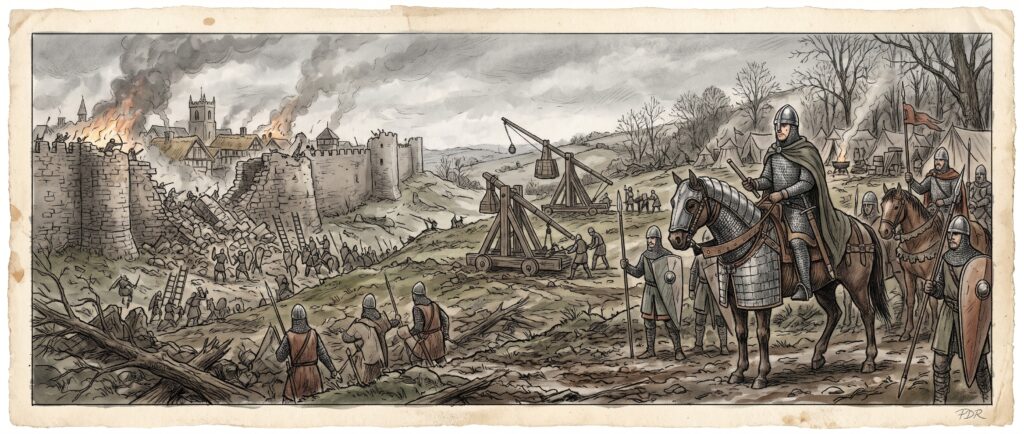
In early 1068, William faced a profound challenge in the West Country. Gytha Thorkelsdóttir, the wealthy mother of the fallen King Harold Godwinson, had entrenched herself within the Roman walls of Exeter. Refusing to swear fealty or admit the King into the city, Exeter’s citizens boldly declared they would only pay customary taxes. William, refusing to accept conditional obedience, marched his army—which notably included the English fyrd (militia) alongside his Norman cavalry for the first time—in the dead of winter. To send a chilling message, he ravaged sympathetic towns like Dorchester, Bridport, and Shaftesbury along the way.
The ensuing siege lasted eighteen gruelling days. Exeter’s defenders were famously defiant; chronicler William of Malmesbury even recorded that one rebel stood upon the ramparts, bared his backside, and broke wind at the besieging Norman forces. In response to their stubbornness, a furious William had an Exeter hostage brutally blinded before the city gates and set his engineers to systematically undermine the ancient walls. Though the city ultimately surrendered through negotiation, Gytha escaped by boat, and William immediately ordered the construction of Rougemont Castle within the city limits. He granted the citizens surprisingly generous terms to secure swift regional stability, but the lesson was clear: organised resistance would be met with overwhelming force and permanent military occupation.
Securing the North: The Subjugation of Lincoln (1068)
With the West Country subdued, William turned his attention north to intercept the rebellion of Earls Edwin and Morcar, sweeping through the Midlands in a disciplined display of shock and awe. Approaching Lincoln—a wealthy, bustling trade hub deeply shaped by its Danish heritage—the King took no chances.
William subjected Lincoln to a swift military encirclement, subduing the city and immediately breaking its defensive independence. Inside the ancient Roman walls, William’s engineers demolished an estimated 166 Anglo-Scandinavian homes, driving local families into the cold to make room for the earthworks and timber stockades of Lincoln Castle. This strategic strongpoint, towering over the River Witham, stood as a menacing reminder to the East Midlands: native domestic life would be obliterated whenever Norman security required it.
The Breaking Point: The Harrying of the North (1069–1070)
The definitive break in William’s character arrived in 1069. In Northumbria, native rebels ambushed and massacred the new Norman earl, Robert de Comines, and his five-hundred-man garrison at Durham. Emboldened, the Saxon prince Edgar the Ætheling returned from exile, supported by a massive invasion fleet of 240 ships sent by King Sweyn II of Denmark. The combined Anglo-Danish army captured York, storming the castles and putting hundreds of Normans to the sword.
When the news reached William on a hunt in the Forest of Dean, the mask of the legal English sovereign vanished forever. Flying into an uncontrollable rage, he swore “by the splendour of God” that he would avenge his fallen men and root out treason for good.
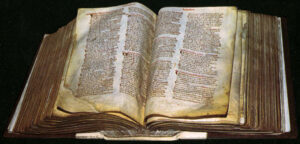
What followed was the Harrying of the North—a systematic campaign of calculated genocide. Over the winter of 1069–1070, William marched his armies from the Humber to the Tees, burning every village, butchering livestock, destroying agricultural tools, and sowing salt into the fields to poison the soil. The resulting famine was catastrophic. Contemporary chroniclers record that starving refugees ate horses, dogs, and human flesh, with corpses rotting unburied by the roadsides. When the Domesday Book was compiled sixteen years later, vast swathes of Yorkshire remained designated as hoc est vastum—”it is waste.”
William had given up on courting the English. Henceforth, he would govern by terror.
The Last Stand: The Sack of Peterborough (1070)
The final spasm of early Saxon resistance unfolded in the marshy wetlands of East Anglia. In 1070, the rebel thegn Hereward the Wake allied with Danish sea-raiders and established an elusive guerrilla stronghold on the Isle of Ely.
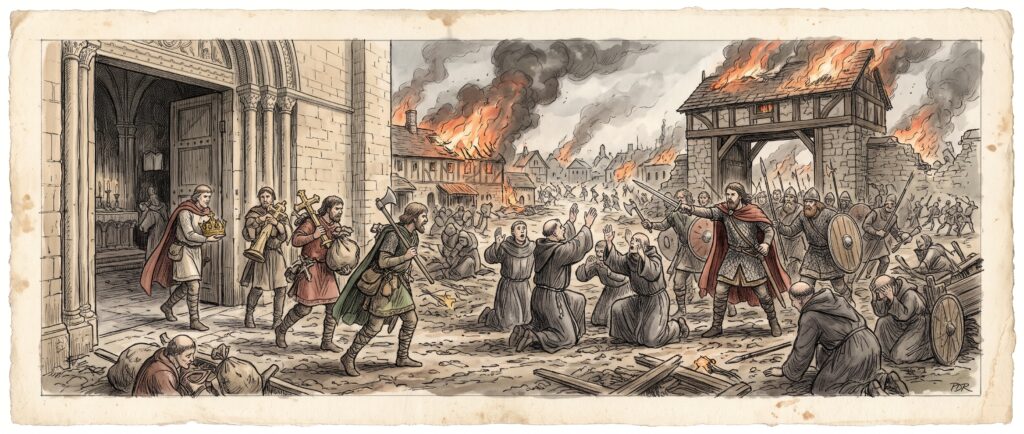
Learning that William had appointed a combative Norman militant named Turold as Abbot of Peterborough, Hereward struck first. In June 1070, he led a daring river assault on Peterborough Abbey—the fabled “Golden Borough.” To prevent its priceless Anglo-Saxon relics, gold crosses, jewel-encrusted vestments, and illuminated gospel books from falling into Norman hands, Hereward and his men sacked Peterborough themselves, stripping the church of its treasures and setting fire to the monastery outbuildings before fleeing into the fens with the Danes.
William was forced to construct a massive timber causeway across the treacherous marshes to finally subdue Ely in 1071. Though Hereward slipped away into legend, organised Anglo-Saxon military opposition was broken.
William the Conqueror died in 1087, ruling an England stripped of its native aristocracy. By the time of his death, fewer than two per cent of English manors remained in the hands of Saxon thegns; the vernacular language was driven from the royal courts; and the native populace lived as disenfranchised tenants under the shadow of over five hundred stone and timber fortresses.
William arrived on English shores claiming to be a rightful king; the unrelenting resistance of his Saxon subjects transformed him into an absolute autocrat.