Beyond the sword: The Great Survey provided the fiscal blueprint for the modern administrative state.
In the winter of 1085, William the Conqueror sat at his Christmas court in Gloucester, likely looking out at a kingdom that was far from settled. Nearly twenty years had passed since the 1066 invasion of England, yet the land remained a patchwork of resistance, shifting loyalties, and economic uncertainty. It was here that William made a decision that would change the course of administrative history forever: he ordered a “Great Survey” of his entire realm. This survey, which would become known as the Domesday Book, was designed to tax and indenture what was left of medieval Anglo-Saxon England revealing the raw, cold “grit” of 11th-century reality.
The Causes: Why Now?
The primary driver for the Domesday Book was not a desire for historical record-keeping; it was a desperate need for military and financial clarity. By 1085, the threat of a Danish invasion was looming on the horizon. William needed to know exactly how much money he could raise through taxation to fund his armies and how many knights each of his tenants-in-chief owed him in scutage (shield-money or tax for military service). Beyond the gold, there was a question of power. The invasion had triggered a total upheaval of the social order. William needed to formalise the “Great Land Grab” that had occurred since 1066. By documenting who held what land, what it was worth before the invasion, and what it was worth now, he effectively legalised the Norman displacement of the Anglo-Saxon aristocracy. It was a strategic move to ensure that every baron, lord and knight in the kingdom knew their place—and their price.
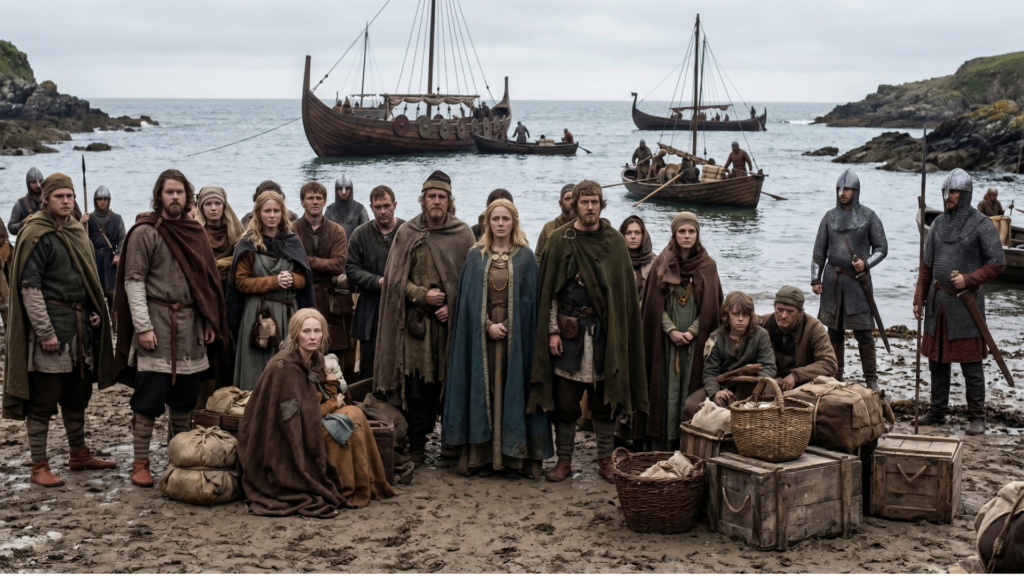
Noble Exodus: The 1086 Domesday Book confirmed the total erasure of the old Saxon aristocracy.
The Logistics: A Race Against Time
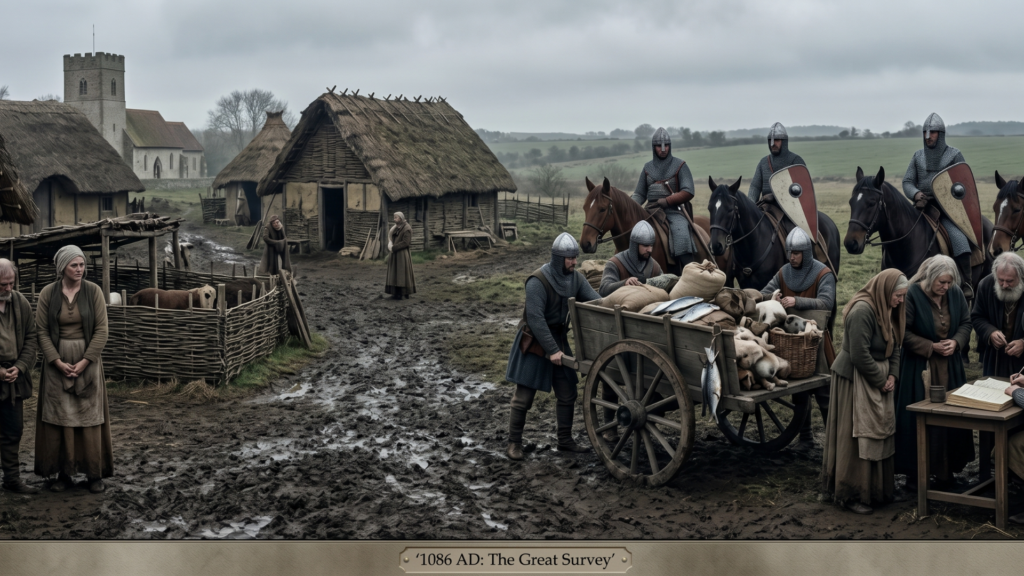
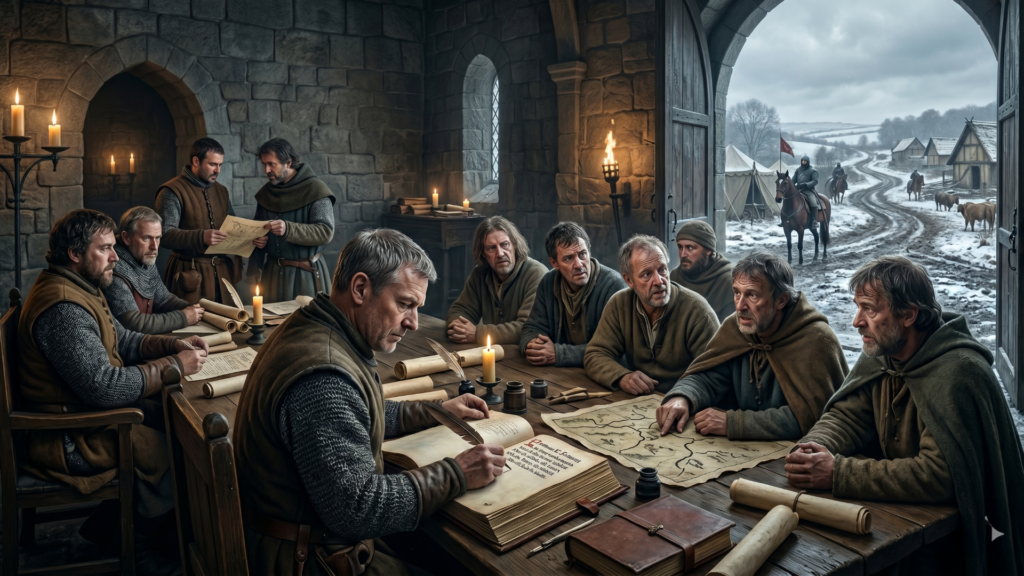
One of the most staggering aspects of the Domesday Book is how quickly it was completed. The survey began in early 1086 and was largely finished within a single year. In an age of mud-clogged roads and slow-moving horses, this was an administrative miracle. William divided the country into seven circuits, sending groups of commissioners into every county. These commissioners held public “inquests,” where they questioned local jurors—half Norman and half Saxon—under oath. The level of detail was intrusive. They asked about the number of hides (land units), the number of plows, the number of slaves, the value of the meadows, and the presence of mills or fishponds. As the Anglo-Saxon Chronicle bitterly noted, “not one ox nor one cow nor one pig was left out.”
The Great Land Grab: How the 1086 Domesday Book legalised the displacement of the Saxon elite.
The Effects: A Kingdom Transformed
The Domesday Book acted as a legal “final judgment,” which is why it earned its name—referring to the biblical Day of Judgment from which there is no appeal. Once an entry was made in the book, it became the law.
The Erasure of the Saxon Lords: The most visceral effect was the documentation of the Saxon collapse. The book showed that by 1086, only about 5% of English land remained in Saxon hands. The rest had been carved up by a few hundred Norman “Leopards” and the Church.
Economic Mapping: For the first time, a king had a comprehensive map of his kingdom’s resources. He knew where the land was flourishing and where it had been reduced to “Waste” following the brutal rebellions of the late 1060s.
The Rise of Feudalism: It solidified the feudal system. Every tenant held their land from the King, and the book proved that the King was the ultimate landlord of England.
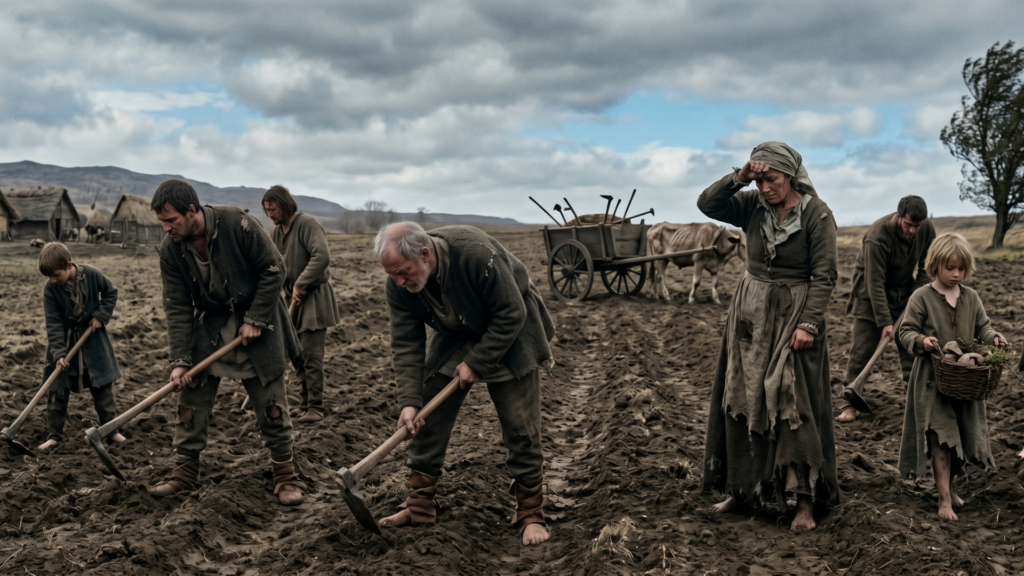
The "Decade of Silence": The Domesday Book left no ox, cow, or pig uncounted among the struggling Saxon peasantry.
Did it Achieve its Goal?
In the short term, the Domesday Book was a resounding success for King William. Although he died in 1087, just as the final data was being compiled into the two volumes (Great Domesday and Little Domesday), it provided his successors with an unrivaled tool for taxation and legal control. No other kingdom in Europe possessed such a detailed record of its own assets.
However, it was not perfect. London and Winchester were omitted, likely due to their complex tax statuses, and the far north remained too volatile to survey fully. Yet, as a tool of statecraft, it was unprecedented. It turned England from a collection of tribal territories into a singular, taxable, and manageable “Norman” estate.
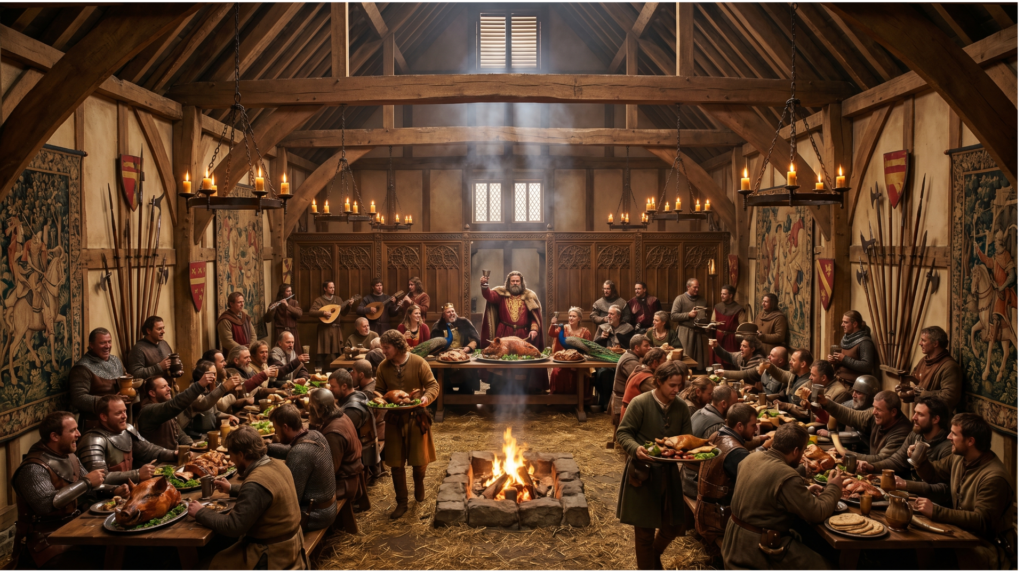
The Place of Joy: While the Domesday Book recorded the "Waste," it also cataloged the unprecedented wealth flowing into the new Norman great halls.
Conclusion: The Domesday Book — A Blueprint for Centuries of Taxation
The Domesday Book was far more than a one-off military audit; it was the birth of the English administrative state. By centralising data on every manor, plow, and fishpond, William the Conqueror created a fiscal blueprint that would serve as the backbone of royal finance for generations. It transformed the relationship between the crown and the land, moving away from vague, traditional feudal dues toward a precise, quantifiable system of national taxation.
Even as the centuries passed and the specific figures within its pages became obsolete, the principle of the Domesday survey endured. It paved the way for the later establishment of the Exchequer and, eventually, the modern Land Registry. Its legacy is found in the very concept of a central government that possesses the right—and the sophisticated means—to assess the wealth of its citizens. Ultimately, the survey proved that the pen was indeed as mighty as the sword, establishing a precedent for documentation and legal finality that would anchor the English legal system for nearly a millennium. The Domesday Book was not just a record of a conquered past; it was the foundation of the modern fiscal state. For all the brutality of its application it was a highly accomplished and effective instrument of Norman rule.