Introduction
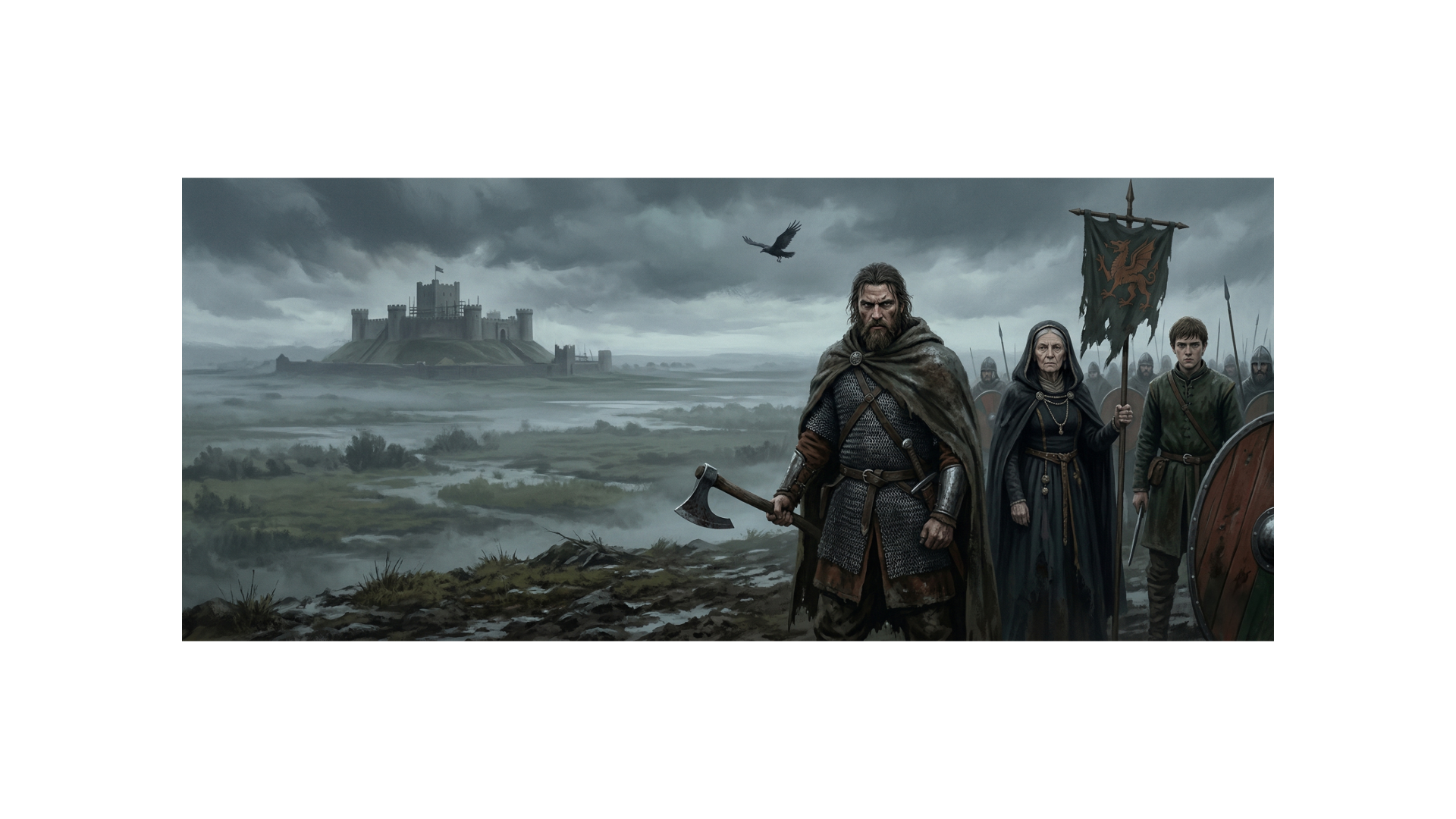
1066 is often taught as a clean break—a single day at Hastings where the crown changed hands and the Saxon era ended. But the truth is far grittier. For nearly a decade after the death of Harold Godwinson, England was a land of fire, insurgency, and desperate last stands.
The resistance was not led by “Hollywood” heroes in shining armor; it was led by displaced nobles, vengeful outcasts, and grieving women who fought from the mud of the Fens and the charred ruins of the North.
The Shadows in the Fens: Hereward the Wake
The most legendary of the rebels was Hereward the Wake. A minor landholder from Lincolnshire, Hereward was a man of visceral ferocity who refused to bow to the “Bastard’s” yoke.
In 1070, he turned the Isle of Ely—then a nearly inaccessible fortress of marsh and reed—into a centre of Saxon defiance. Alongside King Sweyn of Denmark, Hereward conducted a masterclass in guerrilla warfare. He did notjust fight; he humiliated the Normans, famously burning the town of Peterborough to keep its treasures out of Norman hands. He represents the rebel who would rather see his world burn than see a foreigner own it.
The Ghost of the Marches: Eadric the Wild
While Hereward owned the east, Eadric Cild—known to history as Eadric the Wild—owned the brutal borderlands of the Welsh Marches. Eadric was a powerful Mercian thegn who went “Silvaticus” (into the woods) after the Norman sheriff of Hereford began seizing Saxon lands.
Eadric achieved what few others could: a functional military alliance with his former enemies, the Welsh princes Bleddyn and Rhiwallon. Together, they turned the West Midlands into a “no-go zone,” laying siege to Shrewsbury and defying the Conqueror for three years. Eadric was the pragmatist of the resistance, a warlord who understood that on the border, a sharp axe and a strong alliance were the only laws that mattered.
The Silent Witness: Edith Swanneck
While the men fought with steel, Edith Swanneck (Edith the Fair) fought a quieter battle. As the handfasted wife of King Harold, she was the one who walked the blood-soaked field of Hastings when the monks could not.In a moment of raw history, it was Edith who identified Harold’s mangled body by “secret marks” known only to her.
Post-1066, she remained a symbol of the Wessex legacy, ensuring the memory of the “Rightful King” remained a thorn in William’s side. She encited rebellion and encouraged her sons, exiled in Ireland, to return and attack Norman forces. She represents the personal cost of the conquest—the grief that fuels an insurgency.
The Matriarch and the Heir: Gytha and Edgar
The Saxon resistance had a formidable heart in Gytha, Harold’s mother. She turned the city of Exeter into a bastion of defiance, holding it against an 18-day siege by William himself. Meanwhile, the legitimate heir, Edgar the Ætheling, became the rallying point for the Northern rebellions. Backed by the Scots, Edgar represented the hope that a true-born king could still drive the “Leopards” back into the sea.
Why Did the Resistance Fail?
For five years, these rebels effectively paralysed Norman rule. They forced William to stay on a constant war footing and build the “stone cages”—the Motte and Bailey castles—that still dominate our landscape. However, the rebellion ultimately fractured due to three brutal realities:
- Lack of Unity: The rebels were spread thin. Hereward fought for the Fens, Eadric for the Marches, and Edgar for a crown he wasn’t strong enough to wear. They never formed a single, unified army.
- The “Stone Cages”: The Normans used castles as psychological weapons, allowing a small number of occupiers to dominate large, angry populations.
- The Harrying of the North: In 1069, William lost his patience. He enacted a scorched-earth policy, salting the earth and slaughtering livestock from York to Durham. He didn’t just defeat the rebels; he starved the people who fed them.
The Aftermath: What Happened to Them?
- Eadric the Wild: The ultimate survivor. He submitted in 1070 and, in a display of Norman pragmatism, William welcomed him. By 1072, Eadric was fighting for the Normans in Scotland.
- Hereward: Vanished into the mists. Legend says he was pardoned; history suggests he simply became the “Green Man” of the English woods.
- Gytha & Edith: Both eventually faded from the record, symbols of a fallen house dying in exile or quiet seclusion.
- Edgar the Ætheling: Lived a long, strange life as a “tame” royal and even a crusader, outliving most of his enemies.
The Saxon rebellion failed, but it forced the Normans to adapt. The “grit” of the English merged with the “ferocity” of the Normans. These rebels ensured that the Normandie of the Fitzroys would never truly be “French”—it would always have the iron-willed soul of the Northmen beneath its skin.
This Post Has One Comment
really interesting stuff