The Causes, Catastrophe, and Legacy of the Harrying of the North
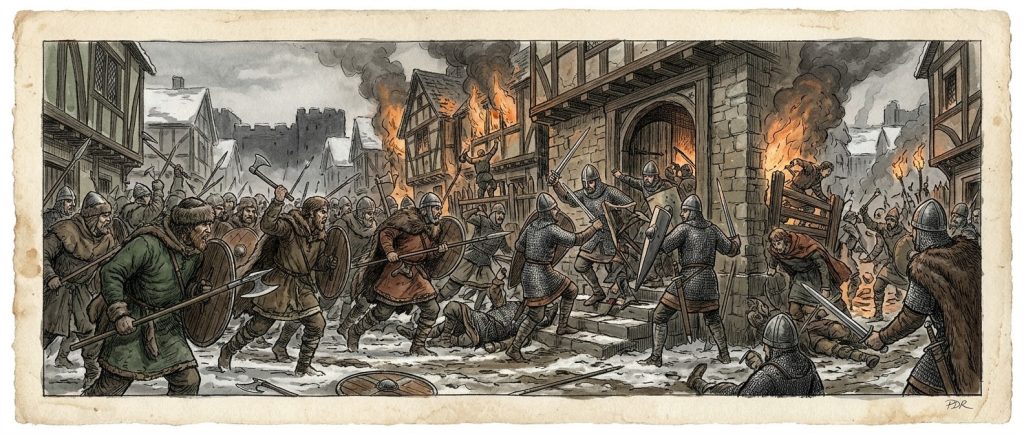
In the winter of 1069, King William I—better known to history as “the Conqueror”—faced a crisis that threatened to undo his fragile grip on England. Three years after his victory at the Battle of Hastings, the north of the country was in open, ferocious revolt, aided by a Danish invasion fleet. William’s response was not merely a military campaign, but an act of systematic, apocalyptic devastation that would forever stain his legacy.
This was the Harrying of the North—one of the most brutal pacification campaigns in European history. Was it a calculated, overarching strategic necessity, or the desperate, wrathful gambit of a medieval dictator?
The Spark: What Caused the Harrying?
William’s victory in 1066 did not translate to immediate control over the entire kingdom. While the south was quickly fortified with Norman castles, the Anglo-Scandinavian North remained fiercely independent, rebellious, and culturally distinct.
The crisis came to a head in early 1069. Robert Cumin, whom William had appointed as the new Earl of Northumbria, was slaughtered along with his 900-man garrison in Durham. Encouraged by this defiant resistance, the local population joined forces with Edgar the Ætheling (the last Anglo-Saxon claimant to the throne) and a massive Danish invasion fleet led by the sons of King Sweyn II. Together, they seized York, dismantled its two Norman castles, and put the garrison to the sword.
To William, this was not just a local rebellion; it was an existential threat. If the Danish-backed northern coalition marched south, the Norman Conquest might easily have been reversed.
Timeline: When Did It Start and Stop?
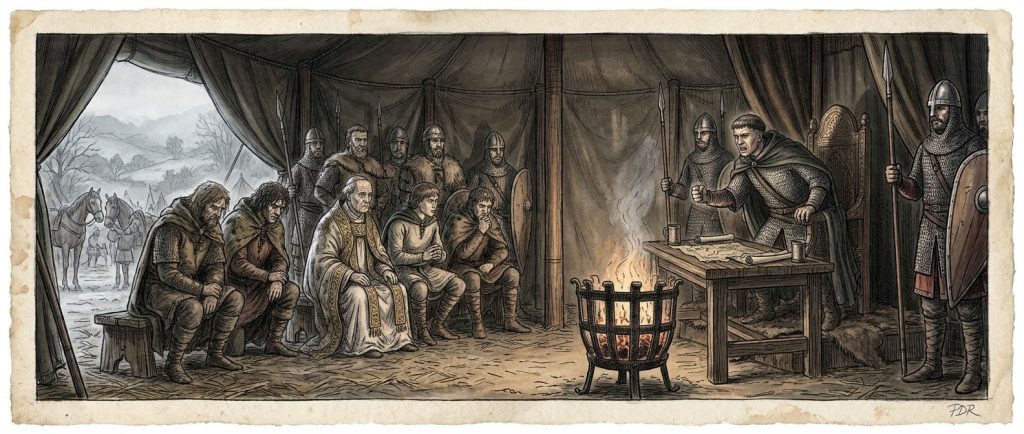
William marched his army north from Nottingham in the late autumn of 1069, paid off the Danish fleet to withdraw, and spent Christmas in the ruined city of York to assert his divine right to rule.
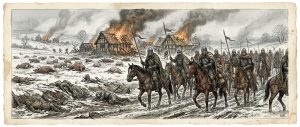
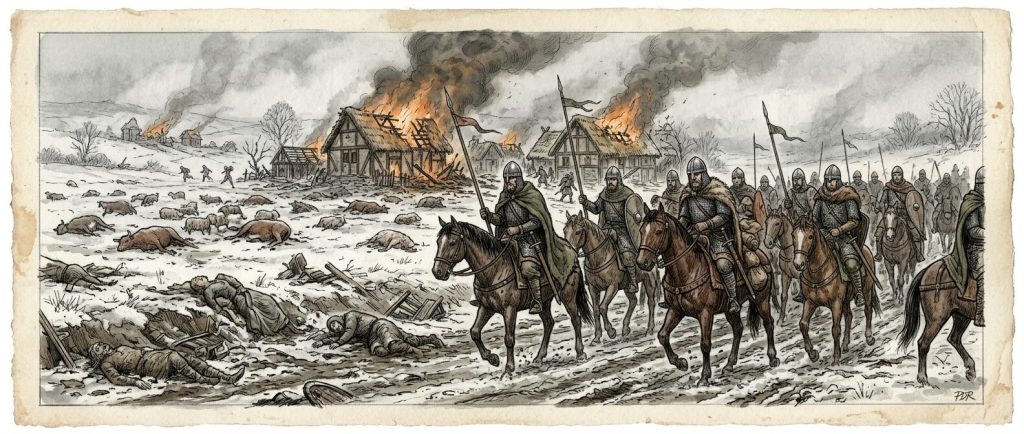
The Harrying itself began in winter (December) 1069 and was carried out systematically over the freezing months of early 1070. William split his army into mobile, smaller units, sending them across Yorkshire, Durham, and Northumberland with orders to destroy anything that could sustain human life. By the spring of 1070, the active slaughter and burning had largely subsided, though the artificial famine it created would kill for years.
Overarching Strategy or Dictator’s Gambit?
Was the Harrying a calculated military strategy or a tyrant’s impulsive rage? The historical consensus points to a grim combination of both.
From a strategic perspective, it was a desperate attempt to apply “denial-of-resource” (scorched-earth) tactics. By destroying the entire agricultural infrastructure of the North, William hoped to ensure that no future Danish invasion could live off the land, and no rebel force could feed itself.
However, the sheer, indiscriminate savagery of the campaign points to a dictator’s gambit fuelled by fury and frustration. It was an act of psychological terror meant to completely break the English spirit. Contemporary chroniclers like Orderic Vitalis—usually sympathetic to William—condemned the campaign as an unparalleled act of cruelty:
“He ordered that crops and herds, tools and food be burned to ashes… Nowhere else had he shown such cruelty… To his shame, William made no effort to control his fury.”
The Grim Statistics and Immediate Outcomes
The human and economic cost was staggering. For a medieval population, the destruction of winter food stores and livestock meant a guaranteed death sentence.
- Casualties: Chroniclers like Symeon of Durham and Orderic Vitalis estimated the death toll at over 100,000 people from sword, freezing, and famine. In a country with a total population of barely two million, this meant up to 5% of the entire English population was wiped out.
- Famine & Cannibalism: Survivors were reduced to eating horses, dogs, cats, and, according to contemporary accounts, human flesh. Others sold themselves into lifelong slavery just to survive. Refugees fled as far south as Worcestershire and as far north as lowland Scotland.
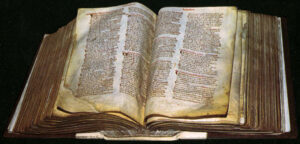
- The Domesday Waste: The ultimate proof of the devastation is found in the Domesday Book of 1086—compiled nearly 20 years later. It recorded estate after estate in Yorkshire as waste (wasteas est or hoc est vast). Roughly 60% of all holdings in Yorkshire were still abandoned or ruined, and the region’s economic value had plummeted by at least 60% compared to 1066.
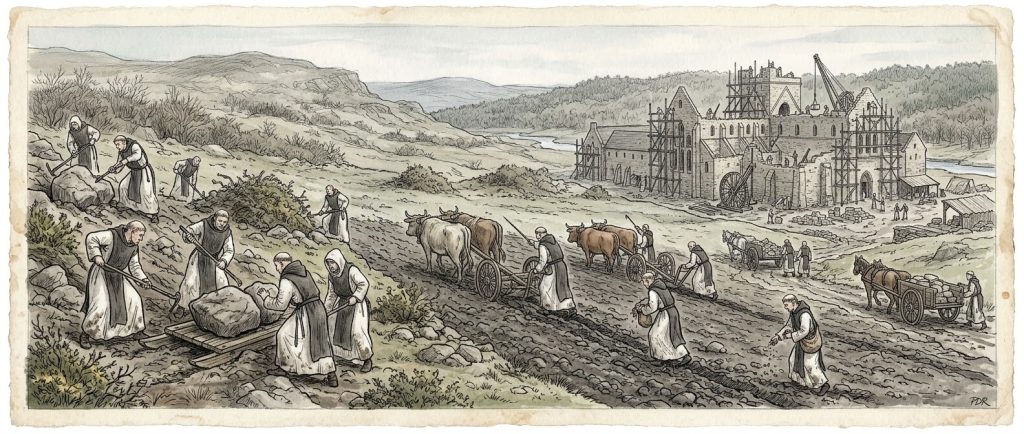
The scars of the Harrying lasted for generations. It took well over a century for the North of England’s population, agriculture, and economy to truly recover. The Norman elite eventually utilised monastic orders, such as the Cistercians who built Fountains Abbey, to colonise, re-cultivate, and bring the desolate northern wilderness back into the economic fold. However, the imbalance of wealth and power between the prosperous Norman-dominated South and the historically neglected, devastated North was a geopolitical legacy that persisted for centuries.
European Context?
In the 11th century, the papacy and Continental powers were largely preoccupied with their own massive geopolitical power struggles, such as the Great Schism and the Investiture Controversy. Pope Alexander II had actually blessed William’s 1066 invasion with a papal banner, viewing Anglo-Saxon England as politically deviant and in need of reform.
While Continental chroniclers expressed horror at the barbarity of the scorched-earth campaign, no foreign powers intervened on behalf of the Northern English. To the ‘Holy Church’, while William’s methods were seen as a sinful “stain upon his soul,” the primary objective of bringing the British Isles under centralised, Norman authority was achieved.
The Harrying of the North fits into a long, dark tradition of “total war,” where military objectives are achieved by targeting civilians and their means of survival.
While Continental chroniclers expressed horror at the barbarity of the scorched-earth campaign, no foreign powers intervened on behalf of the Northern English. To the medieval Church of Rome, while William’s methods were seen as a sinful “stain upon his soul,” the primary objective of bringing the British Isles under centralised, Norman authority was achieved.
The Harrying of the North was a pivotal, tragic milestone in the making of England. It successfully secured William’s crown and effectively ended major Anglo-Saxon resistance, but at a horrifying humanitarian cost. It remains a stark historical reminder of how easily a ruler can cross the line from military defence to atrocious, lasting devastation—using the starvation of the innocent as an instrument of statecraft.